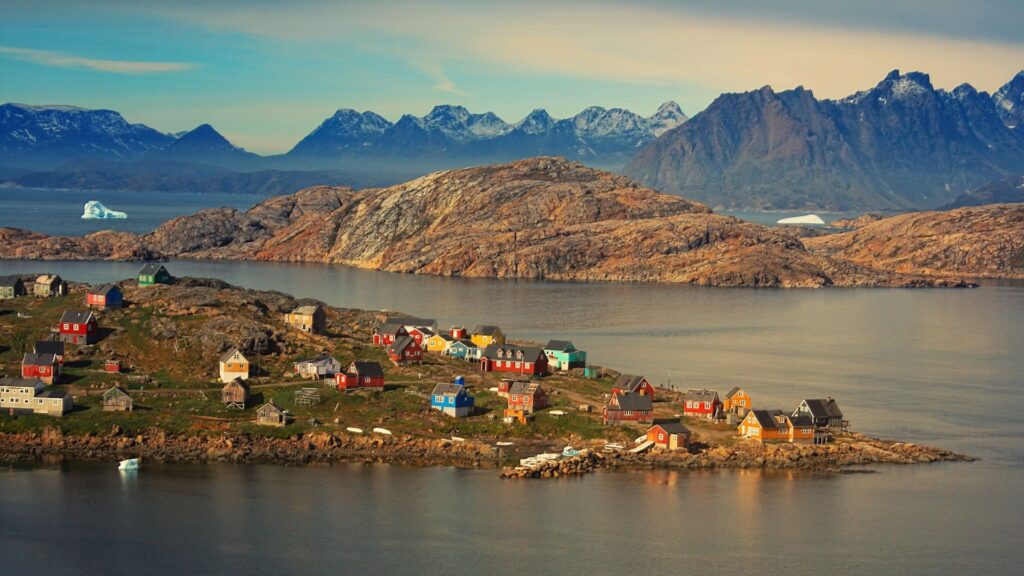
Tensions over Greenland are rising again after the U.S. decision to appoint a special envoy for the Arctic island, a move that provoked an immediate and annoyed reaction from Denmark. Washington talks of strategic cooperation and security, Copenhagen asserts its sovereignty over a territory that, whilst enjoying wide autonomy, remains formally part of the Danish Kingdom. The point is that Greenland is now no longer a glacial periphery, but a central node in the new global competitions.
Rare earths: the economic factor that weighs most heavily
Strategic mineral resources are concentrated beneath Greenland’s ice, starting with rare earths that are essential for batteries, wind turbines, electric vehicles, advanced electronics and military systems. At a time when the United States and Europe seek to reduce dependence on China, which dominates much of the global supply chain, Greenland becomes a possible alternative. It is no coincidence that U.S. interest has intensified just now, as the race for critical minerals enters a decisive phase.
Greenland is also a key piece in the Arctic geopolitical chessboard. Its location makes it strategic for controlling the links between North America, Europe, and Russia. The United States has been present for decades with crucial military infrastructure, while Moscow strengthens its projection in the Arctic and China, while not an Arctic state, seeks space as a global player with investment, scientific research and infrastructure interests. Within this framework, the appointment of a U.S. envoy is a direct political message.
The Arctic route: when climate changes the maps
Boosting interest in Greenland is the climate crisis. Melting ice is making Arctic routes increasingly viable, reducing distances between Asia, Europe, and North America. The Arctic shortcut provides significant time and fuel savings over traditional routes, with potentially disruptive effects on global trade. Greenland, overlooking these new sea corridors, thus becomes a possible logistics hub of the future.
Inside the island, meanwhile, the debate over independence from Denmark is growing. Natural resources are seen by some of the population as a lever for economic self-sufficiency, but there is also a strong fear that accelerated exploitation will undermine fragile environmental balances and endanger local culture and lifestyles. But the increasingly assertive entry of major powers on the scene risks shifting the centre of gravity of decisions away from Nuuk. Greenland is now the intersection of energy transition, geopolitical competition, and climate change. As the ice recedes, resources, routes, and interests emerge. Tensions are bound to grow.