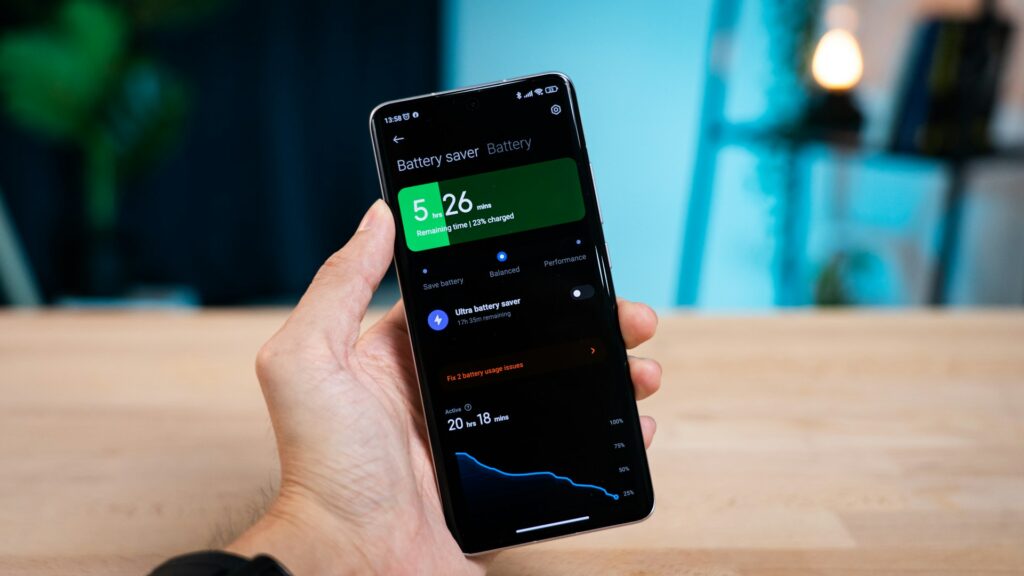
The smartphone is one of the most intimate objects in our daily lives. It sleeps on the bedside table, travels in the pocket, works nonstop between messages, maps and videos. Inside that sheet of glass and metal, however, is a small chemical laboratory: the lithium-ion battery, the energy engine of digital life.
These batteries have revolutionized portable electronics because they store a lot of energy and can be recharged thousands of times. But they are not eternal. After a certain number of cycles-often between 500 and 800-the internal structure begins to degrade. In most cases it just means less range. In others, the phone begins to send troubling signals.
When the phone becomes a stove
Some heat is normal: any current flow produces heat loss. The problem arises when the temperature rises too high. If the phone becomes hard to hold or keeps getting hot even when you are not using it, the battery may be under stress.
In extreme cases, a phenomenon called thermal runaway can occur: a chain reaction in which the heat produced by one cell accelerates chemical reactions in neighboring cells, raising the temperature higher and higher. It is one of the most studied mechanisms in accidents related to lithium-ion batteries.
The wake-up call that can be seen
Among the most obvious signs is swelling of the phone. Over time, or when overcharged, gases produced by chemical reactions can build up inside the battery. Pressure builds up and the device changes shape.
In thinner models, the effect is obvious: the back curves, the screen appears to lift, small cracks appear along the body. A swollen battery is not only less efficient: it also becomes more fragile and vulnerable to sudden damage.
Suspicious noises and smells
A healthy battery is silent. That is why hissing, crackling, or small bursts are signs to be taken seriously. They can indicate internal cell expansion or gas leakage.
Sometimes it is the nose that notices before the eyes. Some electrolytes used in batteries release a sweetish or solvent-like odor when they escape. It’s not just unpleasant: those vapors can be irritating and flammable.
If smoke is coming out of the phone, the situation is already over the limit. It means that the internal chemical reaction is out of control and fire is imminent. In that case, the rule is simple: do not touch the device and move away.
The hidden issue: batteries and the environment
Behind these minor household accidents is also an environmental issue. Lithium-ion batteries require metals such as lithium, nickel and cobalt, the extraction of which incurs significant environmental costs.
Therefore, research is accelerating on the recycling of spent batteries, with technologies capable of recovering a significant portion of the materials.
In the meantime, learning to recognize the signs of a battery in trouble remains a key expedient to avoid sudden failures and extend the life of devices that, all too often, end up in the drawer or electronic waste before their time.