Figures released today by the International Energy Agency photograph a situation that until a few weeks ago seemed unthinkable: the global energy system has entered a crisis more severe than that of the 1970s. The war in Iran, with the almost total blockade of the Strait of Hormuz and the carpet bombing of fossil energy deposits and infrastructure in the Middle East, has caused a supply collapse that exceeds in size the combined effect of the two major oil crises of 1973 and 1979 and the war in Ukraine. Not least because, unlike the 1970s, the global economy is now much more interconnected. Rising energy prices do not only affect final consumption, but spread throughout the supply chain: fertilizer, chemical industry, food. In other words, the risk is systemic.
According to IEA estimates, the world is losing more than 11 million barrels of oil a day, while gas is also experiencing a massive contraction. It is a double shock that simultaneously affects two pillars of the global energy system. For the agency’s executive director, Fatih Birol, we are facing “the biggest threat to global energy security in history.”
Hormuz, the bottleneck of the Planet.
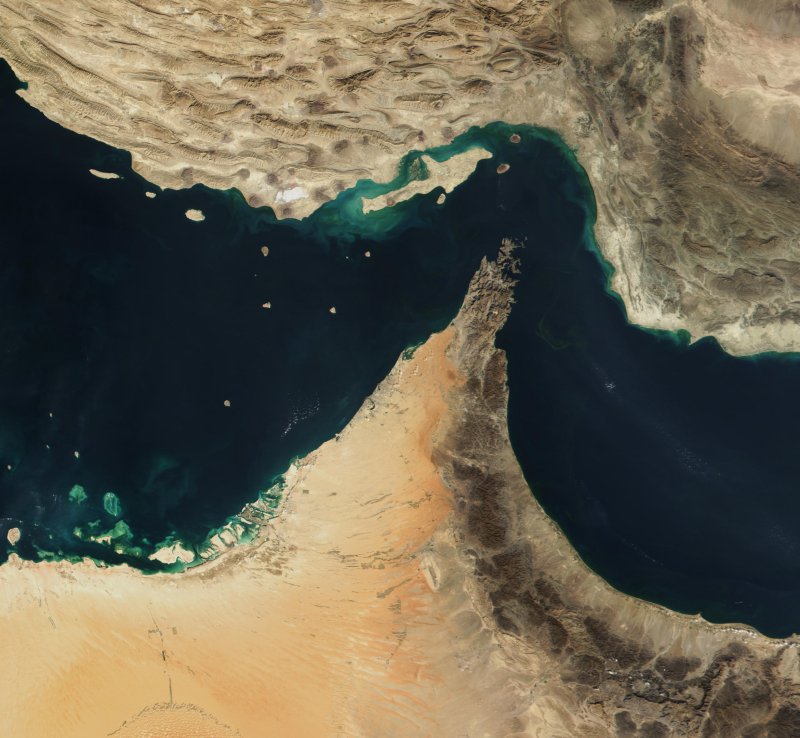
The critical point is the Strait of Hormuz. About 20 percent of the world’s oil and a major share of liquefied gas passes through here. Today the traffic is almost at a standstill, with tankers stranded and alternative routes insufficient to compensate for the void.It is not just a production crisis, but a system crisis. Global energy trade is based on a few strategic hubs, and Hormuz is the most important one. When it stops, it stops everything. And indeed, the markets reacted immediately, with oil back above $100 a barrel and high volatility in the financial markets.
The most immediate effect is on prices, but the real risk is the chain reaction that such a crisis triggers. More expensive fuels mean more expensive transportation, industrial production under pressure, and generalized price increases. The ghost conjured up is stagflation, meaning weak growth and high inflation.
Faced with a shock of this magnitude, the member states of the International Energy Agency (the organization that coordinates the energy policies of industrialized countries) reacted with an unprecedented move: the release of some 400 million barrels from strategic reserves. It is the largest such operation ever, designed to get oil on the market quickly and relieve pressure on prices. But the agency warns: stocks can buffer the crisis, not solve it. They are an emergency tool, useful in the short term but unable to offset a prolonged crisis.
That is why the IEA also insists on the demand side. Reducing consumption becomes a key lever. And the report identifies a package of ten immediate measures: reduce speed limits on highways; promote smart working where possible; introduce car-free days in cities; encourage public transport and make it more accessible; incentivize car sharing and car pooling; alternate private car use (e.g., alternate license plates); promote more efficient driving (eco-driving); reduce air travel when alternatives exist; replace short flights with rail transport; and improve efficiency in logistics and freight transport.
A more complex crisis than those of the past
These are measures we have seen before, in an emergency context, and they mainly affect transportation, which is the sector lagging furthest behind on the energy transition. They may solve part of the problem, but the heart of the solution lies in the change of model, in moving from a production and service system based on fossil fuels and the linear economy to one based on renewables, storage, smart grids and the circular economy.
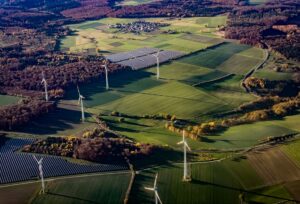
However, the transition to the new model has been held back by resistance from the old organization. Thus the world faces this new crisis in an incomplete energy transition: renewables are growing, but not fast enough. In recent years, the growth of renewables has been rapid, but not yet sufficient to structurally reduce global dependence on fossil fuels. According to the International Energy Agency, record volumes of new capacity were installed in 2023 and 2024, with more than 500 gigawatts added in a single year. However, in order to meet climate goals and strengthen energy security, the IEA itself points to the need to triple renewable capacity by 2030.
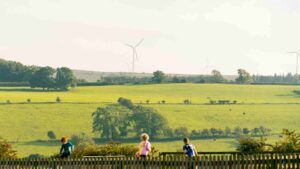
The paradox is that alternatives not only exist, but are now increasingly affordable. According to the most recent data from the International Renewable Energy Agency (IRENA), more than 90 percent of the world’s newly installed electrical capacity comes from renewables because they are cheaper. The cost of power from new solar installations, in particular, has fallen dramatically in recent years and in many cases is 40 to 50 percent lower than coal and gas. Onshore wind also follows a similar dynamic, confirming itself as one of the most competitive large-scale technologies.
Despite this well-established economic advantage, the transition is proceeding at a slower speed than the IEA scenarios indicate. And the current crisis makes this clear: If the system were already more electrified and based on widespread renewables, the impact of a shock like the blockade of the Strait of Hormuz would be much smaller. Choosing to slow down the energy transition has left us defenseless in the face of fluctuating oil prices, international tensions and unstable energy markets. This is the problem that needs to be removed to escape energy blackmail.