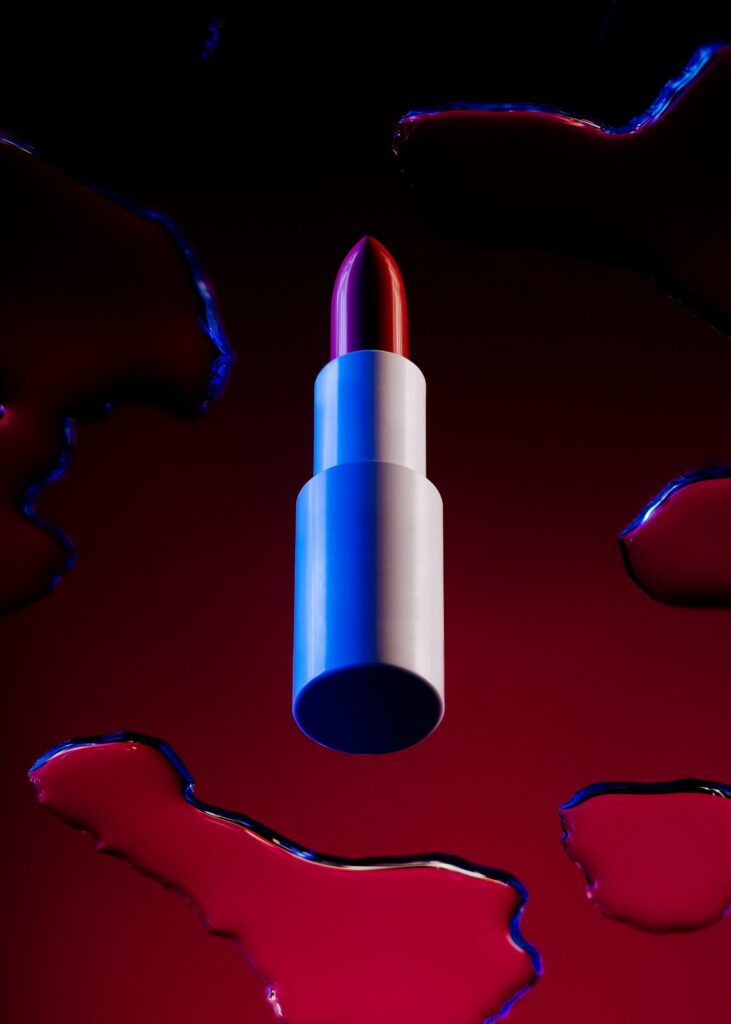
In 2025 there are many ways to test a lipstick or cream: advanced computational models, artificial skins, human cells in the laboratory. Yet in many parts of the world, thousands of animals continue to be subjected to invasive, painful and often lethal testing. All because of an industrial and regulatory system that is struggling to change, even though alternatives are there, and they work. But something is moving. And indeed, in some ways, radically changing.
Good, indeed very good news in this regard comes from Brazil, which passed a historic law in July, putting a stop to animal testing for cosmetic purposes throughout the country. A breakthrough not only ethical, but also scientific and cultural, coming after more than a decade of civil battles, public campaigns and social pressure.
Brazil’s turning point
In short, the new legislation bans the use of vertebrate animals in tests for cosmetics, personal care products and perfumes, but not only that. It also imposes a ban on the marketing of any product or ingredient tested on animals, except for tests required by international regulations.
A law, this one, that is the result of a battle that began in 2013 and remained stuck in parliamentary gears for years. So, the efforts of associations such as Te Protejo and Humane World for Animals, supported by popular mobilisation and collecting more than 1.6 million online signatures, were decisive in achieving a concrete breakthrough.
In this decision, Brazil joins 44 other countries around the world that have already banned cosmetic animal testing, including several Latin American nations such as Chile, Mexico, and Colombia. Now the ball is in the court of ANVISA (National Agency for Health Surveillance), which will have two years to define protocols for monitoring alternative methods.
The situation in Italy
But how cruelty-free is the world of cosmetics really? More importantly, what is the situation in Italy and Europe? “The situation, when compared to the global context, is in a fairly pioneering position, in the sense that in Europe there was for the first time in 2004 a ban on testing for cosmetic substances, which was then strengthened in 2013 in that it was also prohibited to import into the territory of the European community both ingredients and finished products tested on animals. So we can say that since 2013 in Europe—and therefore also in Italy—the marketing of cosmetic products tested on animals should be banned,” comments Valeria Albanese, head of LAV—Lega Antivivisezione.
“I use the conditional tense, however: unfortunately, there are still regulatory loopholes that allow cosmetics with ingredients tested on animals to be on the market. In many cases, these are substances governed by other regulations, such as REACH for chemicals, which impose mandatory testing regardless of cosmetic use,” she explains.
A situation therefore less clear than it may seem, partly because of regulatory fragmentation and lack of effective border controls. And companies, in many cases, take refuge behind this “excuse” for not taking a real, concrete step towards alternative methods that are already available and scientifically valid.
“Today we have alternative methods available that are extremely reliable because they are based on human cells and objective data referring to humans, not mice, rabbits or rats. We are talking about artificial skin, membranes that reproduce the skin barrier, in vitro tests, computational models,” Albanese clarifies. “These tests are cheap, reproducible and rapid. So they are also a beneficial choice for the company.”
The Leaping Bunny Brand
As proof of this, LAV has been promoting the brand for some time now. Leaping Bunny, recognisable by its logo—a stylised bunny—and representing the international standard for truly cruelty-free products. And unlike many vague and often misleading wordings on packaging, Leaping Bunny guarantees an annual inspection of the entire production chain by certifying bodies such as ICEA. Indeed, Albanese points out that “unfortunately, many consumers are confused by ambiguous labels. The only truly reliable label is that of Leaping Bunny, which certifies the total absence of animal testing throughout the supply chain.”
But if alternative testing is valid and cheap, then why don’t cruelty-free products always cost less? “It is not necessarily the case that the final price is lower,” Albanese answers, “for some companies, especially smaller ones, it can be difficult to convert processes that have already been started. Some ingredients have to be replaced, and adhering to certified standards has costs. Large companies, on the other hand, can sustain these investments without affecting the price to the public too much.”
In short, from Brazil the signal comes strong, and the hope is that the future will be increasingly cruelty-free. But on one condition: that we do not limit ourselves to laws, but continue to be vigilant, inform and, above all, choose consciously.