In Israel, the space for dissent, humanitarian action, and independent reporting on the war is shrinking rapidly. The clampdown on international NGOs operating in Gaza and the latest decisions targeting critical journalism point to a shift in phase: no longer isolated emergency measures, but a political line that structurally weakens democratic checks and balances.
NGOs on time: the countdown to humanitarian action
The new registration system imposed on international organisations introduces vague and highly discretionary criteria. Those who do not get the green light by the end of the year have 60 days to cease operations. It is a legislative bazooka that can hit even the most structured and entrenched NGOs, including those that have been providing health care, drinking water, malnutrition treatment and logistical support in refugee camps for months.
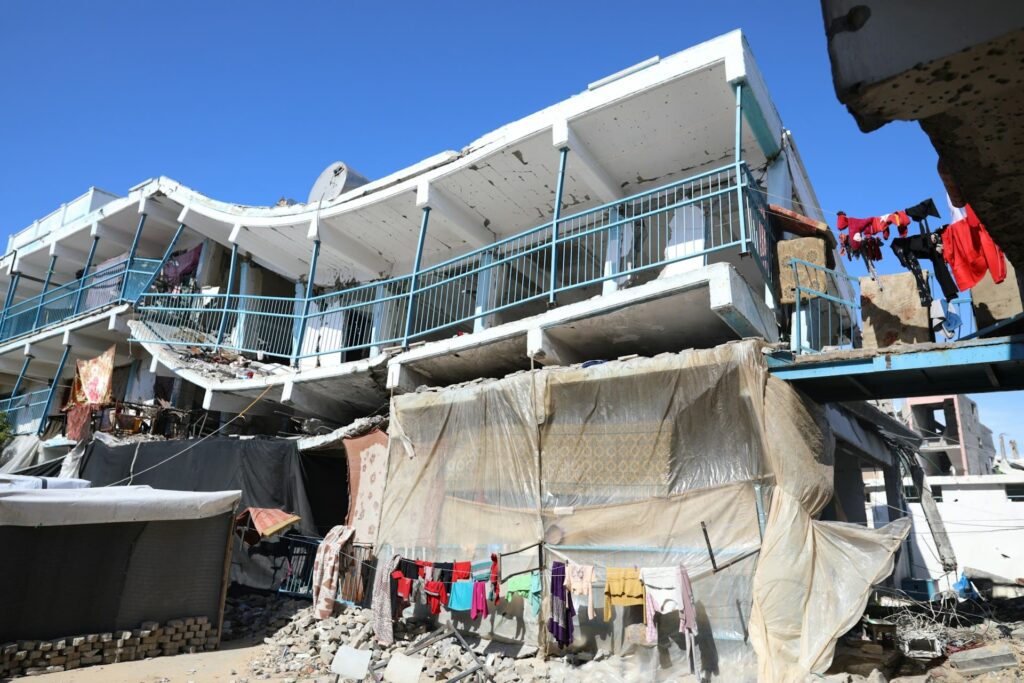
Without the international NGOs, much of the humanitarian infrastructure would be lost in Gaza: field hospitals, clinics, water distribution, sanitation, nutrition programs. The impact would be immediate because no one else today has the operational capacity to replace them on a large scale.
Doctors Without Borders: ‘We risk having to stop operations‘
Amongst the most exposed organisations is. Doctors Without Borders, which in recent days denounced the risk of being forced to leave Gaza. In a message posted on X, the NGO recalled the scale of its activities in the Strip since the beginning of the war:“800 thousand visits, 22,700 surgical operations, 700 million litres of water. This is what we have done in Gaza and it is at risk.”
Médecins Sans Frontières explained that it had completed the registration process required by the new law, but had not received any response from the Israeli authorities. A situation that, according to the organisation, makes concrete the scenario of a forced interruption of humanitarian activities, with immediate consequences for the civilian population, which is already exhausted.
A rischio la presenza di #MSF a #Gaza dal 2026 con le nuove regole israeliane per la registrazione delle #ONG. Chiediamo alle autorità di garantire che le ONG possano continuare a operare. La risposta umanitaria non può essere ulteriormente ridotta.https://t.co/BgkLWAEuRo
— MediciSenzaFrontiere (@MSF_ITALIA) December 22, 2025
From UNRWA to private foundations: aid under control
A move preceded by the marginalisation of the United Nations and the closure of UNRWA s activities. Elements that are part of a broader strategy: to shift aid management to selected external entities, with much tighter political and military control. A model that has already produced dramatic outcomes, including chaos in distribution and civilian casualties during access to basic necessities.
In this context, the reduction of space for ngos is not a side effect of war, but a tool to redefine who can act, how and under what conditions.
Information under fire: the case of Military Radio
The squeeze is not just on the humanitarian front. Parliament’s decision to shut down Military Radio, the Israeli army radio station, historically an autonomous and sometimes critical voice, marks a symbolic shift. The accusation is of “undermining morale,” a formula that recalls contexts of total war and dangerously broadens the perimeter of what can be considered permissible in the factual narrative. Even the voice of the military is silenced after 75 years of broadcasting. It is a clear message to the rest of the media as well: dissent is no longer tolerated even within institutions.
The measures against ngos and information are part of a broader framework of radicalisation. Tightening government control over commissions of inquiry, pressure on domestic protests, and extreme proposals on the treatment of Palestinians point to a drift that worries not only international organisations but also sectors of Israeli civil society.
The risk is that of a double silence: fewer independent witnesses on the ground and fewer critical voices capable of telling what is happening, inside and outside Gaza.
Israel remains a formal democracy, but the prolonged use of emergency as a political framework is turning temporary rules into permanent tools. Restricting the action of ngos and weakening information does not help resolve the conflict; it reduces the possibility of understanding it and mitigating its effects on civilians. When those who care, assist, and report are cornered, the space for freedom shrinks.