Let’s face it. We’re all waiting for some sunshine: we’re sick and tired of a start of the year that the lucky ones spent under the umbrella and the less fortunate with more serious problems caused by the intensifying rains. And in return for all this we would at least expect a summer without tap problems. Wrong. From the point of view of water safety, a cubic meter of water is not always worth the same. It depends on the form it takes, it depends on the temperature of the time when the precipitation comes. If it is too hot even in the mountains, instead of snow comes rain and the difference is huge. The rain runs off and there are no supplies left in solid form to feed the rivers in the spring.
This is what is happening. In the Aosta Valley, according to the 2025 update of the “SottoZero” monitoring, total rainfall for the year reached 902 millimeters, about 8 percent less than the historical average and well below the values recorded the previous year. This decline affects not only rain but especially snow, that is, the main natural water supply for warm seasons.
The striking fact is the reduction in snow accumulation at high altitudes: less snow in winter means less available water in spring and summer, that is, at the time when agriculture, cities and hydropower production depend significantly on progressive snowmelt. The Alps function as a huge reservoir: they store water in the form of ice and snow and release it slowly in the warm months. If the reservoir is underfilled, little comes out of the summer tap.
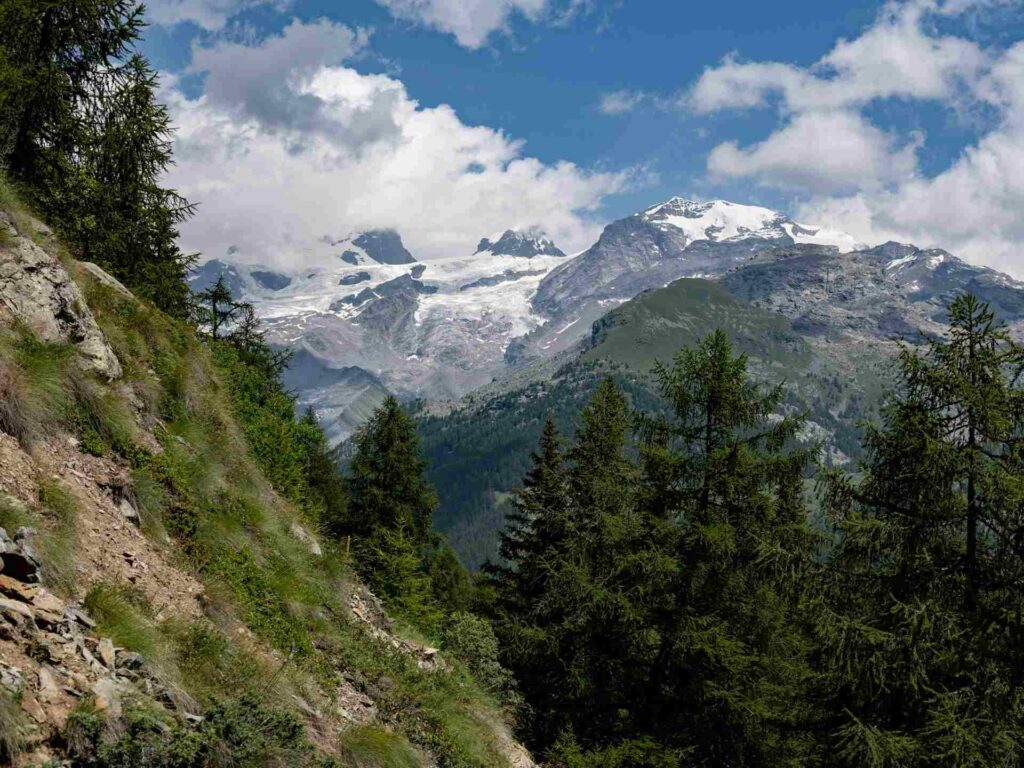
Over the past 50 years, 125 glaciers have disappeared in the Aosta Valley and the regional glacial area has shrunk by about 41 percent. This is a figure that photographs a structural transformation of the Alpine landscape. And it is not a local anomaly: the entire Alpine arc has lost more than 40 percent of its glacial area since the mid-nineteenth century, with an acceleration evident in recent decades.
The issue is not only the quantity of snow, but also its quality and duration. Milder winters favor precipitation in the form of rain even at medium to high altitudes. Falling snow tends to melt earlier, reducing the accumulation function. This alters the natural timing of runoff: more water now, less water later. In a context of increasingly hot summers and more frequent drought periods, the loss of this natural “sponge effect” amplifies the vulnerability of downstream areas.
Then there is a less immediate but crucial aspect: slope stability. Retreating glaciers and permafrost degradation make mountains more unstable, increasing the risk of landslides and collapses because ice is not only a water reservoir, it is also a structural element of the resilience of the Alpine landscape. But the Alps are warming faster than the global average, making the mountain environment particularly sensitive to climatic variations.
In this situation, we need effective measures to turn off the pollutant spigot (greenhouse gases emitted mainly using fossil fuels and deforest) and adaptation measures to live with the climate crisis. But Trump is sabotaging global climate security efforts and the Italian government is not deigning to operationalize a climate adaptation plan. Climate problems are not a fatality-they are the result of choices we can change. More heat equals less snow. Less snow equals poorer rivers. Poorer rivers equals thirst. Do we like it that way?