Tourism is often one of the first indicators of a region’s stability. When skies close and governments discourage travel, the global flow of people-and money-slow abruptly. That is what is happening today in the Middle East, where military escalation between the United States, Israel and Iran threatens to turn into an economic and cultural earthquake for the entire area.
According to estimates prepared by the Tourism Economics analysis center, the number of international visitors to the region could decline between 11 percent and 27 percent in 2026. In absolute terms, this means up to 38 million fewer tourists than previously forecast and a potential loss of between $34 billion and $56 billion in tourism spending.
The reason is that when air routes are suspended and geopolitical uncertainty increases, tourism-especially international tourism-comes to a halt almost immediately.
Cancellations and closed skies
The consequences are already visible. Several Western countries have issued travel warnings or advised against nonessential travel to some Gulf destinations, while large portions of airspace have been closed for safety reasons.
The Middle East is a major hub for global traffic: airports in the region handle about 14 percent of international transit. This means that the impact affects not only those traveling to Dubai, Doha or Riyadh, but also those who use these hubs for connections between Europe, Asia and Oceania.
The suspension of routes creates a domino effect: canceled flights, stranded tourists, airlines forced to reroute routes, and a logistical system that jams in a matter of days.
Tourism as an economic pillar
In recent years many Gulf countries have invested heavily in tourism to diversify economies still heavily tied to hydrocarbons.
Saudi Arabia, for example, only opened to international tourism in 2019 but is growing rapidly through new projects and infrastructure. The United Arab Emirates remains one of the most visited destinations in the Middle East, while Qatar and Bahrain focus on events and regional tourism.
This expansion, however, depends on one key element: the perception of security. When this is lacking, the industry reacts with extreme sensitivity. In fact, international tourism is one of the industries most vulnerable to geopolitical shocks because it relies on the trust of travelers.
Cultural heritage under pressure
It is not only the economy that is at risk. The region’s cultural heritage can also become a collateral casualty of conflicts.
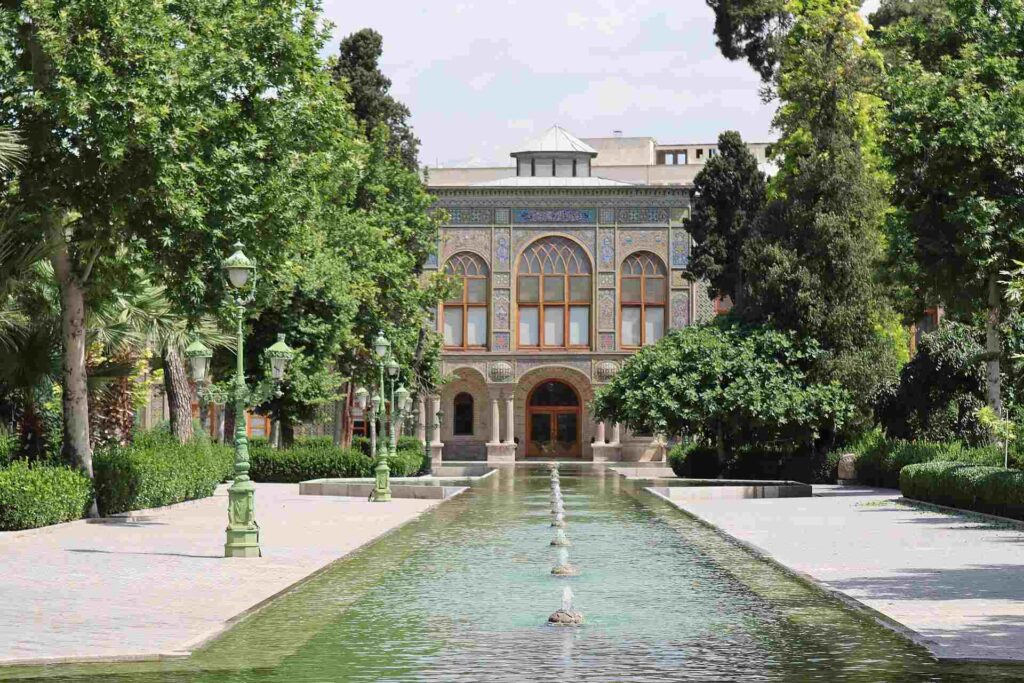
UNESCO expressed concern after the Golestan Palace, one of Tehran’s most important historical complexes and a world heritage site, was-according to various accounts-damaged by debris and shockwaves caused by nearby shelling.
The palace, built in the historic heart of the Iranian capital and expanded in the 19th century during the Qajar dynasty, is one of the city’s architectural symbols. The United Nations organization recalled that cultural property is protected under international law, particularly the 1954 Hague Convention.
Any damage to these places does not only affect a single country: the world’s cultural heritage represents a collective memory that, once lost, is difficult to recover.
Resilience already seen
Despite the current picture, many analysts urge caution before talking about a permanent crisis. Tourism has repeatedly demonstrated surprising resilience after geopolitical or pandemic shocks.
Demand, say several experts in the field, tends to return quickly when political stability and transportation security are restored. It has happened after regional conflicts, terrorist attacks and even during post-pandemic recovery.
One clear lesson remains, however: in a hyper-connected world, war is not only fought on military fronts. It also affects airports, cities of art, local economies and that fragile web of travelers, cultural exchange and global mobility that holds international tourism together.