In Rome , greenery is no longer just a matter of aesthetics or urban decorum. More and more clearly it is becoming a structural lever of environmental policies, with measurable effects on air quality as well. This is demonstrated on the one hand by ARPA Lazio data, and on the other by the new widespread forestation interventions that are redesigning, piece by piece, the capital’s green infrastructure.
In the last few days, two new educational micro-forests were inaugurated in City Hall XIV, on Via Pieralisi, and in City Hall III, at Talenti Park, as part of the“Forest For Rome” project. These are a total of twelve modules already implemented in different quadrants of the city, designed to recover unused areas and strengthen the urban ecological network, with a special focus on the areas most exposed to traffic and pollution.
The CO₂ absorbed
“We wanted to bring these micro-forests to all municipalities, and we are doing so starting in areas where air quality needs to be improved, with high levels of traffic, or where the percentage of usable greenery needs to increase,” explained Capitoline Councillor for Agriculture, Environment and Waste Cycle Sabrina Alfonsi. “These new small forests will interact with the city’s green network and with Rome’s other green construction and reconstruction efforts, from ecological corridors to Pnrr plantings, creating a green infrastructure that will act throughout the urban fabric.”
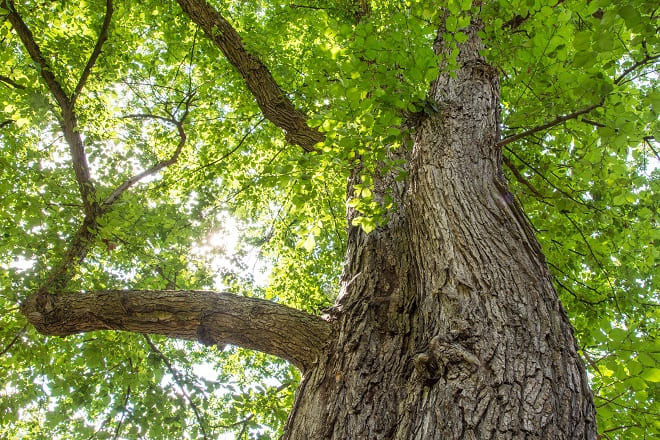
The micro-woods are composed of 25 trees – including linden, sophora and celtis – and 16 shrubs, selected because they are native and adapted to different city microclimates. Each plant, when fully operational, will be able to absorb more than 30 thousand kilograms of CO₂ per year, as well as contribute to temperature mitigation, noise attenuation and improved air quality.
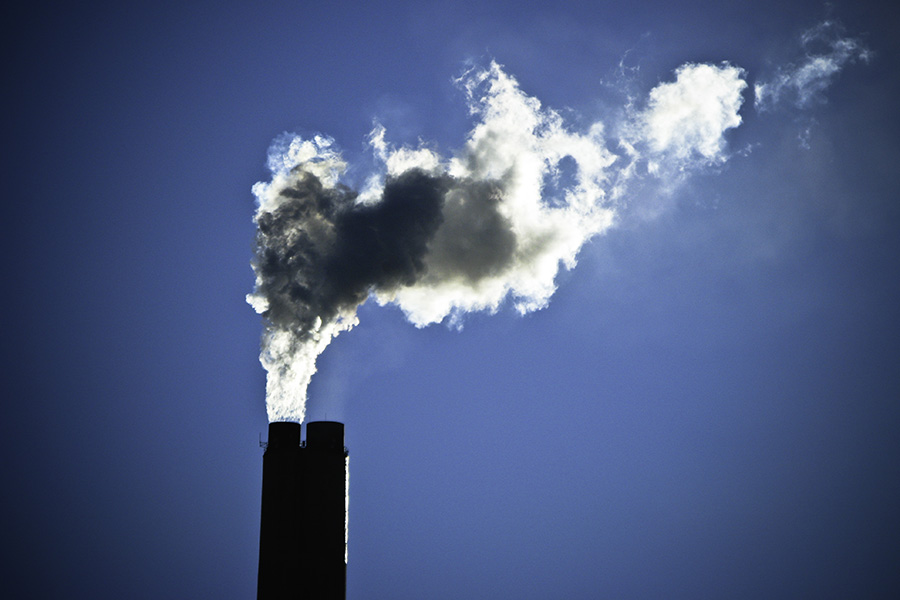
A piece that fits into a larger picture, photographed by ARPA Lazio’s“Data and Trends on Air Quality in Lazio” report, covering the period 2021-2025. Rome shows an overall improvement: for all of 2025, even the historically most critical stations did not record exceedances of legal limits for nitrogen dioxide (NO₂) and PM10 particulate matter.
The climate adaptation strategy
“An achievement closely linked to the renewal of the circulating vehicle fleet and other measures introduced by the city administration,” Alfonsi stressed, citing among the measures the reduction of the period and time slots for turning on heating systems. But the interesting fact is that, alongside policies on traffic and energy, urban forestation is now being referred to as one of the cornerstones of the city’s climate adaptation strategy. A strategy that aims to consolidate the positive trend in view of the new European limits on emissions, which are to be transposed within the year and implemented from 2030.
In other words, trees are becoming infrastructure in Rome. And, data in hand, also allies in the daily fight against smog.