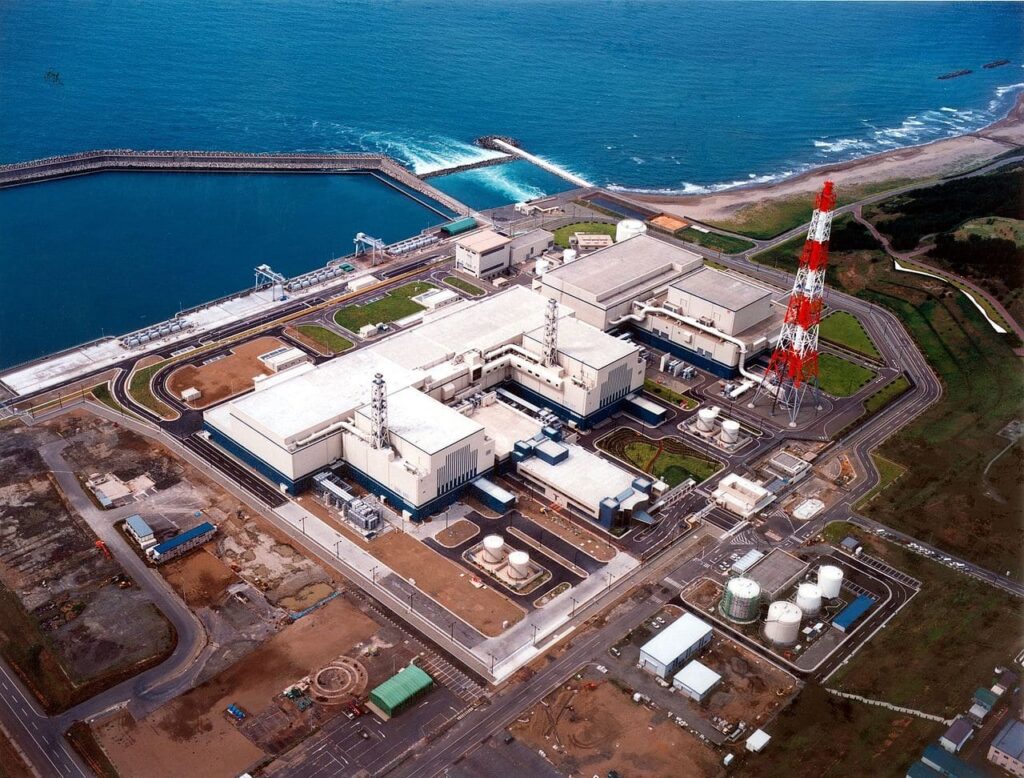
Japan has decided to restart the Kashiwazaki-Kariwa nuclear power plant, the world’s largest by installed capacity. The authorisation came from the Niigata prefectural assembly on the country’s northwest coast, nearly 15 years after the Fukushima disaster. According to public broadcaster Nhk, reactor number 6 is expected to be back in operation by January 20.
TEPCO plans to restart reactor at Kashiwazaki-Kariwa nuclear plant in Januaryhttps://t.co/9NOGJs6wuX
— NHK WORLD News (@NHKWORLD_News) December 23, 2025
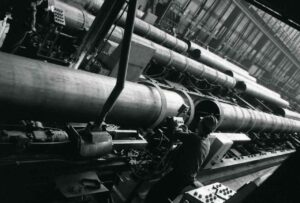
The plant overlooks the Sea of Japan and occupies an area of more than four square kilometers between the cities of Kashiwazaki and Kariwa. It consists of seven reactors and, at full capacity, can produce more than 8,200 megawatts of electricity: enough to cover the needs of about 16 million homes. The plant is operated by Tokyo Electric Power Company (TEPCO), the same company that was responsible for the Fukushima Daiichi plant in 2011.
Why Japan is returning to nuclear power
After the March 2011 earthquake and tsunami, Japan shut down all of its 54 nuclear reactors. It has since restarted 14 of them. This choice has deeply affected the national energy system, forcing the country to rely increasingly on imported fossil fuels.
In 2024, Japan spent the equivalent of nearly 60 billion to import natural gas and coal. These sources now cover between 60 and 70 percent of domestic electricity production and account for about one-tenth of the total value of imports. The reopening of Kashiwazaki-Kariwa also serves to reduce this economic burden.
Prime Minister Sanae Takaichi, who took office last October, has pointed to nuclear power as one of the tools to curb energy costs and combat inflation, alongside new investment in photovoltaics.
Security and controls after Fukushima
On the technical side, Kashiwazaki-Kariwa Reactors 6 and 7 were declared safe by the Japan Nuclear Regulatory Authority in 2017. The audits certified that they met the most stringent safety standards introduced after Fukushima. TheInternational Atomic Energy Agency (IAEA) also ruled out structural damage related to the 2011 earthquake.
However, this does not erase a complex history. The area is seismically active, and in the past the plant has experienced earthquakes, fires, and minimal leaks of radioactive material, which had led to temporary closures even before 2011. Elements that continue to weigh in the public debate.
The Legacy of Fukushima
The Fukushima Dai-ichi nuclear disaster, triggered on March 11, 2011 by a 9.0 magnitude earthquake and subsequent tsunami, caused cooling systems to fail, resulting in three nuclear meltdowns and the release of radioactive materials.
The long-term consequences include the management of more than 1.3 million tonnes of contaminated water generated by maintenance and stored in more than a thousand reservoirs. This “treated water” has been cleared for spillage into the Pacific Ocean, an operation that will last 30 to 40 years. Although the IIAEA has given the go-ahead, assessing the radiological impact as “negligible,” the decision has raised strong international controversy, primarily from China, which has accused Japan of using the ocean as a “cesspool.” Beijing, along with Hong Kong and Macau, has banned or heightened restrictions on food imports from Japan’s neighbouring regions to the area. Despite reassurances and plans to dilute the liquid, the release is also contested by local fishermen and Greenpeace, keeping open a bitter dispute that is part of the broader context of regional geopolitical tensions.
Local protests and divisions
According to a November poll, more than 60 per cent of Niigata Prefecture residents oppose the reopening of the Kashiwazaki-Kariwa power plant. Concerns are mainly about TEPCO’s management of the plant. During the provincial assembly vote, about 300 people demonstrated in front of the institutional building.
Governor HideyoHanazumi acknowledged that the decision divides the population and promised to ask the central government for additional guarantees for the safety of residents, including new road infrastructure designed to facilitate any evacuations.
Kashiwazaki-Kariwa will be the first TEPCO-operated nuclear power plant to return to operation after Fukushima. The restart of the first reactor does not end the confrontation over risks, costs, and liabilities. That confrontation remains open, especially in the territories living with the plant.