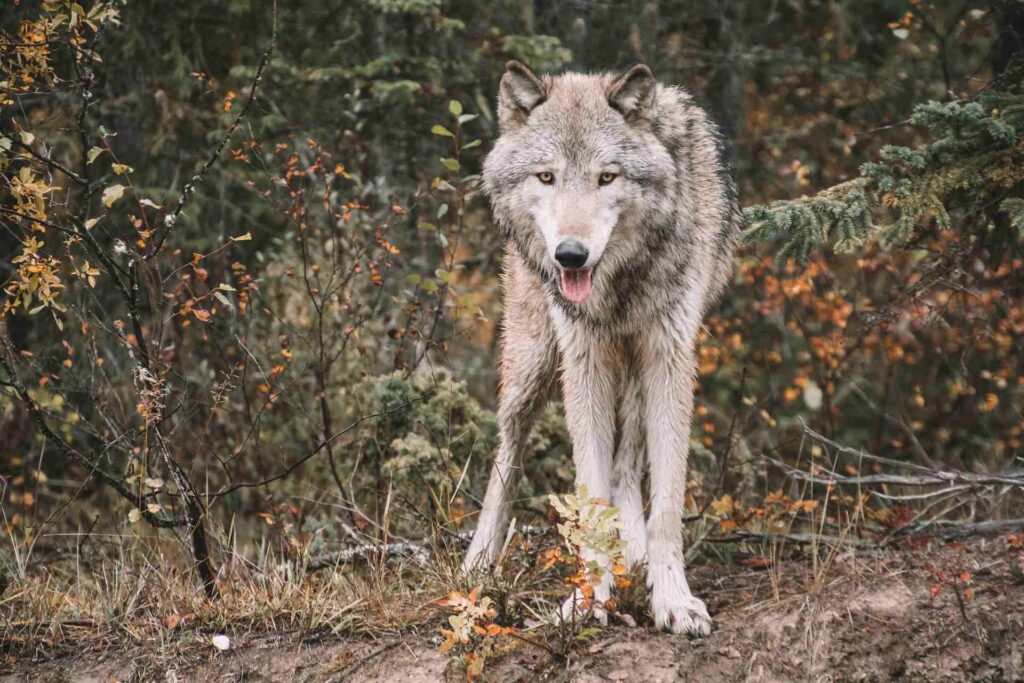
At dawn on Feb. 7, a gray she-wolf crossed Los Angeles County, marking a return after more than a century. Her appearance breaks a long absence and brings wolves back to Southern California, in one of the most urbanized territories in the United States.
The three-year-old, black-coated female is identified by biologists as BEY03F. Her arrival represents the southernmost point ever documented in modern times for the species. A milestone reached at the end of a journey that began in the Sierra Nevada mountains, crossing agricultural valleys, peri-urban areas and major infrastructure, until it skirted the Los Angeles metropolitan area. The journey was reconstructed using a satellite collar affixed in May 2025, which made it possible to track movements and assess risks encountered along the way.
A long migration through California
Born in 2023 in Plumas County, within the BeyemSeyo pack, BEY03F has traveled hundreds of miles in less than two years. Her journey tells of remarkable adaptability in a landscape fragmented by roads, population centers and man-made barriers. Not surprisingly, road accidents remain a major cause of mortality for wolves. The crossing of Interstate 5, one of the busiest roadways on the West Coast, represents one of the most delicate passages of her journey.
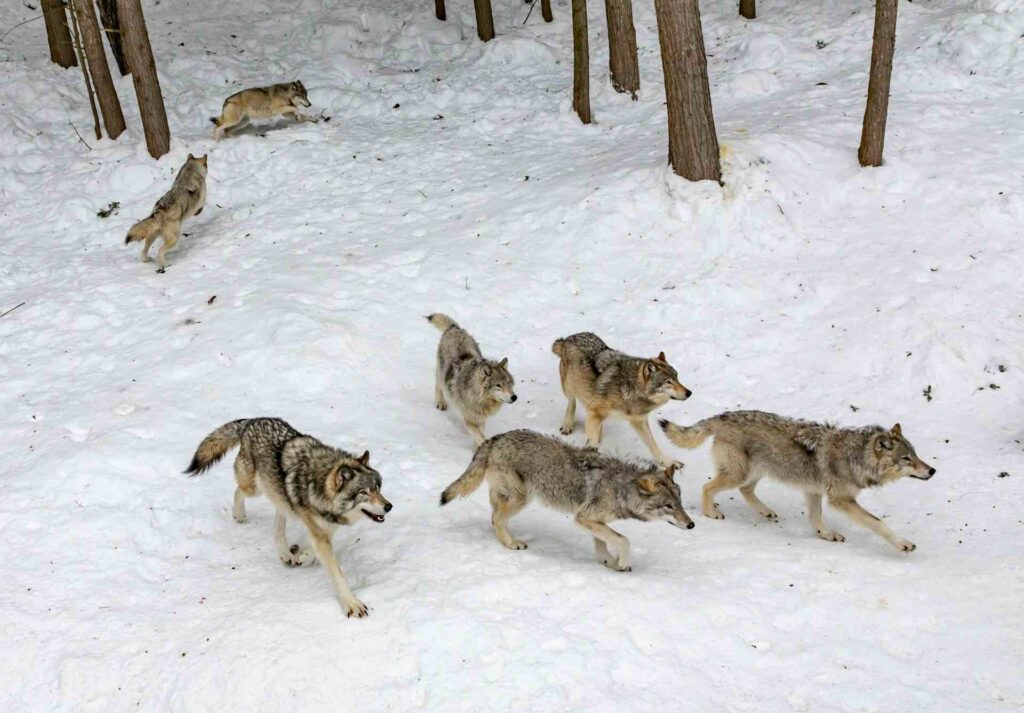
Solitary movements are typical of young individuals in search of a partner and new territories. It is an essential dynamic for the expansion of the species, allowing the formation of new packs and reducing the risk of inbreeding. It is precisely this mobility that explains the gradual return of wolves to areas from which they had disappeared for generations.
From eradication to slow return
Until the early decades of the twentieth century, thousands of wolves populated the continental United States. Their elimination was systematic: culling campaigns, government bounties and poisonings led to the near total extermination of the species. In California, the last wild specimen was killed in 1924. Only half a century later, with the passage of the Endangered Species Act, did the gray wolf gain federal protection.
In the 1990s, reintroduction to Yellowstone National Park marked a turning point. From that original core, some individuals began to disperse westward, eventually reaching California again in 2011. Since then, the population has grown slowly but steadily: by 2024, at least 70 wolves were estimated to be distributed in several packs, mostly in the northern regions of the state.
A return that reopens the debate
The arrival of BEY03F in Los Angeles County has been welcomed by environmental organizations, which read it as a signal for ecosystem health. The presence of large predators helps to rebalance ungulate populations, with positive effects on vegetation and overall biodiversity.
Along with the excitement, however, concerns are emerging about coexistence with human activities, particularly livestock farming. Authorities urge caution and say there have been no confirmed public sightings. The hope is that careful management based on scientific monitoring and prevention will avoid conflicts.
The path of the young she-wolf is also intertwined with a still-open political confrontation. Recent federal decisions to forego a national recovery plan have prompted several associations to take legal action, fearing a weakening of protection. Against this backdrop, the wolf’s presence in Southern California also takes on symbolic value: it testifies that regaining lost spaces is possible, but remains fragile and reversible.