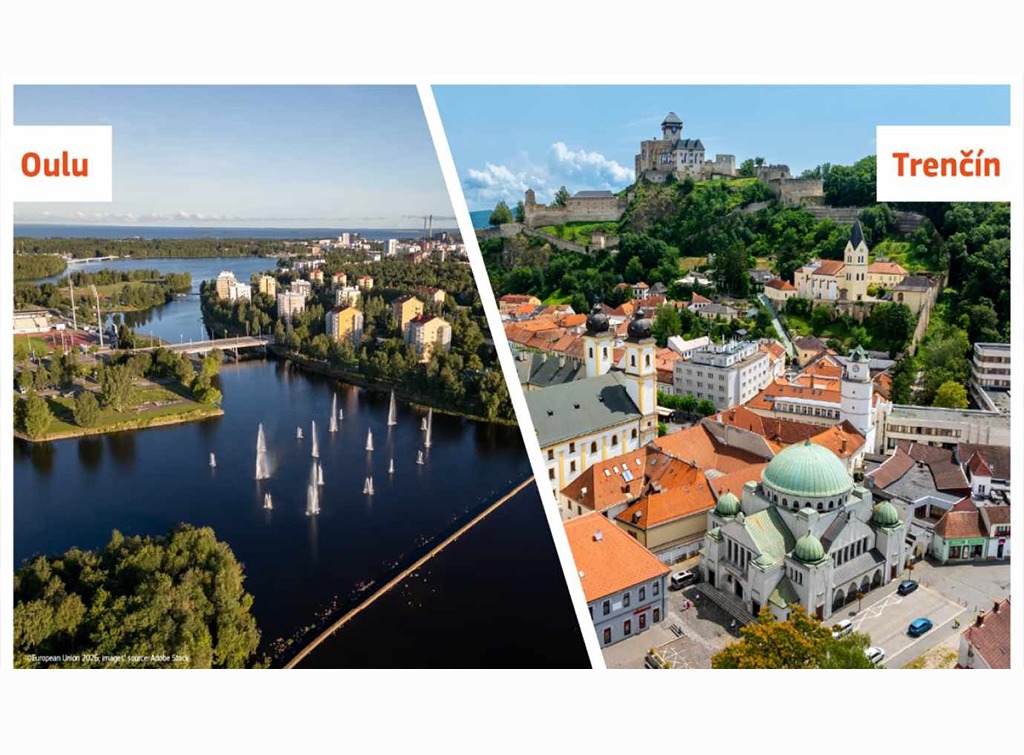
In 2026, Europe chooses two Capitals of Culture and entrusts them with a common task: to show how culture can affect the way territories are inhabited. The cities are Oulu, in northern Finland, and Trenčín, in Slovakia. Different in size, latitude and history, they share the same basic question: what is left when the year of celebration ends?
Oulu opened the year with a grand inaugural festival in January; Trenčín took over from February, with a program extending through the end of the year. Two distinct calendars, two different approaches, one European framework.
Oulu: culture as climate infrastructure
Located in northern Ostrobothnia, Oulu – population 215,000 – has built its program by involving 39 municipalities and hundreds of European artists. The common thread is stated right from the motto:“cultural climate change.” Here, culture is called to measure itself against the big global issues – sustainability, resilience, inclusion – without staying within the perimeter of the event.
Among the flagship productions is Climate Clock, a series of permanent works that interweave art, science and nature to make visible the timing of environmental choices. Alongside, projects dedicated to Sami culture and multimedia installations such as Layers in the Peace Machine, which addresses the theme of peace as a dynamic process. The city center, during the opening festival 16–18 January, was transformed into a widespread cultural village.
Trenčín: working on connections
More than two thousand kilometers away, Trenčín chooses a different scale. The Slovak town has just over 54,000 inhabitants and is the eighth largest in the country. It sits in the Váh Valley, about an hour from Bratislava, dominated by a medieval castle also known for a Roman inscription from 179 A.D., long considered the northernmost in Central Europe.
The 2026 program revolves around “curiosity,” understood as everyday practice: between past and future, between public spaces and private life. The castle becomes a venue for contemporary art exhibitions, while festivals and installations are distributed along the river, in converted bridges, and in citizens’ homes. Events such as the Festival of Light Arts, Garage for Emerging Music, and Altofest transform the entire city into an open cultural device.
After the title
Trenčín is the second Slovak city to receive the award after Košice in 2013, a precedent that has left a lasting cultural infrastructure. “Receiving this title is a historic moment, but even more so it is a transformational opportunity for our city, our region and the people who live there,” said Deputy Mayor Patrik Žák.
It is the same goal that drives Oulu, albeit with different tools. The European Capitals of Culture program, born in 1985, continues to work when it stops producing only events and starts impacting territories.
In 2026 Oulu and Trenčín tell the story of a plural Europe, trying different ways to hold together culture, community, and the future.