Protests against overtourism no longer affect only European cities such as Barcelona or Venice. Tensions between residents and visitors are also emerging in India, especially in places that have suddenly become popular thanks to social media and tourist guides. One of the most recent cases comes from Mawlynnong, a small village in the northeastern state of Meghalaya that has become an international symbol of cleanliness and sustainability in recent years.
Asia’s cleanest village
Mawlynnong is a town of a few hundred people nestled in the green hills near the Bangladesh border. In 2003, a travel magazine called it “the cleanest village in Asia,” a title that changed the destiny of this remote corner of India. Since then the location has attracted a growing number of visitors, curious to see a place where caring for public space has become a real rule of life.
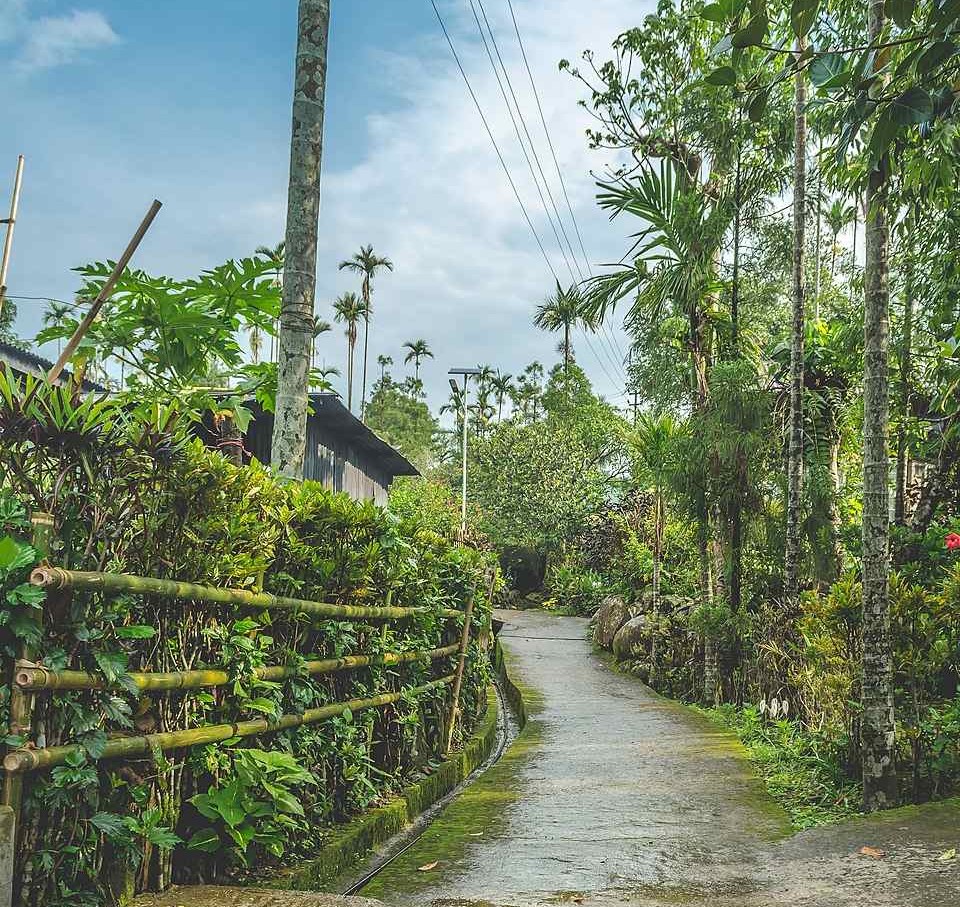
Walking through the village streets, one immediately notices the almost total absence of litter. Paths are swept continuously, and baskets constructed from bamboo appear along the routes. Cleanliness is not entrusted to a structured public service but to the direct efforts of villagers.
Residents’ discontent
In recent months, however, the growing popularity has begun to create problems. Some residents are complaining of increasingly uncivilized behavior by tourists: plastic bottles left along paths, abandoned paper wrappers between houses, and visitors ignoring local rules. In a village that has built its reputation precisely on collective discipline and respect for the environment, these incidents have caused irritation and concern.
For residents, cleanliness is not just an aesthetic issue but a central element of community life. To see trash on the street is to break a balance built over time through everyone’s cooperation.
In Mawlynnong, waste management is organized in a simple but effective way. Bamboo bins distributed along the roads allow for the collection of waste, which is then separated, while the organic part is often turned into compost for local agriculture. Children also participate in the care of the village and learn from an early age how to keep the communal areas clean.
Nature and traditions of the Khasi people
Mawlynnong is located in the territory of the Khasi people, a community that has developed a very close relationship with the natural environment over time. Also found around the village are the famous “living root bridges,” structures built by weaving ficus tree roots over the years to cross streams and waterways. These natural bridges become stronger with time and are one of the most amazing examples of traditional engineering based on collaboration with nature.
Tourism and sustainability: finding a balance
However, tourism has brought economic benefits to the community. Some residents run small family guesthouses, others sell agricultural or handicraft products to visitors. However, the growth in the flow of tourists is forcing the village to question how to protect its way of life.
The fear is that the fame gained in recent years will end up undermining the very thing that makes Mawlynnong special. Therefore, the local community is considering new rules and initiatives to remind visitors that this place is not just a curious destination to be photographed but an inhabited reality with definite traditions and norms.