A haul estimated in the tens of thousands of euros, hidden in transport crates and with Asian origin concealed by bogus tags: this is the script of illegal wildlife trafficking in Fiumicino. This criminal business, which evades European import bans, is confirmed as the fourth largest global criminal market after drugs, weapons and humans.
With its cargo city, Rome’s airport confirms itself as one of the crucial hubs, both as a final destination and as a transit stop, of this illicit trade. Recent data, reworked by the AGI news agency, from the CITES Group of the Fiumicino Guardia di Finanza, which specialises in countering the trade in species protected by the Washington Convention, photograph a surge in the phenomenon.
Hawks, reptiles and bats: a gallery of lawlessness
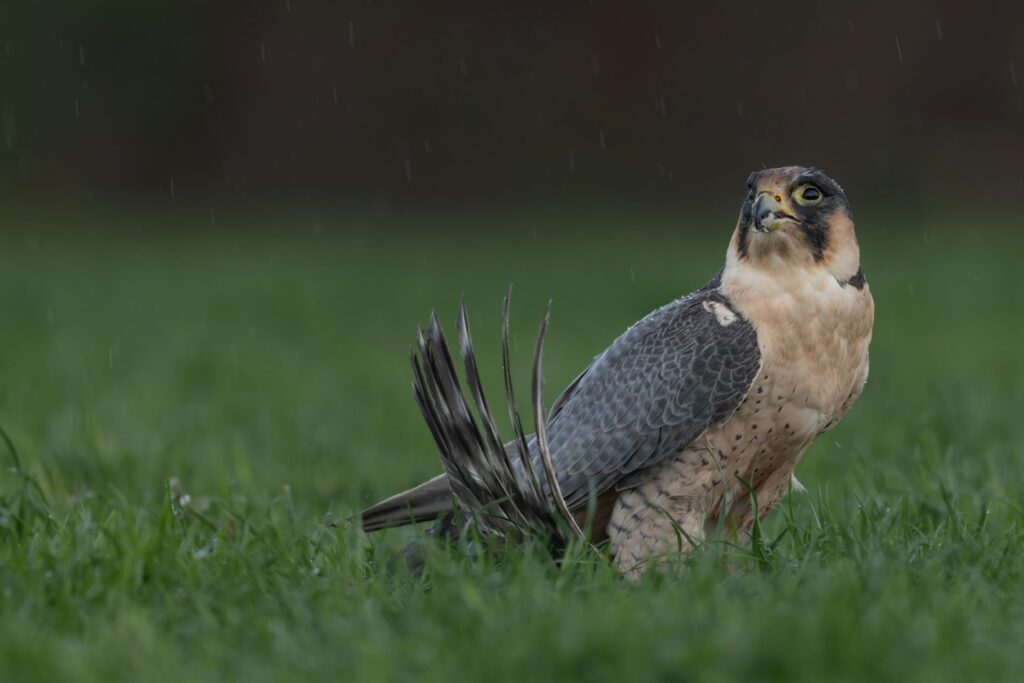
Finance’s attention focuses on a steady stream of fauna taken illegally from their natural habitats. One example is the two recently intercepted rare peregrine falcon specimens, shipped from the United Arab Emirates and worth an estimated tens of thousands of euros. Their discovery, with fake tags affixed to their legs to conceal their provenance, led to the seizure and prosecution of the “owner” for forgery and illegal introduction of endangered wildlife.
But the case history is vast and ranges far beyond raptors. In 2024, more than 150,000 turtles, 7,600 reptiles, 24,000 tropical fish illegally transited Fiumicino alone.
In the first eight months of 2025, seizures focused mainly on 1,500 tropical fish, 20 live coral specimens and 25 dead coral specimens.
High fashion and the risk of extinction
Trafficking involves not only live animals for aquariums or the exotic pet market, but also leather goods and collectibles. In the same period, 20 leather goods were intercepted. These included boots labelled as “bovine leather” but actually lined with crocodile skin, destined for the high-fashion black market and with potential earnings of up to 4,000 euros per pair. Added to this are 20 live corals, a protected and unmarketable species.
Lieutenant Candeloro Calabrò, head of the CITES unit at Fiumicino, coordinating operations with the Customs and Monopolies Agency, stressed to AGI the seriousness of the problem: “It is a criminal phenomenon that threatens the conservation of species in the wild.” If ivory and rhino horn are the best known examples, there are also illicit trade related to Malaysian bears (for bile, paws and claws) and marine corals.
Italy, as a hub, sees mainly marine species and reptiles arriving, particularly turtles from China. Turtles are also amongst the main exported animals, followed by parrots and, to a lesser extent, raptors for falconry.
The CITES unit’s garrison at Fiumicino therefore proves to be a crucial “shield” not only for detecting illegal trafficking and bringing those responsible to justice, but also for “ensuring that the animals’ transport conditions are guaranteed to protect their welfare,” Calabrò concluded. After the illegal trade is discovered, the animals are immediately turned over to specialised centres for recovery.