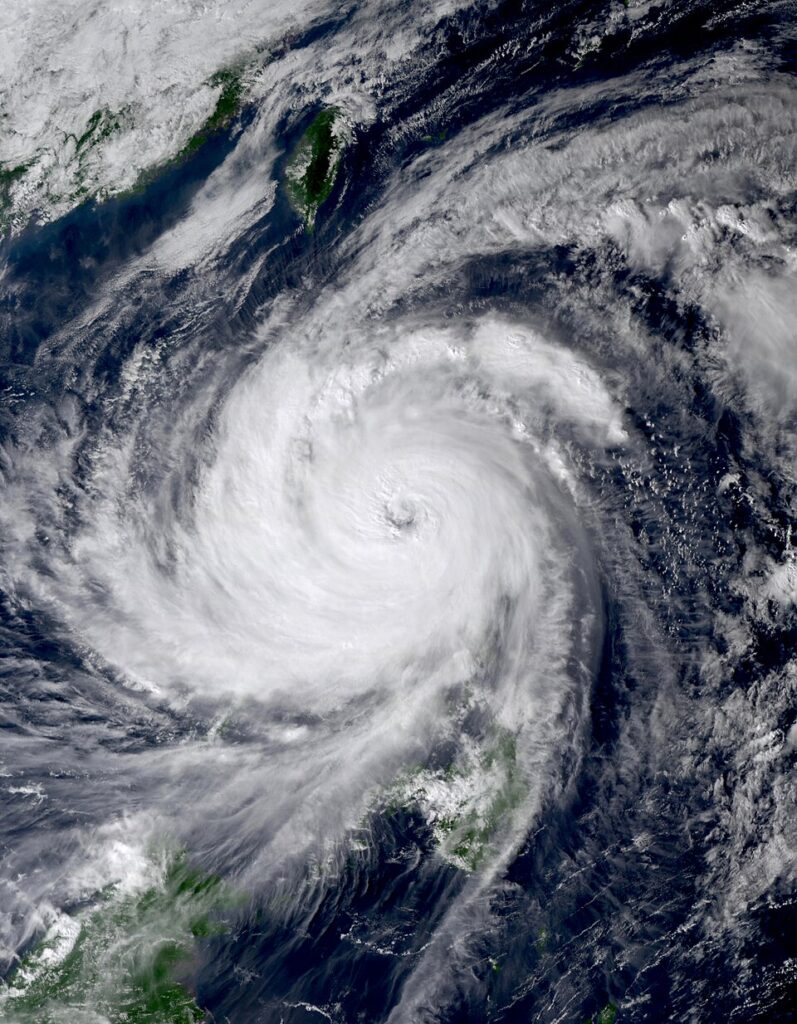
The eastern Pacific has just experienced a double blow that is difficult to absorb: typhoons Kalmaegi and Fung-Wong swept through the Philippines and Vietnam, leaving behind destruction, mass evacuations, and a human toll that continues to climb. As two studies from Imperial College London document, the events are distinct, but the framework is unique: climate change has acted as an accelerator, making storms more likely, more violent and far more costly in terms of lives and damage.
Typhoon Fung-Wong was found to be 17 per cent more likely than in a world unheated by humans. Not only that, in the Philippines, its amplified force increased recorded damage by 42 per cent. The future scenario is even more telling. In a +2 °C world, such an event would cause 63 per cent more damage than in a pre-industrial climate. Numbers that make it clear, in a very real way, what “living on a warmer planet” means.
Climate models
The story does not change with Typhoon Kalmaegi, which mowed down the Philippines and then the Vietnamese coast with a deadly combination of intense winds and torrential rains. Here climate change increased the probability of the event by 33 per cent and the level of damage in Vietnam by 9 per cent. Again, climate models make a disturbing projection: with a +2 °C world, the damage from a similar typhoon would increase by 26 per cent. These are not technical details: it’s the difference between an infrastructure that holds up and one that collapses, between a neighbourhood that floods and one that holds out, between an entire community that can restart and one that is wiped out.
The physical dynamics are simple, and it is what scientists have been repeating for years: a warmer ocean provides more energy to tropical cyclones, fuelling stronger winds; a warmer atmosphere holds more water vapour, preparing the ground for sudden and devastating rainfall. When two storms arrive in sequence, as in this case, saturated soils and fragile infrastructure further multiply the impact. It is no coincidence that more than a million people in the Philippines were forced from their homes within days.
A story that concerns us
These episodes, whilst geographically distant from Italy, tell a story that affects us directly. They tell that extreme events are already changing frequency and intensity, and that every tenth of a degree counts. They say that global supply chains, on which we depend for energy, technology, food and raw materials, may be compromised by an increasingly unstable climate. And they say adaptation is an administrative, economic and civic urgency.
Of course, the numbers should be taken with caution: the percentages are modelling estimates and every attribution study has margins of uncertainty. But the direction is clear and the overall picture is clear: climate change makes extreme events more likely and worse. Substantially so.
Kalmaegi and Fung-Wong are not an exception: they are a preview. If the world takes the +2 °C path and beyond, the numbers that seem impressive to us today will become ordinary. The choice before us is whether we want to limit ourselves to chasing emergencies or reduce the force of the disaster that is coming our way.