When it comes to climate crisis, animals almost always appear as fragile symbols of a shrinking world. Yet in the physical and biological mechanisms that regulate the atmosphere, soils, and oceans, many species perform functions that directly affect the carbon balance and stability of territories. This is not a consolatory narrative: it is applied ecology.
According to the most recent scientific literature, the presence or absence of certain species alters the ability of ecosystems to absorb CO₂, retain water, and resist fires and floods. Measurable processes, with large-scale cumulative effects.
More efficient forests thanks to large mammals
As Euronews reports, in the rainforests of central Africa, elephants act as structural regulators. By felling thin trees and opening up gaps in the vegetation, they reduce competition and encourage the growth of larger specimens with high-density wood. A study published in Nature (2019) showed that this rebalancing increases the share of biomass capable of storing carbon over the long term.
Estimates released by WWF indicate that a single forest elephant can significantly increase CO₂ sequestration capacity over large areas, with an impact comparable to the annual removal of emissions from thousands of vehicles.
Predators also contribute indirectly. Forests where tigers are permanently present can accumulate up to 12 percent more carbon per hectare. By controlling deer and wild boar, big cats limit overgrazing and allow forest regeneration to continue.
The soil that breathes: the work of diggers
In Australia, small burrowing mammals such as bettongs and echidnas continuously stir up the soil. The digging activity incorporates organic matter into the soil, improves fertility and increases moisture-holding capacity. In contexts marked by prolonged droughts and more frequent fires, more porous and nutrient-rich soils mean more resilient vegetation and greater accumulation of organic carbon.
The loss of these species not only results in damage to biodiversity: it alters fundamental soil processes.
Nutrients that come from the sky
The contribution of fauna does not stop at land. A 2024 study in Nature analyzed coral reefs located near islands with high seabird colonies. Researchers recorded calcification rates up to 2.7 times higher than on reefs without this natural supply of nutrients.
The mechanism is straightforward: birds feed offshore and transfer nitrogen and phosphorus to land through guano, which rainfall conveys to coastal waters. In balanced amounts, these nutrients support coral growth and the construction of limestone skeletons, which are also critical for carbon storage.
Natural hydraulic engineering
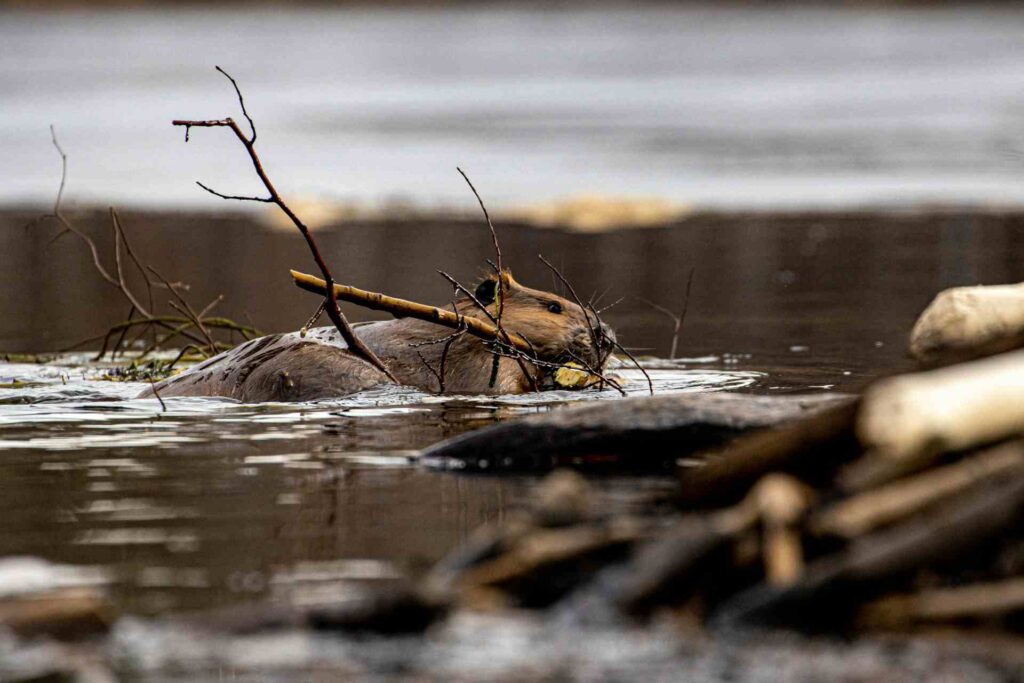
In a climate that retains about 7 percent more moisture per degree of warming, water management becomes central. Beaver-built dams slow runoff, expand wetlands and reduce flood intensity. In 2025, in the Czech Republic, one colony built a dam where a man-made structure was planned, avoiding significant public expense.
Areas influenced by dams also show less fire spread due to more saturated soils and less dry vegetation. This is a direct consequence of hydrological alteration that stabilizes the landscape.
Wildlife therefore does not offset industrial emissions or replace climate policies, but it does affect key variables in the Earth system. Protecting populations and habitats means keeping these biophysical processes active. To ignore them would be a technical before an environmental mistake.