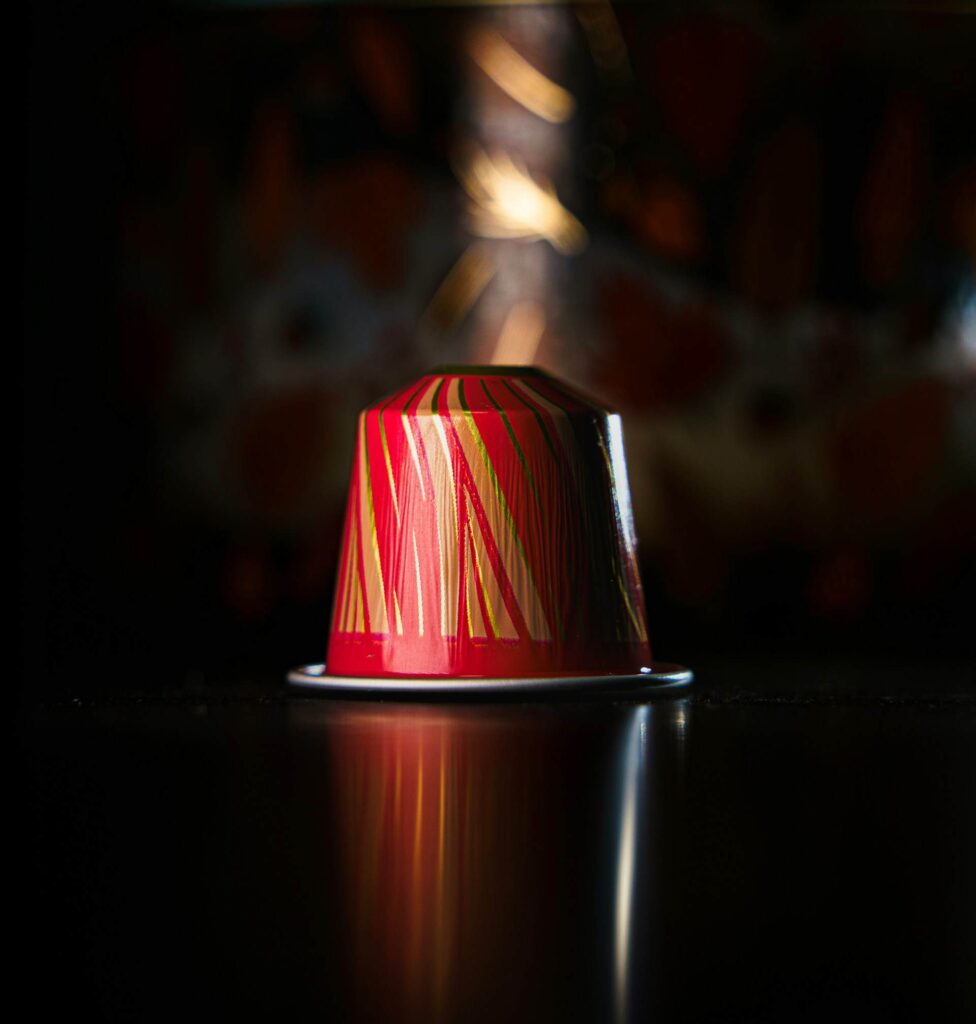
There is a gesture that marks the beginning of the day for millions of Italians every morning. A mechanical, almost unconscious movement: the insertion of the capsule into the coffee. A ritual accompanied by the sound of pressure and the aroma wafting out. And then the discarding: and it is that last instant, when the spent capsule falls into the container or is thrown away, the critical moment.
For a long time we have wondered where to throw that little colored wrapper, perhaps ending up choosing the wrong bag. But this confusion has its days numbered, because from August 2026 a new European Regulation will revolutionize our relationship with the coffee machine. From that date on, it will change the legal status of our single-servings, which-as stated in Article 3 of the Regulation-will be classified for all intents and purposes as “packaging.” Which means the end of the era of disposal in the undifferentiated black bag, with the future will be divided into two distinct paths: organic recovery or certified recycling.
The news comes from Brussels and is contained in the folds of the new Regulation (PPWR). The regulation, and in particular Article 8, imposes a breakthrough: soft, “permeable” pods (such as tea or coffee paper pods) will have to be compulsorily compostable and thrown in the wet. For hard (plastic or aluminum) capsules, the challenge is twofold: certified bioplastic versions will go into the organic, turning into fertilizer along with coffee grounds; aluminum or traditional plastic ones, on the other hand, will be allowed to remain on the market only if they prove to be effectively recyclable. No longer a generic waste, then, but a resource to be carefully separated: the EU’s goal is that by 2030 every single capsule will be recovered, either as compost for the earth or as metal and plastic for reuse, closing the door to landfill for good.
A drastic simplification for the consumer and a titanic challenge for manufacturers, who are now being called upon to reconvert production chains away from traditional plastics and non-separable aluminum in favor of biopolymers capable of rapid degradation in industrial composting plants.
To understand the magnitude of this revolution, it is necessary to look at what has happened to date. The “end-of-life” management of capsules has been, to put it mildly, a logistical and environmental failure. In fact, the vast majority of single-serve capsules in circulation, made of complex plastic or aluminum structures, have ended up inexorably in undifferentiated dry waste. The reason is technical: the capsule, once used, is a dirty polymeric waste that is difficult to recycle. Today, to dispose of them properly, a consumer, armed with patience, would have to open each individual capsule, empty it of the coffee to be thrown in the wet waste, wash the wrapper and throw it in the plastic or metals. In short, a task that requires time and dedication, and one that very few consumers are willing to perform every day, several times a day.
A vicious cycle to be broken
Against this backdrop, some major players in the industry have attempted to curb the problem by creating proprietary take-back circuits, inviting customers to bring their spent capsules back to special collection points or single-brand boutiques. But this system has intercepted only a tiny fraction of the total volume placed on the market, with billions of units still ending up in landfills or incinerators each year.
The result is there for all to see: mountains of small waste that will take centuries to degrade, contributing to microplastic pollution and the waste of valuable resources such as aluminum.
So, the environmental impact of capsules as we know it today is heavy and needs to be analyzed along the entire life cycle. Because it is not just about the final waste.
The production of virgin aluminum or plastic capsules requires significant energy expenditure and the extraction of non-renewable raw materials. Add to this the volume involved: the portioned coffee market has grown exponentially over the past decade, driven by convenience and the promise of espresso “just like at the bar.” In fact, according to the most recent estimates, more than 10 billion capsules are sold worldwide each year. And in our coffee-loving country, per capita consumption is among the highest in Europe. Which translates into tons of plastic and metal that, mixed with coffee grounds, create a mass of heavy, difficult-to-treat waste, increasing disposal costs for municipalities and the overall carbon footprint of our daily cup.
The European directive, therefore, steps in to break this vicious cycle by mandating ecodesign as a mandatory standard. Starting in August, the capsules produced and sold will have to degrade under industrial composting conditions without releasing harmful substances and allowing spent coffee, which is an excellent nitrogen-rich organic matrix, to become a resource instead of a burden. With the new rules, consumers will no longer have to separate anything because it all ends up in one bin, the organic bin.
But the transition will not be without obstacles, and the coffee industry is in turmoil. It is a matter of developing materials that will withstand high temperatures and water pressure during brewing, while ensuring aroma retention for months and subsequent biodegradability-a very complex technological challenge.
Compostable materials, in fact, must provide an oxygen barrier as effective as aluminum in order not to alter the taste of the product, a requirement that Italian consumers are unwilling to compromise on. Many companies are already moving, but time is strident and upgrading production lines will require substantial investment. And then there is the node of composting facilities: for the revolution to be real, organic waste treatment facilities will have to be able to properly handle these new materials and ensure that they actually decompose within the timeframes set by industrial cycles.
Despite the technical challenges, the signal sent from Europe is unequivocal: the future of packaging is circular. And the perfect cup of coffee will be one that leaves no trace except the pleasure of having drunk it.