The generation that grew up amid endless deadlines, notifications that reach us every minute and a future that often seems like a quiz show with no instructions has developed an unintentional talent: living with a level of stress that has become almost physiological. It is not just fatigue, but a kind of permanent bewilderment that leaves little room for play, digression, or slow questions.
The way out does not come from the increasingly noisy and competitive new entertainments: on the contrary, the compass points towards narrative universes that do exactly the opposite. Universes that slow down. Which breathe. That grant respite. Those signed by Studio Ghibli.
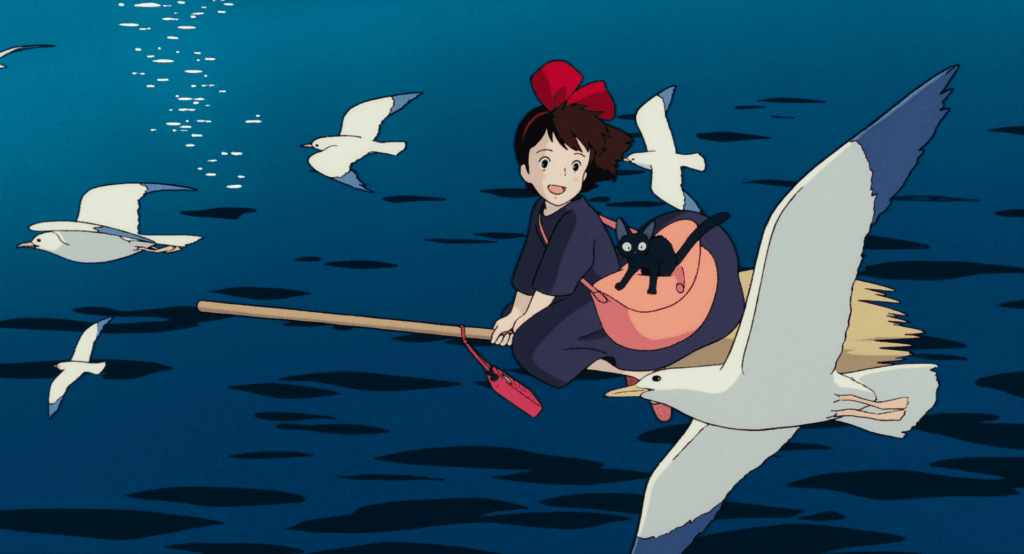
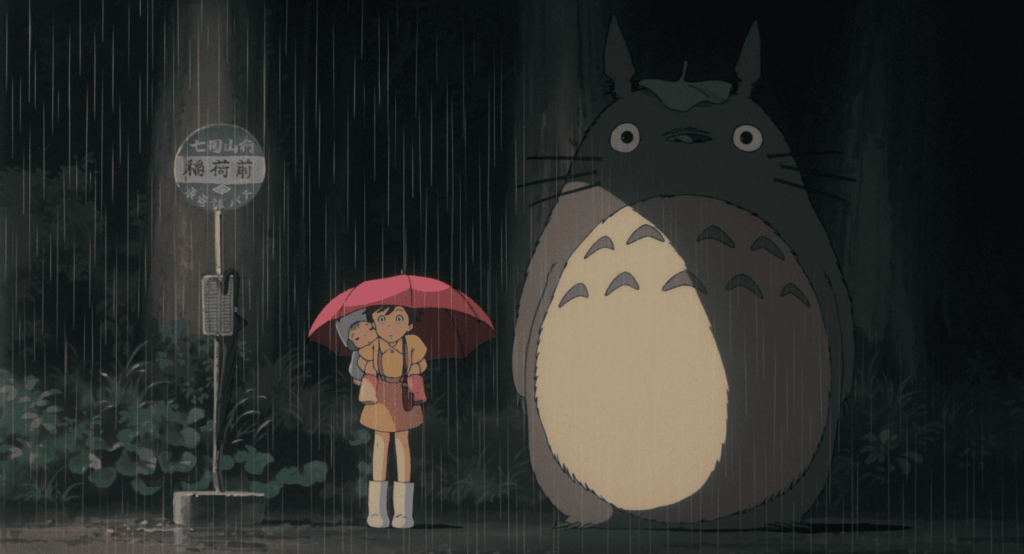
This is told by the results of research at Imperial College London, which tested more than five hundred postgraduate students, asking them to immerse themselves for a few minutes in films such as My Neighbour Totoro and Kiki’s Delivery Service, or in open-world gaming sessions. The result was surprising only to those who had never watched a child spellbound by a breath of wind: those who had watched the Ghibli excerpts showed a marked increase in calmness, curiosity, and a sense of satisfaction, as if those little snippets of the world had realigned something internal that had remained off-axis.
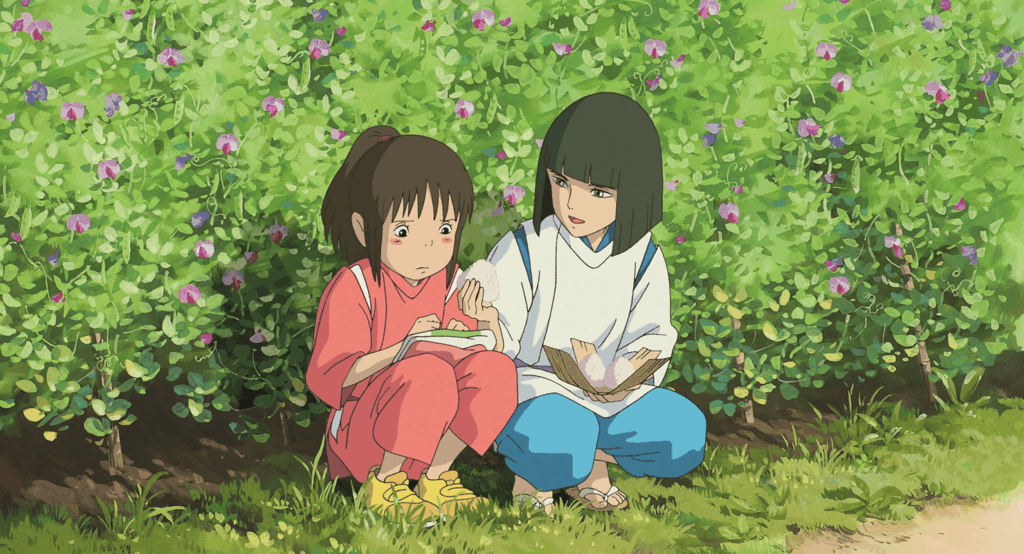
What works is not a sugary nostalgia, but a more vivid and concrete nostalgia, one that takes us back to a dimension where days have time for details: a meal prepared together, a path that leads nowhere, a sky that changes colour unhurriedly. Miyazaki’s (and associates’) stories seem to remind us that wonder is not a special event, but a habit that atrophies when life speeds up too much. The viewer, suddenly, finds himself inside scenarios in which nature is not background, but presence. A silent ally that stabilises, roots, comforts.
This serenity does not come from the absence of conflict. Ghibli works do not avoid emotional fatigue: the mother’s illness in Totoro, Kiki’s bewilderment and burnout, Chihiro’s inner journey in the train suspended over water. These are stories that admit fragility without making it spectacular. They offer the characters pauses, minimal gestures, glances that sediment the experience instead of overwhelming it. It is in those narrative gaps that the viewer breathes, finding a more human rhythm.
When this kind of gaze is coupled with open-world games like Breath of the Wild, which reward free exploration and more spontaneous creativity, the effect is amplified. Not because there is a profound message to decipher, but because both worlds—Ghibli’s poetic cinema and the playful freedom of digital landscapes—offer the same thing: the chance to wander. To try, to fail, to go back. Of rediscovering a sense of direction without the pretence of a finish line.
These narratives suggest that happiness looks more like a path than a goal. To a form of attention, care, even tenderness towards one’s inner time. There is no need for epic feats: all it takes is a forest where the wind blows, a broom that doesn’t fly very well, a little girl watching the world from a train window. The real adventure, perhaps, is finding a step that resembles our own.