Walking can become an environmental strategy. In Brazil, where biodiversity coexists with agricultural pressures and climate change, hiking trails are taking on an unexpected role as light infrastructure capable of strengthening nature conservation.
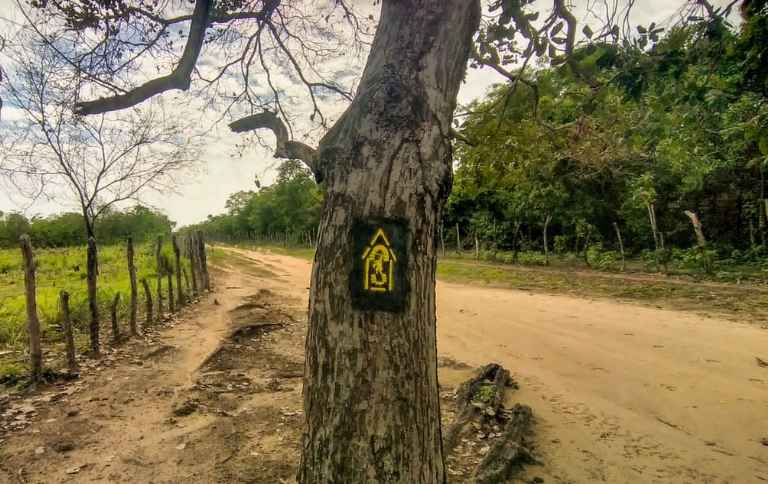
The project is relatively recent but growing rapidly. In recent years, the South American country has begun building a national network of long-distance trails with standardized signage-black footprints on a yellow background-with the goal of making protected areas accessible and turning visitors into allies of conservation. According to the initiative’s promoters, the principle is: you protect what you know best.
The green corridor of the Caminhos da Ibiapaba
One of the symbols of this strategy is the Caminhos da Ibiapaba, 186 kilometers of trail connecting two national parks in the northeast of the country. The trail crosses three very different ecosystems: fragments of Atlantic forest, the semi-arid Caatinga, and the Cerrado, one of the most biodiverse savannas in the world.
The trail partly traces ancient 19th-century trade routes and now accompanies hikers between caves, plateaus and rural villages. Along some sections, forest areas are undergoing ecological restoration, and the controlled passage of visitors helps make these interventions visible.
The idea behind the trekking network is also ecological in the strictest sense: linking protected areas together can create green corridors useful for wildlife, facilitating the movement of species and reducing the risk of genetic isolation.
Slow tourism, local economy
But the project is not just about biodiversity. In many rural areas, trekking is a possible economic alternative to small-scale intensive agriculture, which often involves deforestation or the use of fire to clear new land.
Small businesses are springing up along the trails: family guesthouses, rest stops, guide services. Local communities and hiking associations contribute to trail maintenance and signage, in a process that grows from the bottom up.
The result is a slow and widespread tourism, very different from the large flows of the most famous destinations. And above all, capable of enhancing elements that are often ignored: rock carvings, carnauba palms, rural traditions and little-known landscapes.
A global movement
Brazil is not the only country to focus on trails as a lever of sustainable development. In recent years, similar projects have sprung up in different parts of the world, long hiking routes that cross entire regions and connect parks, villages and cultural sites.
The logic is the same: use the path as a light infrastructure to support local economies while strengthening environmental protection.
Of course, trails are not a miracle solution. Without proper management, even nature tourism can generate impacts on ecosystems. But experts point out that leaving vast protected areas isolated and little visited can be even more risky because it reduces public attention to their conservation.
Walking to protect
In Brazil the network is still in its infancy: just over twenty official routes and about 7,000 kilometers of marked trails. However, thousands more are in the planning stage.
The bet is, first and foremost, cultural. If direct contact with landscapes creates a bond with territories, every step can turn into a small gesture of protection and become environmental policy.