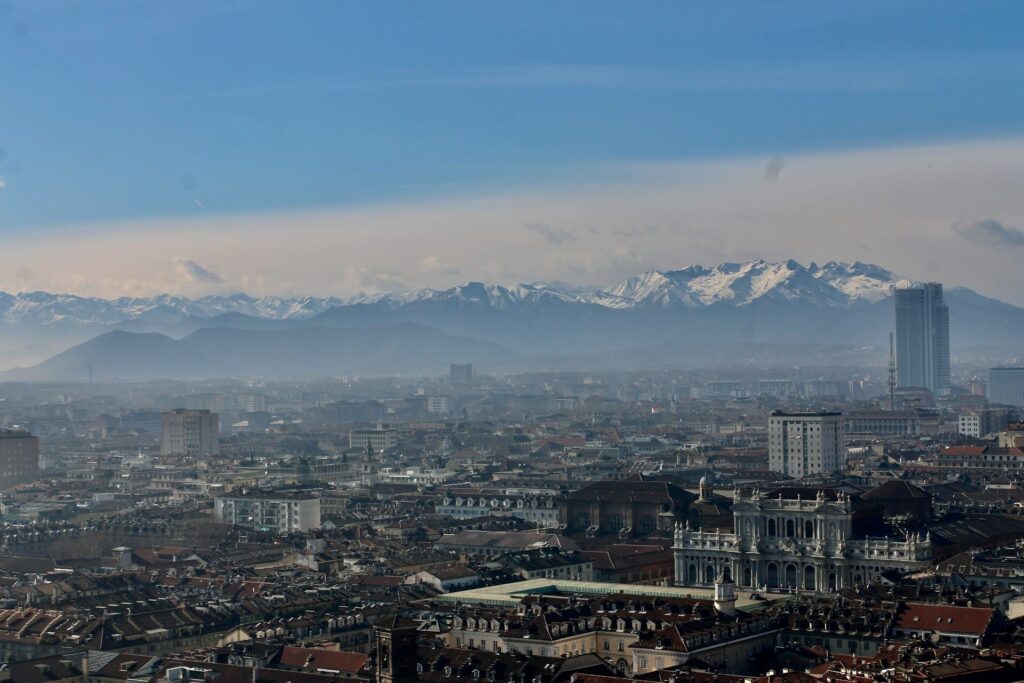
Turin is one of Italy’s most important industrial and cultural hubs and, at the same time, also one of the cities with the most polluted air. Concentrations of fine particulate matter (atmospheric particulate matter) PM10 and PM2.5 regularly exceed not only the limits suggested by the World Health Organization (WHO), but also the legal limits set by European regulations.
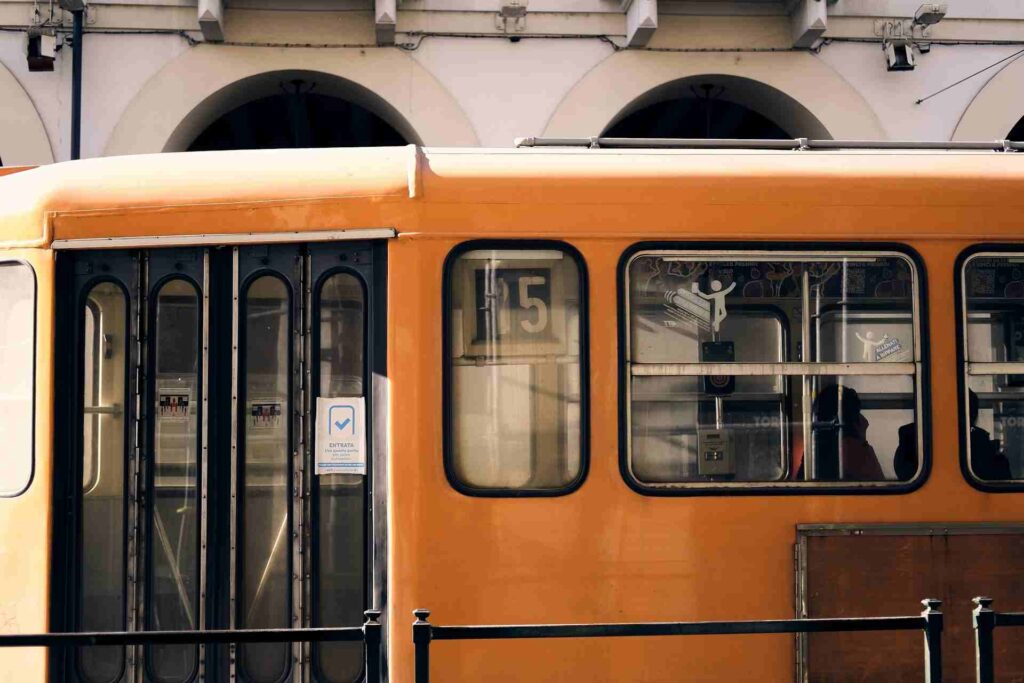
Suffocating the Piedmontese capital is mostly private vehicular traffic. Some data easily explain why: there are 69 cars per 100 inhabitants in the city, double the sustainability target set for 2030. Despite the fact that Turin has the second largest streetcar network in Italy, the car continues to dominate, so much so that the vehicle fleet has grown by 8 per cent in the last year.
A child in court against the state
This health emergency is now at the centre of an unprecedented legal battle. The parents of a six-year-old boy suffering from chronic bronchitis have decided to sue, seeking compensation from the Piedmont Region for “smog damage” suffered.
The Region’s reaction has turned the case into a national issue. Using the tool of the “third-party call,” the Region also called the Prime Minister’s Office and the Ministry of the Environment into question: arguing that responsibility for air quality cannot fall solely on local authorities, but must be shared by the highest levels of government.
Data exposes pollution
The legal case is supported by scientific data. The court-appointed technical adviser cross-referenced measurements from ARPA (the regional environmental protection agency) stations with mathematical models to calculate the child’s actual exposure. According to the results, concentrations of fine particulate matter in some areas of the city were up to three times higher than European limits and 100 times above WHO safety standards.
Vehicular traffic is listed as the main source of nitrogen oxides, pollutants that are highly harmful to respiratory health. The upcoming medico-legal consultation will be decisive: it will have to establish conclusively whether air pollution is the direct cause of the child’s illness.
The national repercussions
The Turin case is not just about a single compensation. If the judge were to recognise the causal link between smog and disease, a very important legal precedent would be set, paving the way for a hardly calculable number of similar cases throughout Italy.
In Turin, an estimated 900 deaths per year are directly attributable to fine particulate matter. The fact highlights a political and urban failure: choices about mobility, urban planning and the environment are interconnected, and pollution is the result of these choices.
London precedent
The Turin court case is part of an already open international debate. The most direct reference is the case of Ella Adoo-Kissi-Debrah in London: in 2020, the British courts ruled that air pollution “materially contributed to the death” of the nine-year-old girl, who was crushed by asthma in 2013. That was the first time a coroner officially recognised smog as a contributing factor in a death.