For years they have been ideological battlegrounds: for some a symbol of more livable cities, for others yet another obstacle to mobility. Today,“30 Zones” are becoming something different: a structural choice, adopted by dozens of Italian municipalities and increasingly widespread even in large cities.
The principle is simple: lower the speed limit to 30 km/h on secondary urban streets and in neighborhoods, leaving the 50 on main arterials. But behind this seemingly technical measure lies a paradigm shift: putting safety and the quality of urban space at the center.
The numbers that explain it all
The power of Zones 30 lies in the data. The difference between 30 and 50 km/h completely changes the stopping distance and, more importantly, the consequences of an impact. At 30 mph a car stops in just over a dozen meters; at 50 it takes more than twice that distance. Even more relevant is the risk to pedestrians: according to the World Health Organization, the probability of survival in the event of an investment remains very high at 30 km/h, while at 50 the risk of death increases dramatically. It is on this threshold that the difference between accident and tragedy is played out.
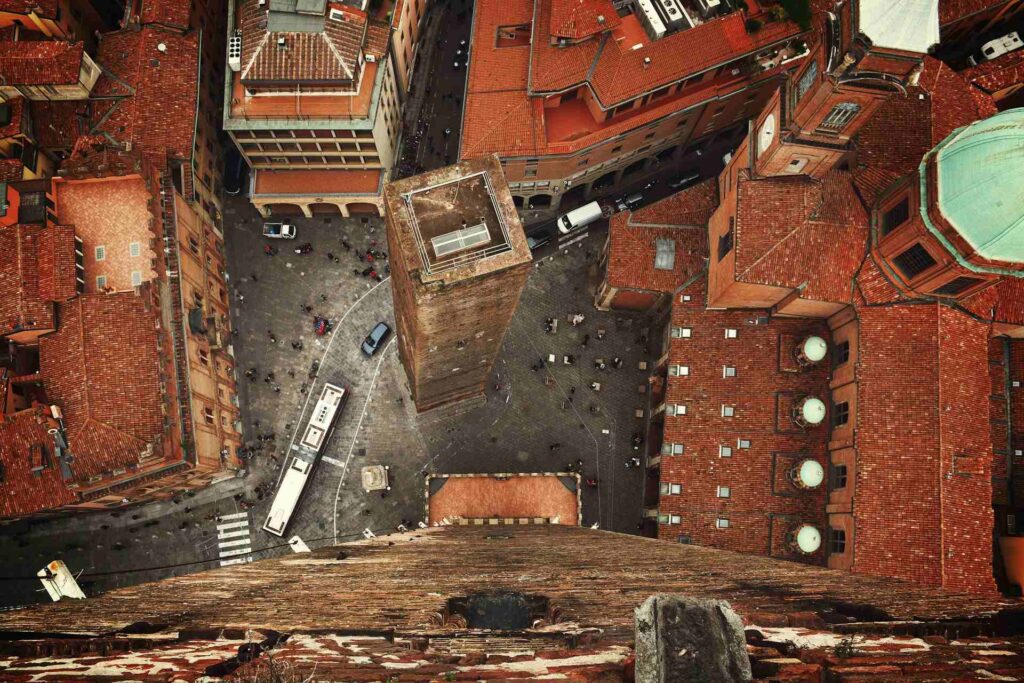
The most cited case is that of Bologna, the first major Italian city to extensively adopt the “City 30” model. The results have led the way: fewer accidents, fewer injuries and a significant drop in road fatalities in the first years of implementation.
Not surprisingly, other administrations are following the same path. From Milan to Naples, from Florence to Genoa, passing through medium and small towns, the Zone 30 map continues to expand. Rome, for now, is proceeding step by step: the limit is already in place in some areas of the historic center and the goal is to gradually extend it to hundreds of streets, especially in the most sensitive neighborhoods, near schools and residential areas.
Smoother traffic and less noise
One of the most frequently used arguments against Zones 30 is that they slow traffic and increase travel times. In reality, the experience of cities that have adopted them tells something different.At lower, more consistent speeds, traffic tends to be smoother, with less hard braking and acceleration. This not only improves safety, but can also reduce noise and, in some cases, emissions.
The point is that the city is not a highway: it is a shared space, where cars, bikes, pedestrians, public transport coexist. And where speed, above a certain threshold, becomes a risk factor.
The political knot: between consensus and resistance
Despite the results, the issue remains politically sensitive. Each new Zone 30 brings with it controversy, appeals, accusations of a “war on cars”.In Italy, the debate has also been heated at the national level, with regulatory interventions making it more complex for municipalities to introduce generalized limits. It is necessary to justify street by street, to justify choices, to build a solid technical framework.
It is the price of a transformation that touches ingrained habits because slowing down means changing the way people live and traverse the city.
An urban transformation, not just roads
The real point, in the end, is not speed per se. Zones 30 work when they become part of a larger project: school roads, raised crossings, pedestrian spaces, bike lanes. It’s not just about avoiding accidents, it’s about giving back public space. Less speed means more opportunities to use the street: to walk, to stop, to meet.This is where the technical measure becomes urban choice.
Zones 30 are signaling a clear direction: in European cities, people are running less and living more.And while they may seem like a limitation at first, in the long run they prove to be a different form of freedom. Less speed, more safety. Less aggressive traffic, more shared space.