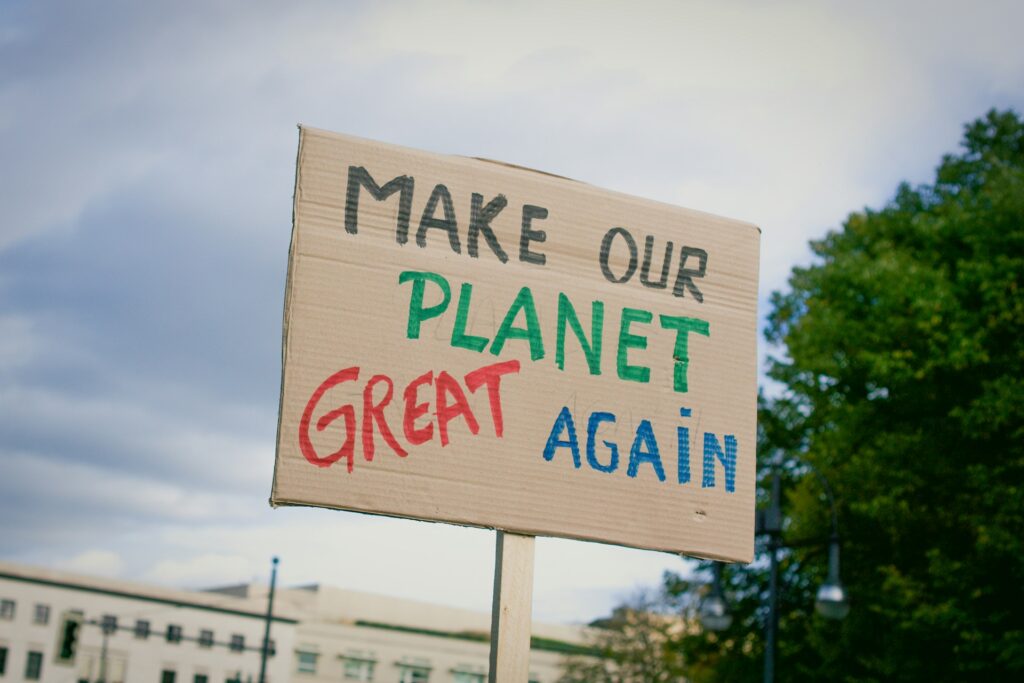
In Montana, the heart of rural America and the scene of spectacular natural landscapes, a group of young people have decided to challenge former President Donald Trump in court. The charge is heavy: his energy policy, centred on reviving fossil fuels and slowing renewable energy, would jeopardise the future of the planet and violate fundamental rights guaranteed by the U.S. Constitution.
The lawsuit, brought by the organisation Our Children’s Trust and led by 19-year-old Eva Lighthiser, is based on the Fifth Amendment, which prevents the state from depriving citizens of their lives, liberty and happiness without due process of law. According to the plaintiffs, the Trump administration’s decisions—including declaring an energy emergency to encourage drilling and fossil fuel plants—run counter to these principles.
Changesin one’s own skin
Eva Lighthiser knows well the consequences of the climate crisis. Growing up in Livingston, a Montana town not far from Yellowstone Park, she has experienced the effects of climate change firsthand: increasingly frequent fires, devastating floods, and sudden evacuations. The young woman says she suffers from anxiety and depression because of the uncertainty shrouding her future. Like her, Joseph Lee, a student who grew up near a refinery in California, faced a youth marked by asthma and, after moving to North Carolina, floods.
Theirs is not an isolated case. In several U.S. states, similar initiatives have already led to significant results. In Montana, a judge in 2023 upheld an appeal by a group of teens challenging the granting of building permits without environmental assessments. In Hawaii, meanwhile, another lawsuit helped accelerate transportation decarbonisation.
Hurricane Trump
But now the focus is on President Trump, who has returned to a highly regressive environmental policy. In addition to dismantling dozens of regulations during his new term, Trump signed a budget bill that drastically reduces tax credits for solar and wind projects. According to an analysis by S&P Global, these cuts threaten to stall thousands of projects under development, especially in states less prepared to embrace clean energy.
New deadlines imposed by the regulations—such as the 2027 deadline for the commissioning of plants—are considered unrealistic by industry players, who complain that it is impossible to meet the timetable because of structural delays in interconnecting to the electricity grid. Also complicating the picture are limits imposed on materials from countries such as China and Russia, which are critical to the solar energy supply chain.
Added to this is the EPA’s possible revocation of the legal opinion that has considered greenhouse gases harmful to human health since 2009. If confirmed, it would be a major turning point, because that assessment underlies much of the current environmental regulations in the United States.
From a legal perspective, the path of the case against Trump promises to be complex. The Supreme Court, with a conservative majority, could reject it, as Patrick Parenteau, a professor of environmental law, reminds us. However, according to attorney Mat Dos Santos, who represents the young plaintiffs, the Court has in the past shown attention to the “right to life” in other areas, such as abortion, and now could extend it to the right to live on a healthy planet.