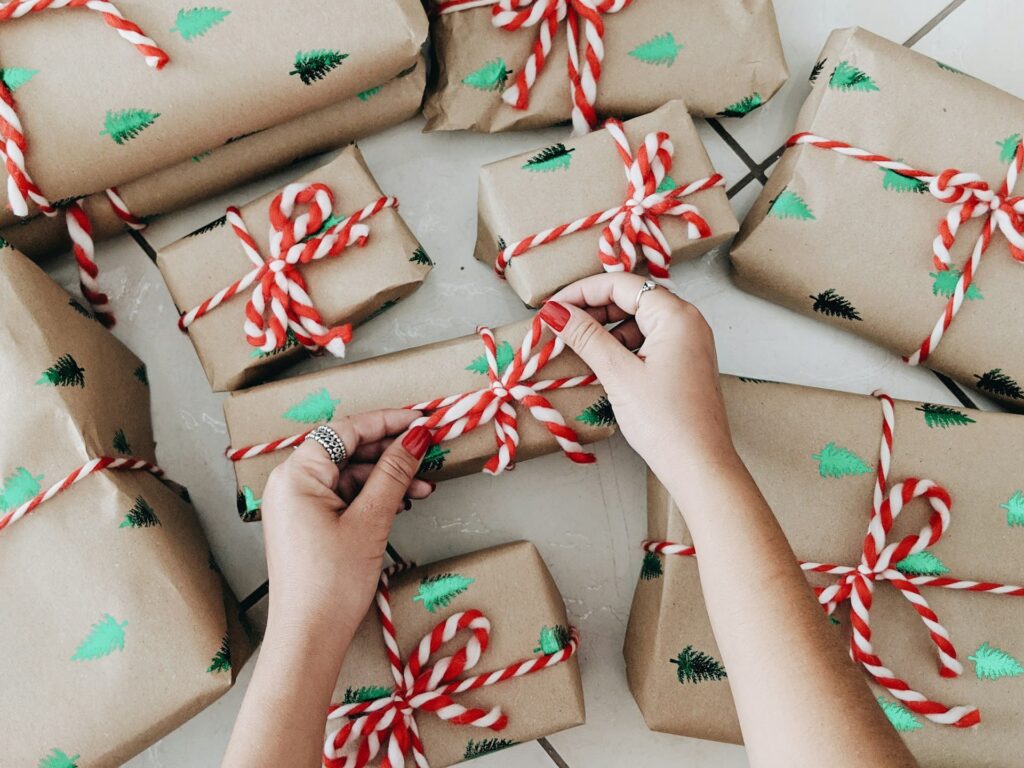
Christmas is finally approaching. And the race for the perfect gift: useful items, trendy gadgets and last-minute thoughts. But lo and behold, come January, punctually, the opposite problem arises again: a staggering amount of unused gifts, returned or even thrown away, with a huge and often invisible environmental impact. To change this course, there is something we can do: think about more sustainable, more ethical choices, focusing on quality rather than quantity.
Giving responsibly does not mean giving up the Christmas atmosphere. Rather, it means restoring value to the meaning of gift-giving: something that speaks of caring, not wasteful, not destined to become waste in a matter of weeks. And, with this in mind, there are three sustainable trends that are growing strongly: experiences, local crafts, and second hand items.
The intangible gift: experiences that last
Gifting an experience is a choice that completely eliminates the problem of packaging, transportation and obsolescence. Whether it is a concert, a play, a gourmet dinner, a wine tasting or a cooking class, the experience has minimal material impact, but a very high emotional impact. That’s because people remember what they experience, not what they own, and this is also demonstrated by several behavioural psychology researches, which point out that experiences generate more lasting happiness than physical objects.
This type of gift, then, has another advantage: it can be completely tailored, from digital vouchers without packaging to activities that can be purchased from local businesses that support the local economy.
Handicrafts: the beauty that sustains the territory
Still, in a consumerist world and age, dominated by industrial and low-cost production,local craftsmanship is a countercultural and valuable choice, a way to give quality, uniqueness and history. And each handmade product is never identical to another: it tells of the tradition, creativity and care of the person who made it. From ceramics to jewellery, prints to textiles, and even typical food products, buying from artisans or small workshops makes it possible to sustain microeconomies that are often fragile and to value slow, material- and environment-friendly processing.
Gifting handmade also means gifting durability: items that can accompany you for years, often repairable, always unique. In short, an investment of meaning as well as quality.
Vintage and reclaimed: when the circular economy is cool
The idea that a gift must necessarily be new is now outdated. The culture of vintage, second hand and reclaimed is now no longer associated only with saving money, but also with a conscious and contemporary style. Those who choose a “second life” item not only reduce the environmental impact associated with the production of a new item, but also actively participate in a circular consumption model.
Whether it’s used books in excellent condition, fashion items, electronic devices or toys, the secondhand market has been experiencing unprecedented growth for a few years now. The benefits? It avoids the production of new waste and gives value to items that still have a useful life. In addition, second-hand gifts tell stories: a book with a dedication found by chance, a rare vinyl, a 1970s jacket, a design object salvaged from a flea market. In short, they too have a soul.
Giving less but better?
Perhaps the real revolution of a sustainable Christmas lies in changing the mindset. It is not just a matter of replacing one item with a more environmentally friendly one, but revising the very idea of gift giving. Giving less, but with more meaning. Many times, in fact, the social obligation of gift-giving prompts us to buy something “just in case,” but the sustainable approach suggests something else: stopping, thinking, evaluating. What can really be useful? What can last over time? What creates a memory, a bond, an emotion?
So, choosing a sustainable gift is not giving up. It is a message, it is a way to say “I care,” both about the gift and the planet. It is an invitation to imagine a different Christmas, one that is slower, more authentic and more in tune with the challenges of our time.