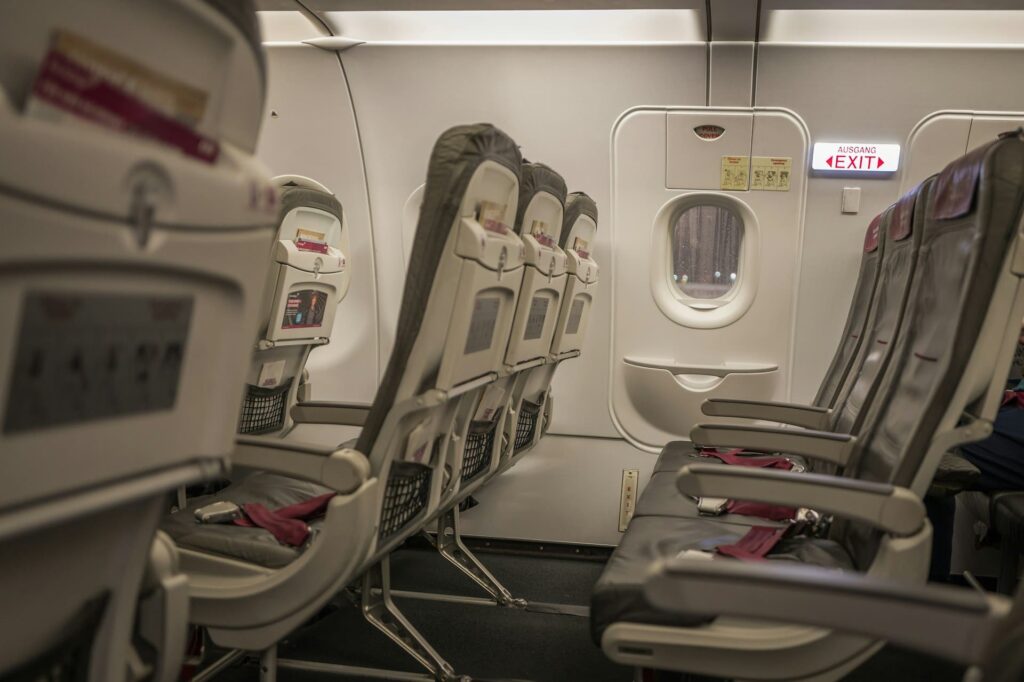
The empty middle seat next to one’s seat in plane is no longer just a dream of many (in fact, of everyone): some airlines are turning it into a paid service. According to a 2023 consumer survey, 42 percent of passengers would consider paying not to have a neighbor on the flight, and more than a third would be willing to do so even on domestic routes longer than three hours.
The empty seat becomes a choice, not an accident
Hungarian low-cost carrier Wizz Air has responded to the survey with its “Wizz Class,” an upgrade that allows passengers to reserve aisle or window seats and block out the middle B or E next to them. The service also includes more legroom, priority boarding, two carry-on bags, a snack and a soft drink, available on selected flights between Budapest, Bucharest, London, Rome and Warsaw.
From low cost to legacy companies
Air France has chosen a slightly different approach: its “Empty Seat – My Extra Space” option allows you to reserve up to three neighboring seats, which can be purchased at check-in and are subject to availability. Lufthansa, on the other hand, offers the “Free Neighbour Seat” program and the more exclusive “Sleepers Row,” which allows passengers to reserve an entire row of three or four seats on long-haul flights. The upgrade includes a thin mattress, blanket and Business-quality pillow, with fares ranging from 159 to 229 euros one way, bookable only at check-in or at the gate.
The concept of“free seat-for-all” is catching on outside Europe as well. Virgin Australia has introduced an auction system on domestic and international short-haul routes: economy passengers can bid from 30 Australian dollars (about 17 euros) to secure an empty seat next to them. The system does not guarantee the outcome, but refunds the bid if the seat is sold to someone else. Only reservations for up to two passengers and only one seat per bid are allowed; Economy X and Business classes are excluded.
Behind these initiatives is a clear strategy: to monetize a space previously perceived as standard. Privacy and comfort become tangible assets, and the availability of empty seats generates new market dynamics. Traditional and low-cost airlines experiment with different solutions, but the principle is common: what was previously included in the base fare can now be sold as a premium service, offering both a feeling of exclusivity and a new revenue stream.
Why more and more passengers are agreeing to pay
The phenomenon also highlights a cultural shift. It is no longer just the luxury of business passengers, but an option that many are willing to pay for, signaling how the perception of personal space and tranquility in flight is becoming a concrete value.
In this scenario, the empty seat next door is an indicator of how much the aviation market is seeking new forms of personalization and monetization. People flying today can decide between a full row, an upgrade, or an auction, and pay no longer just to get to their destination, but to avoid flying next to a stranger.