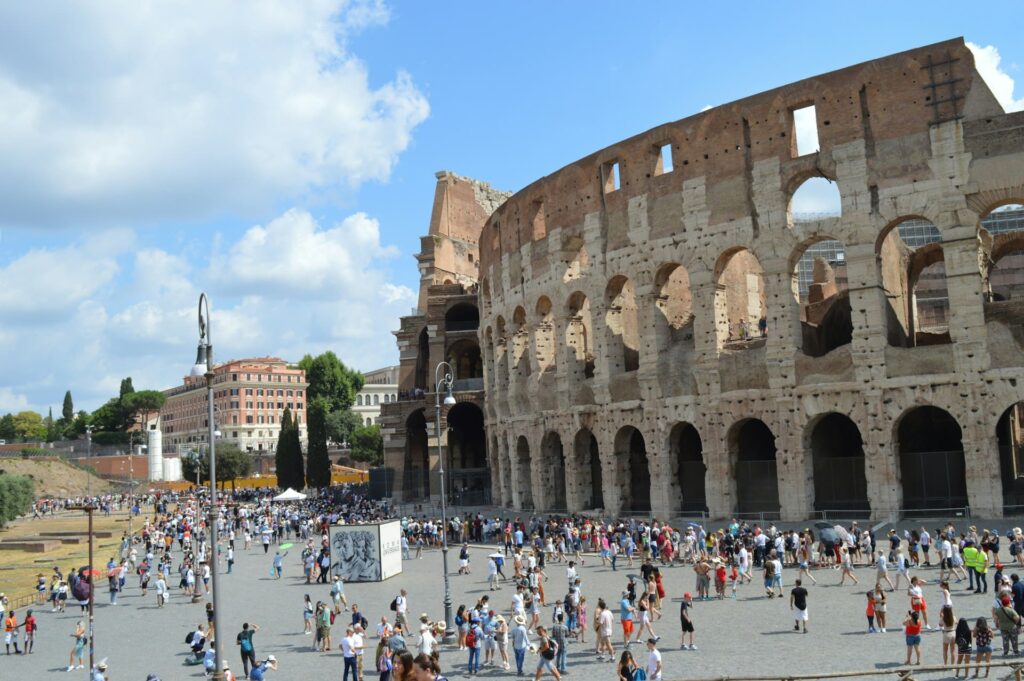
Nothing is destroyed, everything is transformed. This is the teaching handed down to us by Lavoisier in the late eighteenth century: and it is true for Rome as well. Indeed, the Eternal City is no longer the crystallized set of great beauty and “hit and run” tourism. The engine of change is moving along the lines of new mobility, among paths and bicycle paths that stitch together the suburbs with the center, and in archaeological parks where time seems to stand still.
The challenge that the Capitoline administration has taken up is ambitious: to govern the growth of the sector without suffering its side effects. And with a record 53 million overnight stays recorded by 2025, managing flows has become the top priority to ensure that hospitality does not turn into predatory land consumption. In a reinforcement of pressure that has led to a decrease in the number of inhabitants of the historic center.
On this point, Mariano Angelucci, chairman of the Tourism, Fashion and International Relations Commission, is clear: “The vision of this administration is one of balanced, widespread and responsible tourism that does not consume the city but enhances its identity.” So, the protection of heritage and the quality of life of residents are not obstacles, but the indispensable condition to make it lasting and of quality.
Soft mobility and unexpected routes
In this scenario, the concept of “environmental infrastructure takes on a concrete meaning: no longer just green spaces, but real soft mobility corridors that connect history to nature. The GRAB – Grande Raccordo Anulare delle Bici project is the clearest example of this: “This project has shown how urban greenery, bicycle and pedestrian paths and ecological connections can be transformed into authentic destinations, capable of narrating a more livable, resilient and contemporary Rome,” Angelucci continues.
In short, a greenbelt that is not just a bike path, but an authentic tourist destination that allows people to cross millennia of history at the stroke of a pedal. In other words, “an approach that encourages longer stays, strengthens the bond between visitors and the area, and helps build a greener, healthier and more environmentally attractive city as well.”
The real surprise of contemporary Rome lies off the traditional paths. Thanks to the Unexpected Itineraries of Rome, the city invites you to discover its lesser-known secrets. A different narrative, which shifts attention to neighborhoods, parks and sites that often remain outside the glossy guidebooks, but that hold the authentic soul of the city. “These itineraries have been appreciated not only by visitors, but also by Romans who have been able to rediscover places that were previously little known or difficult to use, benefiting from urban redevelopment processes and new opportunities for access and use of spaces,” Angelucci says. “This narrative encourages more environmentally friendly forms of visitation, incentivizing soft mobility and long time exploration, reducing the impact on the historic center and improving the quality of the tourist experience.”
Beyond the historic center
In this strategy of cultural decentralization, a crucial role is played by giants such as Ostia Antica and Gabii. Indeed, these archaeological sites represent an extraordinary historical stratification and offer a much more immersive and relaxed visiting experience than the historic center. And, as Angelucci reiterates, on this the Gualtieri administration has a clear and defined strategy in mind: “On Ostia Antica and Gabii a structured work is underway, carried out in synergy with cultural institutions, universities and territories to improve their accessibility, services, communication and connections with the rest of the city.”
In this sense, a historic turning point is represented by the recent opening of the Colosseo stop on the Metro C line: “This is a sustainable mobility infrastructure that strengthens the connection between the historic center and the eastern part of the city and makes it easier, more accessible and environmentally responsible to reach places of extraordinary cultural and archaeological value, such as the Gabii Archaeological Park,” adds the chairman of the Tourism, Fashion and International Relations Commission. “Investing in public transport, intermodality and accessibility means directing tourist flows in a more balanced way, reducing congestion and environmental impact in the historic center and promoting a more widespread enjoyment of heritage.” In short, a strategy that goes in the direction of quality, less concentrated and more sustainable tourism.
Flow orientation and smart tourism
When getting around becomes easy and environmentally friendly, tourists are more likely to explore, to stop, to experience the city at the pace of those who live there. So, improving the lives of residents becomes the secret to providing a better experience for those from outside as well: it is a virtuous circle that sees urban regeneration and sustainable innovation as drivers of new social cohesion.
The next challenges are already on the horizon, and they come through the strategic use of European funds and technological innovation. An orientation, this one, that Angelucci supports: “It is fundamental to promote a model of widespread, slow, low-impact tourism that enhances not only iconic places, but also neighborhoods, parks, itineraries and green spaces, creating authentic and environmentally friendly experiences.”
And again, “In the past four years, together with Mayor Gualtieri, Rome has already faced and won historic challenges in the tourism sector, investing public resources in urban regeneration and attracting significant private investment in a way that has not happened in more than two decades.” The result? Today Rome competes with the world’s great capitals.
It is a huge and complex task, but one that, as Angelucci reiterates, has made it possible to reduce the distances between the center and the more peripheral areas, fostering not only an increase in visitors, but also a more continuous and widespread use by citizens. In this wake, the capital is preparing to consolidate its reputation in sustainable tourism, focusing on digitization, citizen participation and the fight against illegality in the hospitality sector.
“The path traced in these years will have to continue in the coming years, with even more targeted investments in public transport, sustainable mobility and the enhancement of tourist sites,” Angelucci concludes. The Rome of the future, then, is a city that looks back to protect its history, but pedals swiftly toward a resilient and inclusive model of development.