Producing drinking water from the sea is not new. Doing it without occupying coastlines, consuming large amounts of energy and altering marine ecosystems is. That’s the bet of the world’s first underwater desalination plant -“Flocean One” off the coast of Mongstad, Norway-which is about to go into operation and promises to radically change the way we deal with the growing global water crisis.
The idea is counterintuitive: instead of building large desalinators on land, full of pumps, filters and energy-intensive infrastructure, the plant is placed on the seabed, hundreds of meters deep. Down there, the water pressure-which in traditional systems is achieved by consuming large amounts of electricity-is already naturally very high.
The principle of reverse osmosis
The principle remains that of reverse osmosis, the most popular technology for separating salt from water. But in this case, no powerful pumps are needed to “push” the water through the membranes: the sea itself does the heavy lifting. The result is a significant reduction in energy consumption, with estimates of up to a cut in half compared to conventional coastal plants.
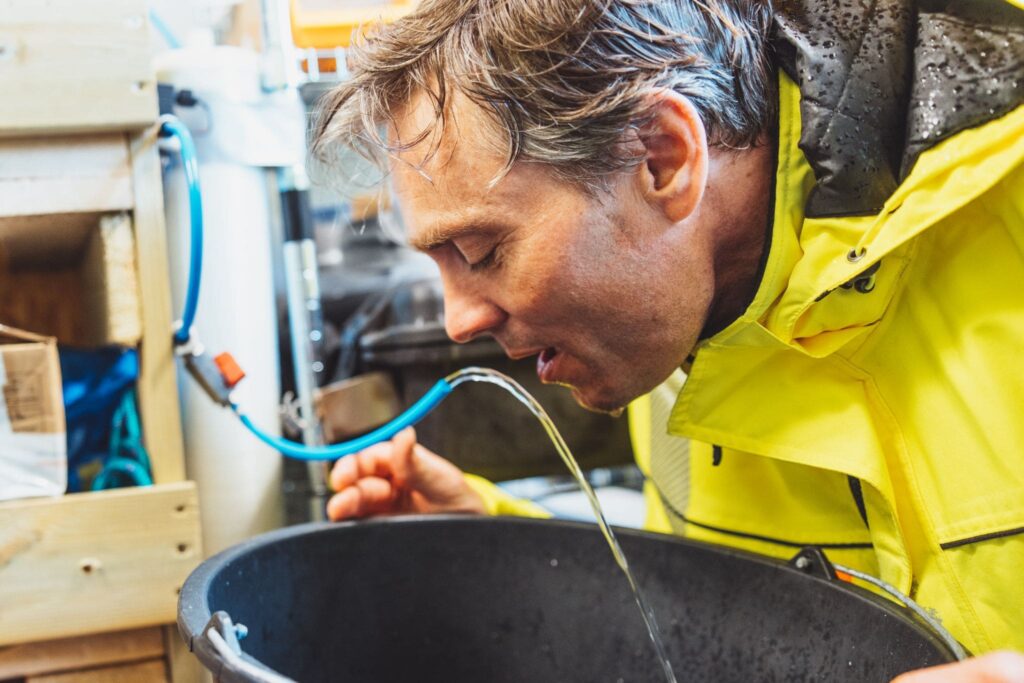
Then there is another advantage that is often overlooked. Water taken at depth is colder, cleaner, and much more stable than surface water. Less algae, fewer microorganisms, less sediment. This means less pretreatment, fewer chemicals, and longer membrane life, which is one of the biggest cost items in desalination.
Waste management also changes. In traditional desalinators, the concentrated brine is often poured near the coast, with potentially harmful effects on marine wildlife. In the case of the submarine plant, on the other hand, the release occurs at depth, where the huge volume of water promotes rapid dilution, reducing the impact on the most sensitive ecosystems.
The pilot plant
The first operational module, designed as a pilot plant but already on a commercial scale, is designed to produce about 1,000 cubic meters of drinking water per day. Not a gigantic amount, but enough to cover the needs of tens of thousands of people. The real strength of the project, however, is its modularity: multiple units can be installed and linked together, tailoring production to the needs of coastal communities, islands, industries or critical infrastructure.
In a world where demand for fresh water is growing faster than supply, and where droughts and water stress are becoming the norm even in areas hitherto considered safe, solutions like this inevitably attract attention. Desalination remains an expensive technology and not without its critical issues, but moving it under the sea could make it more sustainable, less invasive and more compatible with climate goals. Reducing waste, protecting aquifers, and better managing existing resources remains key-it is the priority. But if indeed the ocean can help us produce potable water using less energy and with fewer environmental impacts, it is worth exploring.