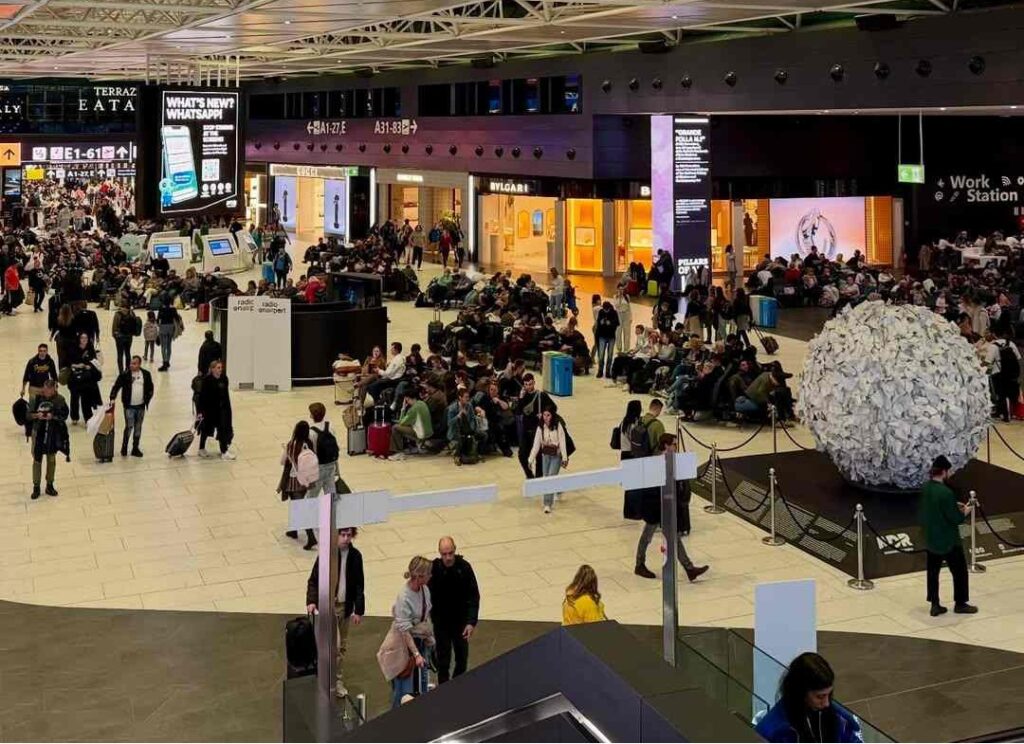
For the ninth consecutive year,Leonardo da Vinci Airport has won one of the most coveted awards on the international scene: European leadership for service quality. A result that photographs a profound transformation of the Roman airport, which over the years has become a benchmark for efficiency, comfort and organization.
The award, given by Airport Council International World as part of the Airport Service Quality Awards, measures the direct experience of passengers. It is therefore not an abstract or technical assessment, but the concrete judgment of those who pass through terminals, security checks, boarding areas and commercial services every day. Fiumicino once again emerges as a model, excelling among major European hubs and standing out for its welcome, cleanliness, waiting times and overall quality of the travel experience.
The passenger experience at the center
In recent years, Leonardo da Vinci has invested heavily in improving the customer experience. From the fluidity of the controls to the clarity of the signage, via the variety of services and attention to space, everything seems geared toward making the airport passage less stressful and more comfortable. This is no small detail at a time when air travel has returned to rapid growth, often putting pressure on infrastructure and staff.
The numbers speak of an airport that has surpassed 50 million annual passengers, with steadily increasing flows and a growing network of connections. In this context, maintaining high standards becomes a daily challenge. The European recognition (achieved with a score of 4.64 on a scale of up to 5) signals that Fiumicino, at least for now, is managing to hold together volume growth and perceived quality. It came out on top in a survey involving 124 major North American and European airports.
Not just Fiumicino: positive signs for Ciampino as well
The achievement is part of a broader picture regarding Rome’s airport system. Ciampino also wins recognition in its category for the third year in a row, demonstrating widespread improvement in the management of the Capital’s airports. Two airports different in size and function, but both committed to responding to a changing demand for mobility.
The award is not read as a point of arrival, but rather as a milestone. Now on the table is the development plan, which aims to further strengthen the airport’s ability to support air traffic growth, improve integration with the local area and consolidate Rome’s role as a strategic gateway to the Mediterranean.
The goal is clear: to increase competitiveness and attractiveness, without compromising environmental sustainability and service quality. A delicate game, intertwining economic, infrastructural and environmental needs. Indeed, expanding means managing new flows, new spaces and new impacts, in a balance that will necessarily have to take into account climate policies and pressure on the territory.
Rome and its international hub
The European record reinforces Fiumicino’s image as a key asset for the city and the country. A well-functioning airport that is well connected to the city is not just a transportation infrastructure: it is an economic multiplier, an international calling card, and a strategic node for tourism and investment.
The challenge now is not to sit on our laurels. Because in the world of global hubs, leadership is defended every day, amidst stiff competition, technological innovation and ever-higher expectations of travelers. Fiumicino, for the moment, is flying high. But the future course hinges on the ability to grow further while living up to the promises made to passengers.