Climate change threatens coral reefs, fish and entire food chains, but also an archive of our history: the archaeological remains stored on the seafloor.
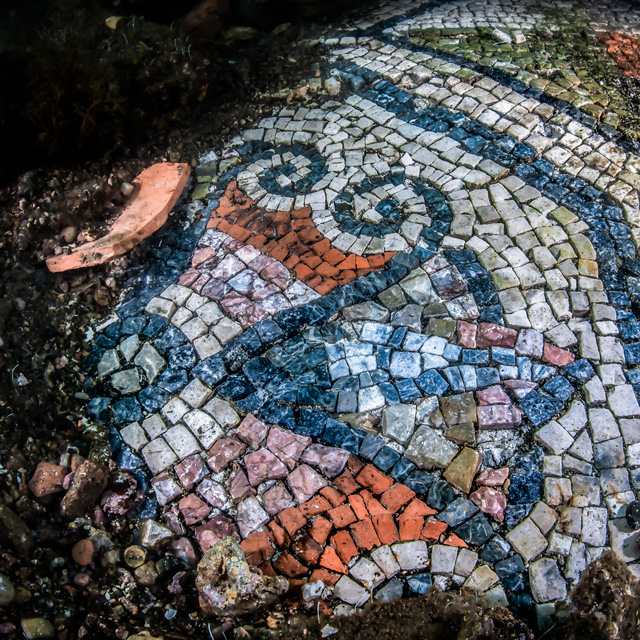
Ancient harbors, statues, mosaics and wrecks are increasingly exposed to a chemical process, the acidification of the oceans, which accelerates their degradation to the point where, in many cases, it is irreversible.
This is shown by international research coordinated by the University of Padua and published in Communications Earth & Environment, which for the first time has quantified the effects of falling pH on erosion of stone materials. “Ocean acidification represents a challenge for the protection of underwater cultural heritage,” the study says. And it’s not a generic warning: the data show that as emissions increase, rates of deterioration could grow exponentially in the coming decades.
The natural laboratory of Ischia
To understand what might happen, scientists chose a unique location: the waters around the island of Ischia, where volcanic vents naturally release carbon dioxide. Here the sea is more acidic and becomes a kind of “time machine,” capable of simulating future scenarios. Panels with samples of marble, limestone and other historic stones were immersed at different distances from the CO₂ vents, exposing them to different pH levels.
The result is telling: the materials richest in calcium carbonate, such as marble and limestone, are the most vulnerable. “Even seemingly minimal degradation can result in irreversible loss of information.”
When chemistry rewrites history
In the pre-industrial period the deterioration was slow, almost imperceptible. Today it is still contained, but simulations indicate that under current emission scenarios the situation could change rapidly. If pH continues to decline, erosion of stone artifacts could multiply four to sixfold by the end of the century.
The problem, therefore, is both quantitative and qualitative. The most exposed objects are those where historical value depends on details: mosaics, bas-reliefs, statues, inscriptions. It only takes a few decades to irreparably compromise surfaces that have endured for millennia.
Baia, Egnatia and the other sites at risk
Italy is one of the most involved countries. The Submerged Archaeological Park of Baia, in the Gulf of Naples, preserves marble floors, columns and statues from a sunken ancient Roman city. The Roman port of Egnatia, in Puglia, on the other hand, tells the story of Adriatic trade. Both are examples of a vast, fragile and difficult heritage to protect.
According to researchers, acidification not only slowly dissolves stone, but also changes the biological colonization of surfaces, altering the balance between microorganisms, algae, and encrustation. A change that can further accelerate degradation.