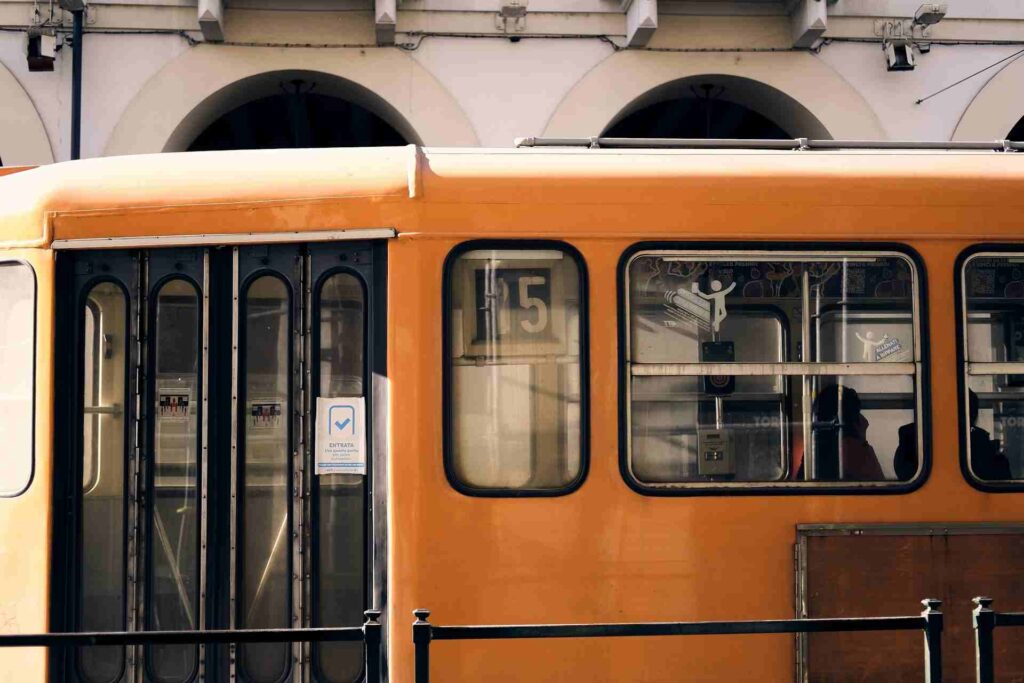
There is one form of poverty that rarely ends up at the center of public debate, but which affects the lives of millions of people every day: it is transport poverty. It affects not only those who cannot afford a car or a season ticket, but also those who live in territories where there are no or insufficient means. According to the first Green Paper on the phenomenon in Italy, presented by the Transport Poverty Lab and promoted by the Foundation for Sustainable Development, more than 7 million citizens are in this condition. A number that alone is enough to make it clear that this is not a marginal problem, but a structural issue.
Transport poverty arises from the intersection of two factors: economic hardship and lack of services. In some cases they add up, creating the most critical situations: families with low incomes living in isolated areas where getting around is complicated and expensive.
The report estimates that about 1.2 million households are in precisely this dual condition: risk of poverty and high mobility expenses. But the problem is much broader. A total of 7.3 million people reside in areas with inadequate public transport offerings.
The territorial gap is stark. In some areas of the South, local transport availability falls below 200 seat-km per inhabitant, while in Milan it exceeds 16,000. Two different worlds within the same country.
Four Italies of Mobility
To better understand the phenomenon, the study identifies four profiles of citizens. There are the most vulnerable ones, where economic scarcity is compounded by the absence of alternatives. Then those who have sufficient resources but live in poorly connected territories, often forced to use their cars even when they do not want to. There are also opposite situations: people who live in well-served cities but are unable to take advantage of services for economic or physical reasons. And finally those who have both access and capacity: a minority, but also a role model.The point is that mobility is not just infrastructure or income: it is the interplay between the two.
The issue is intertwined with the ecological transition. European policies to reduce emissions, such as the extension of the carbon market to transport, risk weighing down the very people who are already most fragile. This is what is called “induced vulnerability.”
To avoid this effect, the European Union has provided for the Social Climate Fund, with about 85 billion euros between 2026 and 2032, of which about 9 billion are earmarked for Italy. Resources that should be used to make the transition socially sustainable as well, not just environmentally.
The levers to get out of the trap
The solutions identified by the report point in two directions: making low-emission vehicles more affordable and strengthening sustainable mobility services. It is not enough to incentivize the purchase of electric vehicles if there is a lack of alternatives to the private car.
Among the measures proposed are targeted incentives, social leasing formulas, subsidized season tickets and the development of shared mobility. But above all, a priority emerges: investing in public transport, especially in the areas most uncovered today.Because without adequate supply, even the best bonus risks going unused.
Transport poverty is not just a logistical problem. It means giving up job opportunities, educational pathways, health services. In other words, it means limiting basic rights.And this is where the issue becomes political, in the fullest sense of the word. It is not just about moving people, but about ensuring access, inclusion and equal opportunity. In a country aiming for ecological transition, ignoring this node would be a strategic mistake. Because without equity, even sustainability risks remaining an empty word.