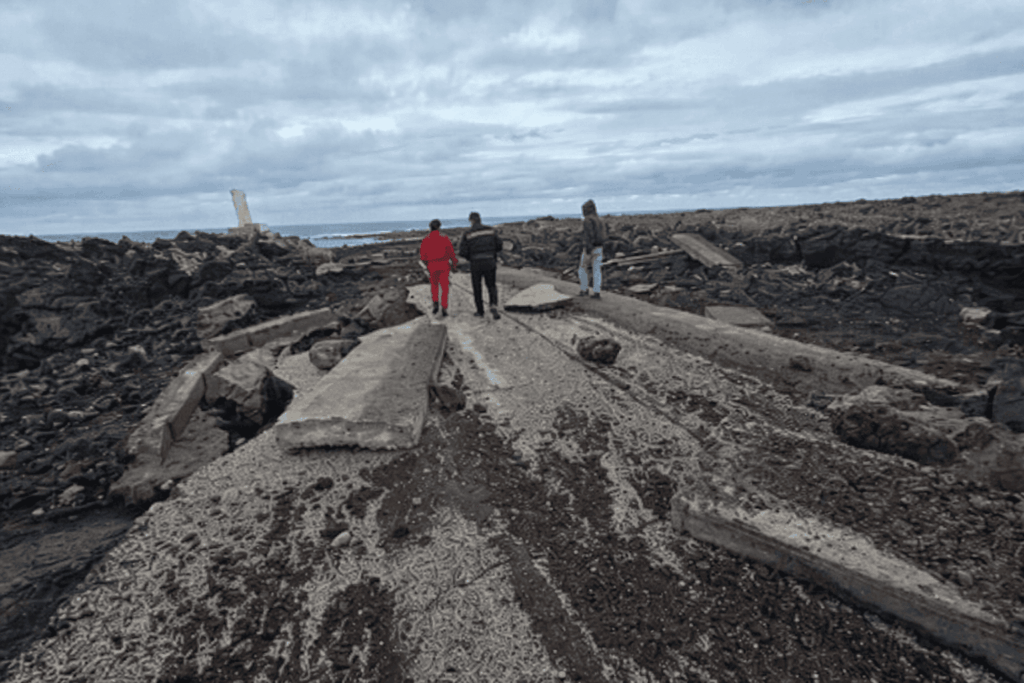
The proven evidence: climate change has aggravated the intensity of Cyclone Harry, and worsened the balance of damage. A new analysis by ClimaMeter (a project funded by the European Union and France’s CNRS, Centre National de la Recherche Scientifique) indicates that climate change has most likely made the winds associated with the storm more intense. Comparing atmospheric conditions similar to Harry’s with past decades, the researchers estimate average near-surface wind speeds 4-8 km/h higher than in the past, up to a 15 percent increase.
The interplay of natural variability alone is not sufficient to explain the observed strength: the imprint of anthropogenic warming emerges as a contributing factor to increased event severity, consistent with what the scientific literature describes for more intense cyclones in the basin. These changes favor more intense wind impacts, increased wave action, and increased moisture transport, which in turn increase the risk of combined hazards such as wind damage, coastal flooding, and flash flooding.
One billion in damage in Sicily
Between January 19 and 22, 2026, the central Mediterranean came to terms with Harry, a cyclone capable of combining record-breaking winds, torrential rains and destructive storm surges. Sicily, Sardinia, and Calabria experienced the most damage, with significant impacts also in Malta and parts of Tunisia. In several locations, gusts exceeded 100 km/h, daily rainfall exceeded 150 millimeters, and waves eroded stretches of coastline and challenged harbors and waterfronts. Despite the violence of the episode, there were no casualties: timely weather warnings and civil protection measures limited exposure. In Sicily, initial estimates speak of more than 1 billion euros in damage to crops, property and transportation networks.
The picture is solid but should be read with caution. Harry is among the rare events in historical archives, and the scarcity of analogues reduces the statistical robustness of the estimates. Therefore, ClimaMeter takes an approach for climate analogs: isolating related weather patterns and comparing them between the period 1950-1987 and the most recent decades, 1988 to 2023, using Copernicus ERA5 analysis. The exercise does not attribute every detail to a single cause, but measures how, given the same synoptic configuration, today’s climate tends to produce stronger cyclones than yesterday’s.
ClimaMeter’s analysis
On the ground, the tale of numbers becomes impact. Strong easterly winds channeled moisture from the Ionian Sea into eastern Sicily, triggering cloudbursts and flash flooding along the Ionian coast. Combined wind and wave action exacerbated erosion and put pressure on coastal infrastructure and backwaters. The storm disrupted road and rail links, closed airports, and caused power outages, turning large portions of islands and coastlines into emergency scenarios for hours. Some areas are now unrecognizable due to debris piles, landslides, and greenhouse damage.
The trend is not surprising to those who study the Mediterranean. The latest IPCC Report (AR6) indicates that as temperatures rise, more intense cyclones in the basin tend to produce stronger winds and more severe impacts. ClimaMeter’s analysis is in line with this picture: as synoptic conditions align, the current climate “pushes” the intensity bar a bit higher. It’s a change that also affects seasonality: winter events with characteristics that used to be observed mostly in warmer periods signal a risk that becomes less predictable and more composite, where extreme precipitation, wind, and high sea levels occur together.
The implications touch on risk management and planning. Coastal protection standards, strategic infrastructure design and contingency planning require updates in light of more intense winds and more aggressive swells. This applies from littoral barriers to electrical systems to major projects such as the hypothesized Straits link, which require climate-informed design criteria. More widespread early warnings and proven response procedures have already proven their effectiveness in limiting loss of life, but increased exposure in low-lying areas and urban development along coastlines amplify the damage bill.
As Davide Faranda, of CNRS, explains, “The scale of destruction caused by Cyclone Harry is extensive and affected coastal infrastructure, homes, and transportation systems. At the same time, the timely issuance of red weather warnings proved effective in saving lives despite the storm’s exceptional intensity. The challenge now goes beyond these warnings: to protect communities from the growing risks of future events and reduce the long-term costs of rebuilding, we must move away from fossil fuels. As Mediterranean cyclones intensify due to climate change, adaptation strategies that reduce both vulnerability and carbon emissions are essential to safeguard lives and livelihoods.”