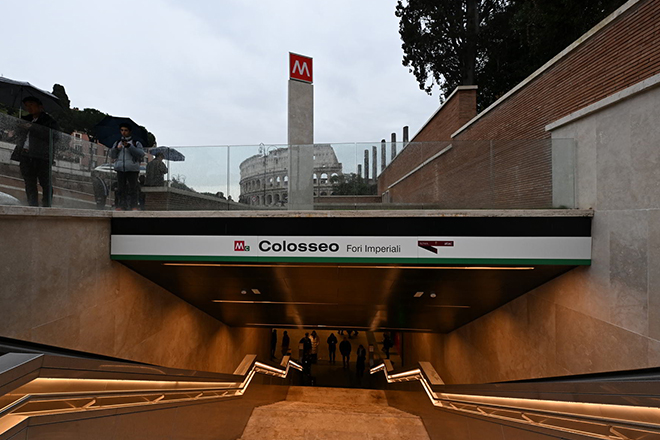
A month after the inauguration, the new Metro C stations have already surpassed the one million total attendance threshold. This is according to Atac data on the Colosseo-Fori Imperiali and Porta Metronia stops.
Validations at the entrance turnstiles totaled 427,748. Of these, 363,851 were concentrated at the Fori Imperiali/Colosseo station, while 63,897 were at Porta Metronia. Numbers already relevant, but partial. In fact, the count does not include the exits of those who got on at other stops on the line nor, above all, the presences of those who access the stations without getting off on the platforms, limiting themselves to visiting the spaces and the archaeological assets on display. Adding up these components, the actual number of people who passed through the two stations exceeds one million.
The most significant figure, however, concerns the composition of the user base. About 50 percent of the validations are attributable to subscribers, thus to residents of Rome and Lazio. Not only tourists, then, but citizens who choose to use – and visit – the subway in their free time. A trend confirmed by weekly trends: on weekends in January accesses double compared to weekdays, and during the holiday season stations become urban destinations in their own right.
The numbers of individual days accurately tell the story of this phenomenon. The peak was recorded on Sunday, December 28 at the Fori Imperiali/Colosseum station, with 22,565 validations, slightly higher than the approximately 21 thousand accesses on December 26 and 27. January 1 exceeded 17 thousand admissions, and the first two Sundays of January remained between 11 and 13 thousand. On all these days, more than half of the accesses were made by subscribers, a sign of intentional and not occasional use.
The comparison between the two stations is also indicative. At Porta Metronia there were 37,138 subscribers, while at Fori Imperiali/Colosseo they reached 199,721. The centrality of the archaeological context affects but does not alone explain the strong participation of residents, who seem to recognize in the new stops a quality public space, capable of connecting mobility, history and daily life.
Atac data thus return the image of a metro that reduces surface pressure, intercepts tourist flows and gives citizens one more reason to choose public transport. Without slogans or special effects, it is the numbers that indicate that a different way of traversing – and experiencing – the city is taking shape under Rome.