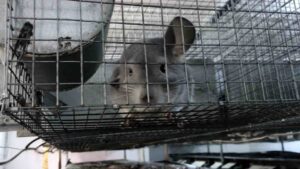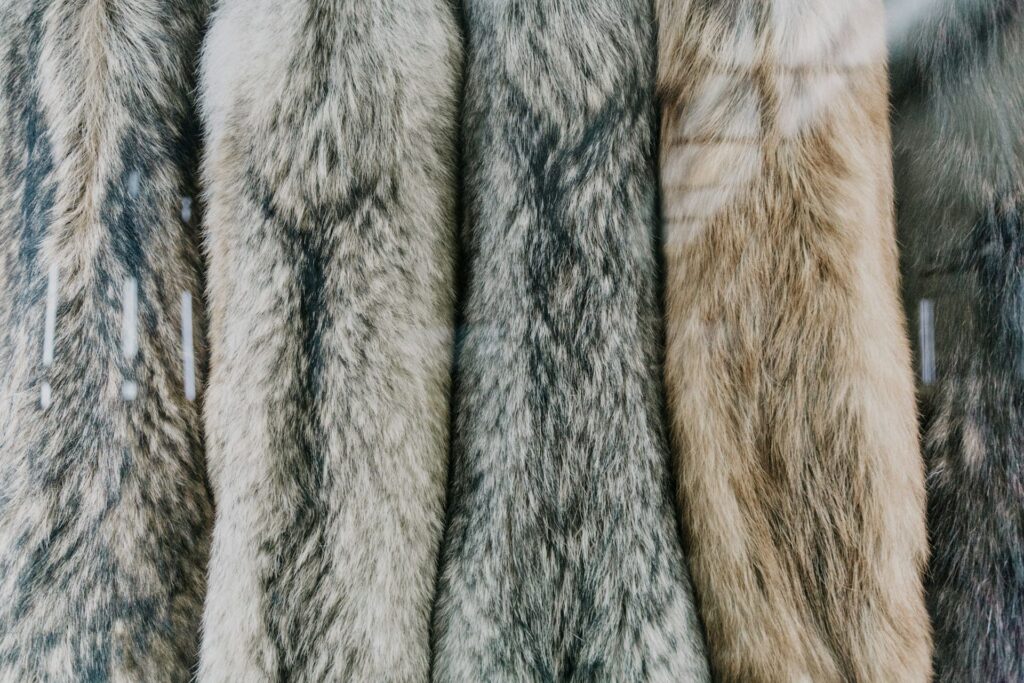
Poland ends the fur era. With the signature of President Karol Nawrocki, the country—for years a world giant in the industry—outlaws the raising of animals for fur production. Not a detail: we are talking about the second largest producer in the world after China and the largest in Europe. Every year about three million minks, foxes, raccoon dogs and chinchillas were bred and killed in the Polish countryside. Now the practice will have an expiration date.
The ban, approved by Parliament in recent weeks, marks a policy shift supported by an unusually cross-party front. It also comes on the heels of an EFSA pronouncement that put in black and white what animal welfare groups have been denouncing for years: suffering on fur farms is not an accident, it is structural. Tiny metal cages, chronic deprivation of natural behaviours, stress, mutilation. In short: a model incompatible with any standard of animal welfare.
Giving further impetus was the European Citizens’ Initiative“Fur Free Europe,” signed by 1.5 million people, forcing the EU Commission to take a position. The official response will come by March 2026, but the Polish vote sets an unwieldy precedent in the European discussion.
A shrinking industry
With this decision, Poland becomes the 18th state in the Union to impose a total ban. The front of the resisting countries—Finland, Denmark, Spain, Hungary, Greece—is getting thinner and thinner. The numbers, however, are not negligible: nearly 1,200 farms remain active in the EU, from which more than 6 million animals a year come.
The Polish government has opted for a gradual transition: the 200 active farms will have until January 2034 to close permanently. But economic accounts could hasten the end of the industry. Increasing compensation is provided for those who close in the first five years after the ban takes effect: the faster you exit, the more you are compensated.
Animals, environment and health: a system that no longer holds up
The battle of animal rights activists is not limited to cage cruelty. Fur farms have repeatedly been at the centre of health risks: hundreds of Covid-19 outbreaks in mink, cases of interspecies transmission, and highly pathogenic avian influenza infections. In Europe alone, viruses detected in mink, fox and raccoon dog farms have led to the culling of about half a million animals for public health reasons.
The environmental burden is equally disturbing. According to calculations by
The fact is that fashion itself has already moved on. Major fashion houses—from Gucci to Prada, from Valentino to Saint Laurent—have long since abandoned fur. More than 1,600 brands worldwide adopt fur-free policies, recognising that fur has become a difficult material to defend: ethically, environmentally and even commercially.
A European domino effect?
Humane World for Animals, which has been working in Poland for years with groups such as Otwarte Klatki and Viva!, considers Nawrocki’s signing a historic achievement and a potential turning point. Indeed, the Warsaw ban could affect the discussion in Brussels and give new impetus to the call for an EU-wide ban on the entire industry.
This is not just a victory for animals. It is yet another sign that practices born in the last century no longer hold up in the face of today’s scientific data, environmental costs and cultural sensitivity. Poland, paradoxically one of the countries that benefited most from the fur season, has become the country to consign it to history. And it won’t be the last.