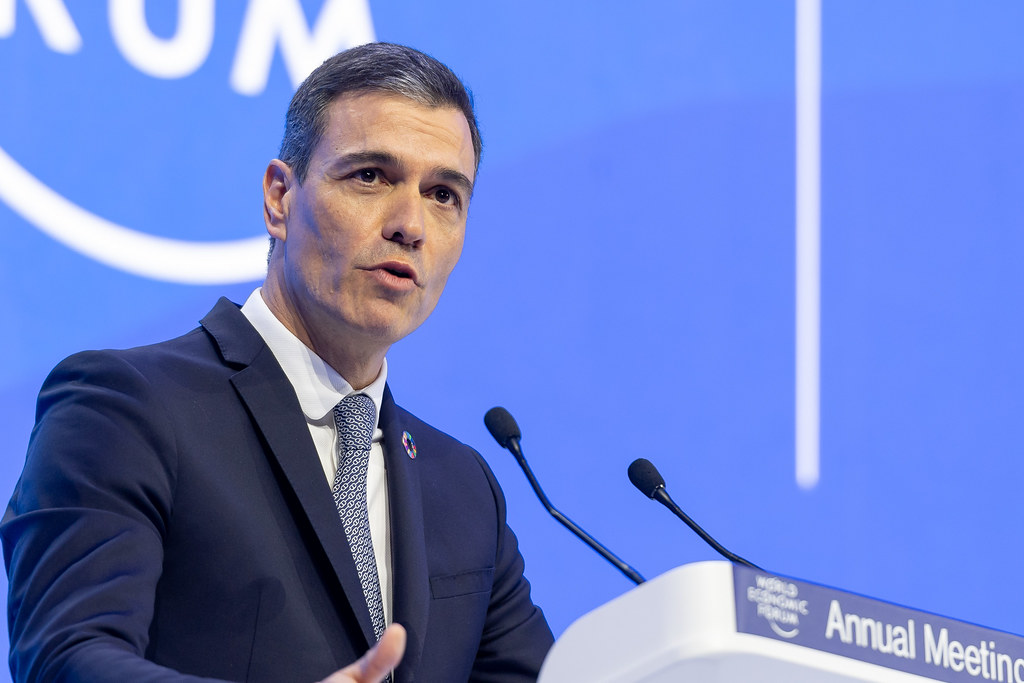
In recent days a video has gone viral in which Spanish Prime Minister Pedro Sánchez claims significantly lower energy prices than in Italy, explaining that it is the consequence of investments made in recent years on renewables and electrification. A statement that accompanies a new anti-crisis package designed to address the instability in energy markets also linked to international tensions.
Ocho años apostando por las renovables nos sitúan hoy a la vanguardia energética en Europa.
— Pedro Sánchez (@sanchezcastejon) March 19, 2026
No es ideología: es autonomía estratégica, es proteger hogares e industrias. Y es el camino que seguiremos defendiendo. pic.twitter.com/2MNM0myr7q
The measure approved by the Spanish government on March 20 puts together some 80 measures worth a total of 5 billion euros. The immediate goal is to mitigate the impact of rising energy prices, but the heart of the decree looks further afield. In fact, alongside support measures, the package strengthens policies already in place to reduce dependence on fossil fuels and make the system more stable over time. Thus, not just buffering the crisis, but harnessing it to accelerate the energy transition.
How. To avoid conflict and local opposition, the legislation introduces a requirement for projects to share economic benefits with affected communities. Not only compensation, but also direct participation: projects that create local jobs or involve citizens and energy communities will be able to have fast lanes in permitting. Collective self-consumption is extended to a 5-kilometer radius, effectively expanding the possibility of energy sharing among citizens, businesses, and local communities. Energy communities and hybrid models are also strengthened, in an increasingly distributed logic.
The Spanish strategy ensures concrete and stable benefits to those who make choices that give concrete and stable benefits to the community. So replacing gas boilers with heat pumps, facilitating installation even in condominiums with lower majorities than in the past. And reductions of up to 50 percent in property tax and up to 95 percent in construction taxes related to interventions for renewable or electrical systems. Deductions for energy upgrading are also extended, making renovations a structural lever to reduce consumption.
Not enough. There are also interventions to relieve traffic jams and smog. The package confirms incentives for electric mobility, with tax deductions of up to 3,000 euros for the purchase of vehicles and the installation of charging stations.
To support this transformation, the decree also intervenes in other aspects. Energy storage becomes a strategic priority, with hydropower pumping recognized as a public utility. At the same time, access to the electricity grid is made more efficient to avoid blockages and speculation: those who book capacity will have to pay, projects will have to meet stricter deadlines, and unused permits will automatically lapse. The goal is to accelerate investment in new facilities by clearing the field of speculative maneuvers.
Italy is on the opposite side of energy choices. It continues frantically to look for fossil fuels to replace fossil fuels. The push for renewables is totally insufficient. There is a periodic return to the tactical use of coal. Energy communities are being held back. The energy system remains heavily dependent on fossil fuels, which cover about three-quarters of the energy mix and are almost entirely imported. And the result is that we are the country of high bills, which penalize industries and households.
Yet the auctions for wind and PV show that renewable prices are very often the most competitive. How long will we continue to deny the evidence?