Rome adds a new chapter to its long relationship with the image thanks to the first public center entirely dedicated to photography. The ribbon-cutting ceremony is set for Jan. 29 at the former Testaccio Slaughterhouse, as part of one of the largest urban redevelopments underway in the capital.
The center occupies Hall 9D of the former industrial complex and is part of the larger design that will transform the area into the future City of the Arts. An operation that works by layers: reuse of the existing, opening of stable cultural functions, stitching up of public spaces.
Numbers, functions, architecture
The numbers tell the scale of the project. About 1,500 square meters in total, on two levels, financed by a 5 million euro contract managed by Roma Capitale and the Capitoline Superintendency. On the ground floor, more than 1,000 square meters house modular exhibition spaces, offices, a ticket office and a specialized library with 3,000 volumes. The second floor, 450 square meters, is designed as a flexible platform: a multipurpose hall of nearly 200 square meters and an exhibition gallery that dialogues with the original architecture.
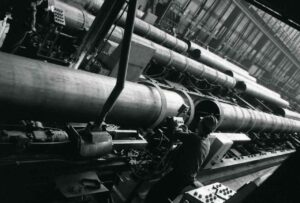
The restoration focused on the coexistence of the industrial past and contemporary devices. Cast iron, guidovie and nineteenth-century trusses remain legible and coexist with lighting and air conditioning systems designed to adapt to different display needs. A balance that makes the container an active part of the visual narrative.
The words of the administration
At the presentation on Capitol Hill, Mayor Roberto Gualtieri stressed the symbolic significance of the opening, “We are happy to announce the opening of Rome’s new photography center because we are talking about something that did not exist in the city,” recalling the deep connection between photography and Roman history, made up of archives, agencies and great authors.
Councillor for Culture Massimiliano Smeriglio also recalled the long gestation of the project, which began in 2012 and was unblocked thanks to a conservative restoration shared with the Superintendence: “An important conservative restoration was done that returned an extraordinary place.”
The inaugural exhibitions
The opening will be accompanied by an exhibition program that brings together international breath and Italian research. On the one hand Irving Penn, with a selection of masterpieces from the collection of the Maison Européenne de la Photographie in Paris, and on the other Silvia Camporesi, with a work that reflects on time and place.
Next door, the“Visual Field” space will explore contemporary languages, mixing archives, documentary images and experimentation, with a focus on the body and gesture as a territory of visual inquiry.
A piece of the future City of the Arts
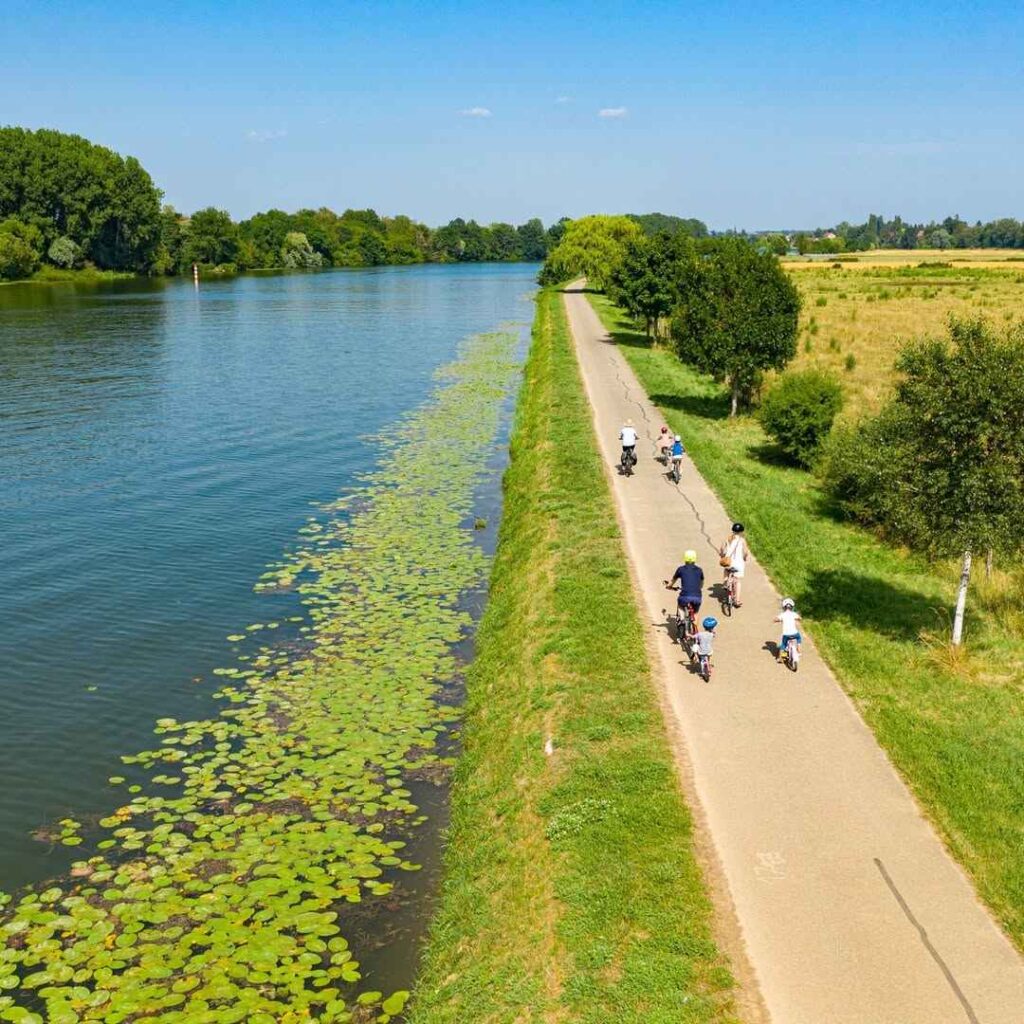
The new center is just one of the elements of the Slaughterhouse’s widespread construction site: 105,000 square meters in total, 15 active interventions, more than 90 million euros of investment between Pnrr and municipal funds. Libraries, university spaces, pavilions for events and a bike path that will connect the area to the Tiber cycleway will redesign the relationship between culture and the city.
In this context, photography finally finds a stable public home. Not as a decorative frame, but as a critical tool capable of observing, interpreting and returning the urban transformations taking place.