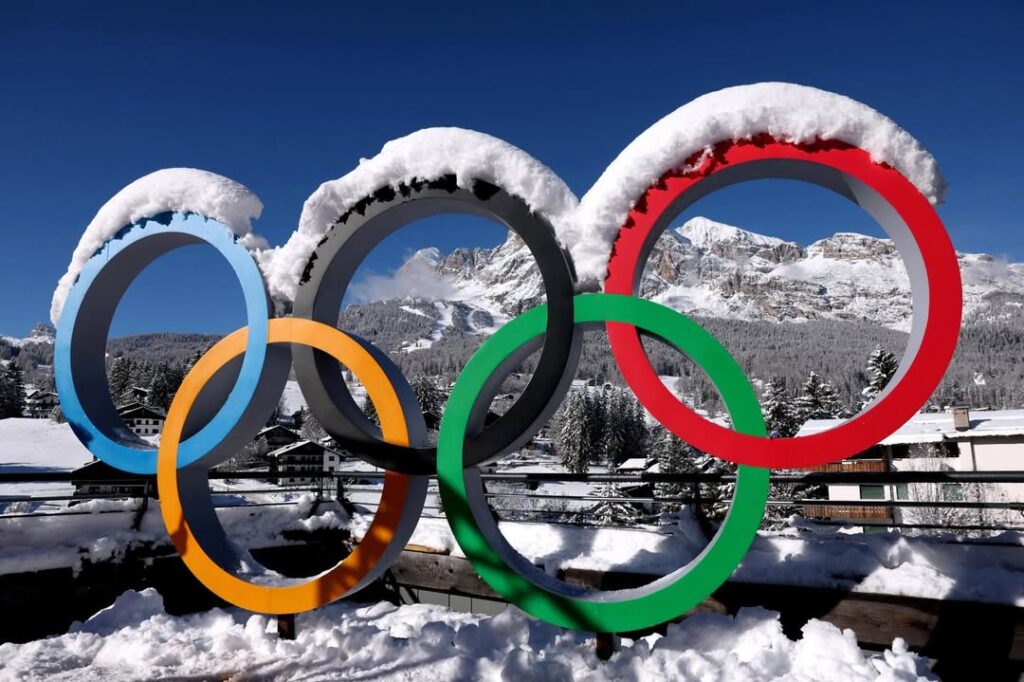
The XXV Olympic Winter Games will not remain locked in arenas or confined to high-altitude slopes. From Feb. 6 to 22, 2026, the edition that Italy is jointly assigning to Milan and Cortina d’Ampezzo-a management experiment never attempted before in Olympic history-will physically occupy the squares of the metropolis. The goal is to bring the event inside the city, making the landmarks of the Lombard capital accessible to everyone, from residents to tourists, through two main routes: the Olympic Boulevard and the Fan Village.
The city becomes a pathway
The Olympic Boulevard is a route through the city center starting from the Central Station. It is a route that touches Piazza Duomo and the Arch of Peace, reaching as far as the Olympic brazier. Along this axis will be official partner areas, National Olympic Committee houses and various installations, including 3D Olympic rings.
This official “off-site” of the Games allows people to experience the event without the cost of tickets to competitions in Rho, Assago or Valtellina. It is the choice to use the layout of Milan as an open map, where the public can move among the monuments finding entertainment points and activities related to the competitions, trying to integrate the event into the daily rhythm of the city instead of superimposing it as a foreign body.
Sports in Cannon Square
The center of gravity for free activities will move to Cannone Square, inside Sempione Park, where the Fan Village will rise. While “super packages” for VIP hospitality go up to nine thousand euros per couple for dinners and ceremonies, the village will be free access. It is scheduled to open on Feb. 6, with operations from 9:30 a.m. until 10 p.m.
In this area, the daily schedule will combine live streaming of competition viewing with hands-on workshops and meetings with athletes. Sports will be the main theme of the experience, with the intention of transforming the village into a place of active participation from morning to night. Not just a fan zone, then, but a space where winter disciplines are told and experienced in an urban context, just a few steps from Castello Sforzesco.
The geography of the third time
Milan Cortina 2026 marks the third return of the Winter Games to Italy, after Cortina 1956 and Turin 2006. The particularity of this edition lies in its territorial fragmentation: in addition to the two main cities, the races will involve Bormio, Livigno, Predazzo, Rasun-Anterselva and Tesero.
Cortina d’Ampezzo rejoins the Olympic circuit seventy years after its premiere, joining Sankt Moritz, Lake Placid and Innsbruck in the group of dual-assignment cities. Milan, on the other hand, will manage the complexities of a program that includes opening and closing ceremonies at different venues, an exception that had only occurred in Sarajevo in 1984.