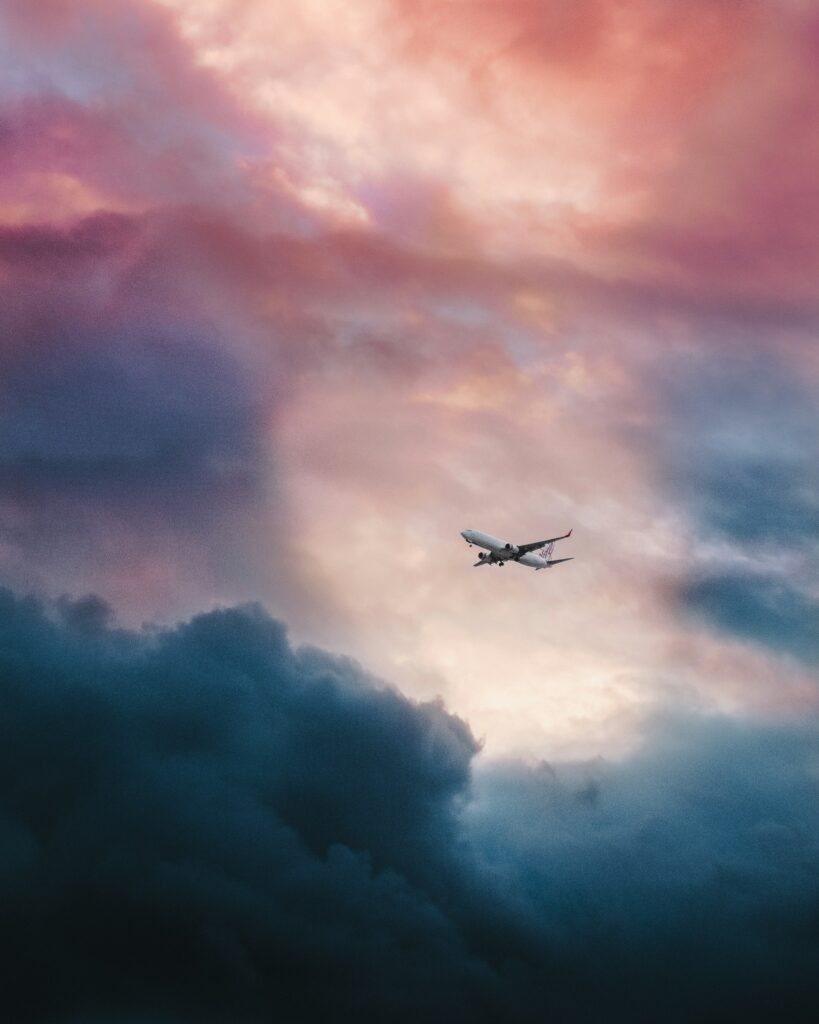
You used to buckle up almost only for takeoff and landing, the rest of the time sipping orange juice and reading, in a bubble of serenity. Today that bubble has cracked. The climate crisis isn’t just affecting cities, glaciers, and tropical forests: it’s shaking flights, too. Literally.
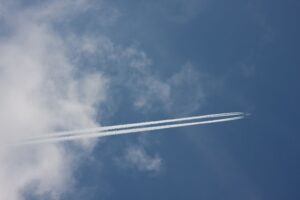
The atmosphere is warming, and so are the high-altitude winds. The jet stream, that sort of invisible highway that guides intercontinental flights, is no longer as linear and predictable as it once was. Its curves become sharper, its speed swings more abrupt. The result? The plane, even when the sky is clear, begins to dance.
Clear air turbulence—the kind that comes without clouds to signal danger—is becoming more frequent and more violent. Pilots fear them because they don’t show up on radar; passengers hate them because they spill drinks and stomachs. You don’t need lightning or thunderstorms. All it takes is an overheated, messy atmosphere to turn a routine flight into a roller-coaster ride.
A side effect
It is a little-told but increasingly documented side effect. Scholars at the University of Reading in the United Kingdom have calculated that severe turbulence over the North Atlantic has already increased by more than 50 per cent since the 1980s. And there’s no need to imagine the distant future: reports of diverted flights or injured passengers due to “crazy air” arrive every week. Meanwhile, global warming continues to push the atmosphere towards higher and higher energy levels: and more energy means more movement, more instability, more shaking.
So flying, a symbol of modernity and the freedom to move, is becoming one of the areas where climate change is being felt the most. Whilst on the ground there is talk of rising seas and heat waves, above our heads a battle is being fought between pilots and winds that can no longer be tamed. Crews must alter routes, fly at different altitudes, consume more fuel. And every extra kilogramme of fuel burned fuels, in turn, the climate crisis. A perfect vicious cycle at high altitude
The coffee that flies
Of course, this is not a disaster movie alert: flying remains statistically safe. But safety is also measured in the details, and a coffee cup flying into a passenger’s face is no longer an isolated incident. It is a sign of an atmospheric equilibrium that is cracking. And of a Planet that no longer just burns under our feet: it also shakes above our heads.
Those who want to look for a symbolic image of this phase might find it in the hand reaching out to the armrest when the plane jerks. It is the most human gesture there is: seeking stability. But stability and climate today no longer go together. And as long as global temperatures continue to rise, our flights will continue to dance to the beat imposed by an overheated atmosphere.