87% of Europeans believe that renewable energy technologies will have a positive effect on their lives in the next two decades. For nuclear power, the percentage drops to 56 percent. The data come from the Eurobarometer on Europeans’ Knowledge and Attitudes toward Science and Technology (Special Eurobarometer 557, published in February 2025). In the perception of the majority of Europeans,“renewable” and“nuclear” are two distinct categories. In the EU taxonomy for sustainable finance, which came into effect on January 1, 2023, both can qualify as “sustainable” investments.
The word “renewable” has an established technical meaning: a source of energy that naturally regenerates on a human scale. The sun, wind, water, and the earth’s heat fall under this definition. Coal and fossil gas do not, because their formation takes millions of years. Nuclear neither, because uranium is a finite resource mined from underground. So far the physics is clear. But in common parlance “renewable” and “sustainable” are often used synonymously: a fund investing in “sustainable energy” evokes wind turbines and solar panels, not gas-fired power plants. The European taxonomy for sustainable finance distinguishes between the two, but brings them together in the same regulatory instrument.
A disputed decision
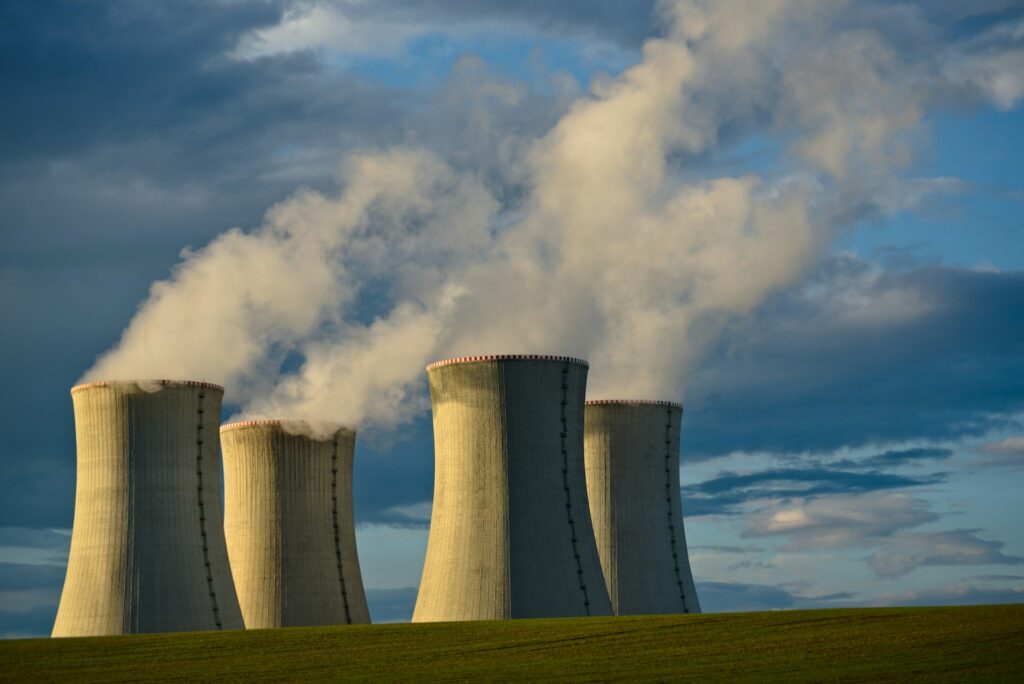
In February 2022, the European Commission adopted a delegated act complementary to the EU Sustainable Finance Taxonomy. The act included fossil gas and nuclear among the economic activities that can be classified as making a “substantial contribution” to climate change mitigation, provided they meet certain technical criteria. For gas, conditions include meeting specific emission thresholds and replacing more polluting coal-fired plants. For nuclear, the presence of plans for final waste storage and compliance with Euratom safety standards. The classification is not “renewable”-the regulation calls them “transition activities” under Article 10(2) of the Taxonomy Regulations. In practice, it means that an investment fund that claims to be “green” or “sustainable” can include gas-fired power plants and nuclear power plants in its portfolio.
The decision did not pass without opposition. The Platform on Sustainable Finance, the technical advisory body appointed by the Commission itself to provide independent advice on the taxonomy, had spoken out against inclusion, recommending that gas and nuclear be ranked at an intermediate level of environmental performance, not the highest level. The European Parliament voted in July 2022: 278 MEPs in favor of blocking the act, 328 against, 33 abstained. An absolute majority of 353 votes was needed to prevent entry into force. The objection fell 75 votes short of the threshold.
Austria, supported by Luxembourg, took the case to the General Court of the European Union in October 2022, arguing that the inclusion violated the criteria of the Taxonomy Regulation. On September 10, 2025, the General Court dismissed the appeal, confirming that the Commission had acted within its delegated powers and that the regulation did not explicitly exclude nuclear activities.
The consequences for Italy
For Italy, this distinction has concrete consequences. Italy has had no nuclear power plants since 1987, when a popular referendum led to the closure of the plants after the Chernobyl disaster. A second referendum in 2011 confirmed the choice. Italy’s electricity mix in 2024, according to Ember data, was 36 percent gas, 14 percent hydro, 14 percent solar, and the rest wind, biomass, and imports. Renewables covered about half of electricity generation, but gas remained the largest single source. Italy is also the largest net importer of electricity in Europe: in 2024 it imported about 15 percent of its needs from abroad, and France, where nuclear power covers about two-thirds of generation, was the largest supplier, with 32 percent of electricity exported from France going to Italy.
Italian think tank ECCO argued that the inclusion of gas and nuclear in the green taxonomy disadvantages Italy: capital classified as “green” ends up in French nuclear power plants and gas infrastructure, rather than in renewables, storage and energy efficiency, which are the technologies the country needs to meet its climate goals. With the capacity market mechanism, Italy had already contracted about 5.8 GW of new flexible gas-fired thermoelectric capacity for 2022 and 2023, almost double the 5.4 GW indicated by Terna’s 2019 adequacy report.
Imagine that the label “fresh” on a food product could mean two things: “freshly harvested” or “frozen and thawed within 48 hours.” Both products are edible. Both comply with a regulation. But the consumer who reads “fresh” almost always thinks of the first definition. When the word “sustainable” applied to energy can include a gas-fired power plant that emits CO₂ as long as it emits less than a coal-fired plant, the mechanism is the same.
Technical language and common perception
This column always comes back to the same point: climate words often have technical or regulatory meanings that diverge from common perception. We have seen this with “natural gas,” which sounds clean but is a fossil fuel, and with “carbon neutral,” which can mean offsetting without real emission reductions. “Sustainable” in the EU taxonomy adds another case: it includes sources that in the perception of most Europeans would not fit into the category. None of these ambiguities are necessarily constructed to mislead, but each creates a space in which those reading, investing, or voting can make a decision based on a meaning different from what the standard intends.
The next time you read “sustainable investment” or “green fund,” the question is: sustainable according to which definition? That of physics, or that of taxonomy? The answer changes the content of the portfolio.