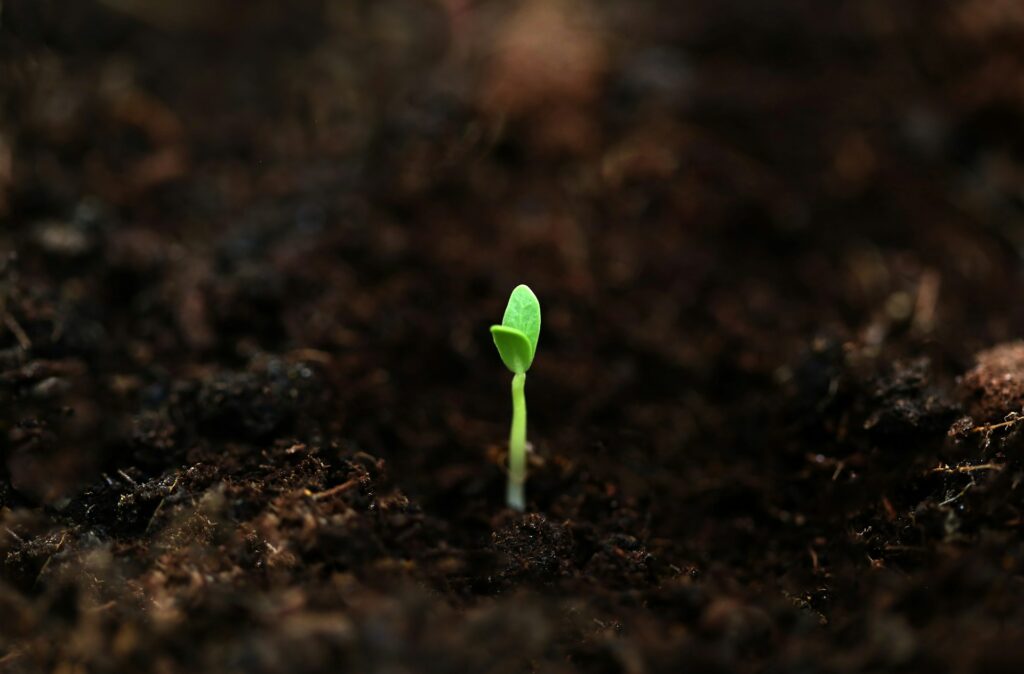
In Brazil, the word muvuca means hubbub, bustle. In agriculture, however, that chaos becomes a method that seems effective: seeds of many different native species are planted together to mimic forest diversity and accelerate the regeneration of rivers and streams. It is a simple, community-based practice that is used to try to restore vegetation where it had disappeared, increasing carbon capture capacity. And making new forests more resilient to the changing climate because the mix includes seeds from areas already adapted to warmer conditions.
“In the end, nature was already doing it on its own,” notes Eduardo Malta, a forest restoration expert at the ‘Instituto Socioambiental (ISA), among the first to spread the method beyond the first communities in central Brazil that “invented” it. “Small farmers in that region were already using direct seeding on their land, and the results were excellent.
The network of seed collectors
At the heart of the system is the network of seed collectors. Thousands of people travel through forests and fields, select seeds of native species and sell them to businesses and farmers required by law to replant areas of riparian vegetation. ISA coordinates and trains these networks, turning an often disregarded legal obligation into an economic opportunity for the land. Because deforestation-while declining from the dismal Jair Bolsonaro era-remains an immense problem: in addition to releasing emissions and destroying carbon-trapping trees, it erodes soils. For example, on large soybean and livestock farms, forest belts along waterways should be maintained: practice shows that they can be, and that the benefit extends far beyond farm boundaries.
The first structured muvuca experience was in 2006, in the Xingu River Basin area, a major tributary of the Amazon. There, contaminated water from deforested areas and upstream cities was reaching the Xingu Indigenous Territory, almost as large as Sicily, and inhabited by some 15 Indian peoples. Communities had already begun direct seeding to try to change the situation.
Since then the practice of muvuca has spread: more than a hundred organizations have adopted it, with ISA and other partners restoring some 11,000 hectares of degraded land, roughly equal to the land area of the City of Florence. Even giants such as Amaggi, among the world’s largest soybean producers, have replanted a few dozen hectares using this method. The goal is to increase the number of hectares recovered to 40,000 by 2030.
There is no shortage of difficulties
The muvuca has taken root in diverse states and biomes, from the Atlantic Forest of São Paulo to the Cerrado of Minas Gerais. Today there are more than 2,500 seed harvesters, about 1,500 of whom live in indigenous territories and in Quilombolas communities that arose from the escape from slavery in colonial times. Support comes from international and local donors: Rainforest Foundation Norway, the European Union, Bezos Foundation, Good Energies Foundation and Instituto Clima e Sociedade.
There is no shortage of difficulties. Between lax controls, red tape, and legal uncertainty about actual land ownership, postponing legal obligations to reforest is still too easy. The muvuca seed market suffers: in the Xingu Basin alone, there are some 300,000 hectares of degraded riparian areas in need of rehabilitation. “If we could actually implement the law, the volume of seeds needed to get to those numbers would stimulate commercialization and implementation,” points out Thiago Belote, director of the forestry department at the National Secretariat for Biodiversity, Forests and Animal Rights in the Ministry of Environment and Climate Change.
A replicable method
Muvuca is not a magic solution, but it is certainly a replicable, inclusive and scalable method. It works because it mimics natural dynamics: dozens (sometimes over a hundred) species per plot, some fast-germinating, some late-germinating, that together build a plant structure capable of protecting soil, providing shade, retaining moisture, and feeding wildlife. It reduces costs compared to transplanting seedlings, enhances local biodiversity , and adapts to site conditions. And it builds community value chains: collection, selection and sale of seeds become work, often the first stable income in rural and indigenous areas.ISA and Rede de Sementes do Xingu explain that a typical muvuca can include more than 120 different species in a year; on average, about 80 kilos of seeds per hectare can start about 3,000 plants. Among the most frequently used seed species are baru, pequi, cashew, carvoeiro, jatobá, tamboril, tingui, xixá and others.