Here we go again. Evidently to some people the idea that public transport in Italy is finally starting to work bothers them. It may be a Pavlovian reflex, a reminder of the postwar days when, to keep the automobile industry happy, they dismantled tram lines to make way for cars. The fact of the matter is that 50 million euros earmarked for the T1 section, the one that is supposed to run from Piazzale Clodio to the Farnesina, disappeared in Budget Law 2026. A cut that the government calls “reprogramming,” but which the Campidoglio translates as yet another obstacle to an already complex project. In Rome, the future of the Metro C is in danger of coming to a halt just a step away.
Admittedly, the subtracted funds are small compared to the total invested, but they are just enough to create a bureaucratic problem that threatens to substantially slow down the revitalisation of the railroad right at the moment of departure. “This work started with government funds because it is important for the city,” explained Transport Councillor Eugenio Patanè in an interview with Repubblica. “But it’s paradoxical that the same executive that gave us the money to be able to carry it out, that appointed a commissioner to speed it up, now removes the pebble that makes the whole mountain collapse.” He adds, “You can’t say ‘here’s the money’ and then take it away once projects or tenders are done.”
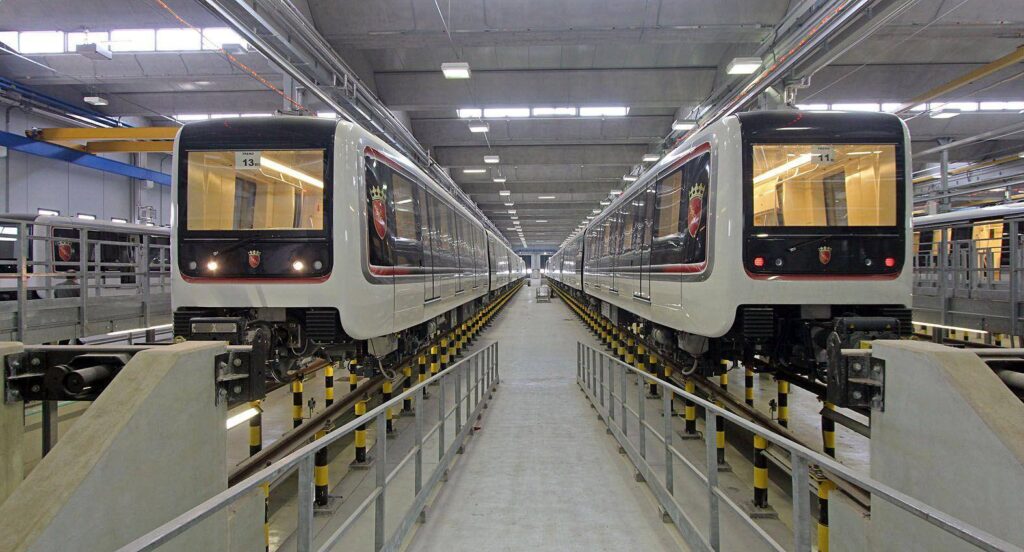
A contradiction that, in addition to blocking construction sites, also risks jeopardising the contracts already signed for rolling stock for the B and C lines. Without those funds, the special commissioner cannot approve the route or award the work to the general contractor. Basically, resources are made available, work and agreements are scheduled, and when everything is ready comes the stop: “We joked.”
Line C is a strategic backbone of Roman mobility. It connects the eastern suburbs, from Pantano to San Giovanni, and will have to go all the way to the monumental heart of Rome, with the Piazza Venezia station already under construction and the continuation northward from Clodio to the Farnesina. It is an axis that runs under congested neighbourhoods like Prati, where every decision also weighs on air quality and surface traffic. The risk, if the cuts are not restored, is having to completely revise the timetable. In addition, excavations would have to start again from Clodio instead of Farnesina, with millions of cubic metres of earth to be transported by lorry in an already busy neighbourhood.
The case turned political. Antonio Tajani called on Salvini to “back off” and “convince Giorgetti to refinance the C metro,” whilst Elly Schlein accused the government of “arguing about cuts and taxes whilst Rome remains without funds.” For its part, the League downplays by talking about a simple “reprogramming,” but the facts tell another story: without that money, work stops. And paying the price is not a junta or a party, but a city that would lose health, competitiveness and quality of life every day.
Yet, investing in metro systems is not just about mobility. A study by the Sony Computer Science Lab and Sapienza University measured the economic impact of the C line: +5 per cent more economic activity in the neighbourhoods served, 4,500 new jobs, and a 60 million increase in local GDP.
In Centocelle, micro-businesses have almost tripled in five years; in Torpignattara 750 have sprung up in just one year. The metro, in short, is a development machine: it reduces traffic, improves air quality and grows the neighbourhood economy. Blocking its construction sites means giving up a value multiplier that in other capitals is now a given.
Rome’s metro network measures 59.4 kilometres. Berlin has 155, Madrid 296 (over 320 including the light rail), Paris 225, London 402. How is it possible for Italy to revive if the government lets the capital city sink?