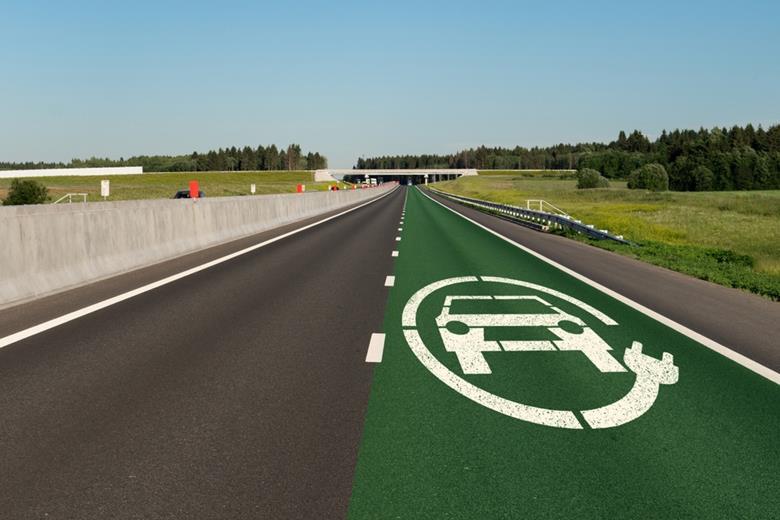
Driving an electric car and seeing the battery charging without stopping, without a charging station and without wires. In Florida, it’s no longer just a futuristic idea: the U.S. state is about to experiment with a freeway that can recharge electric vehicles while they are in motion, thanks to a wireless induction system built directly into the asphalt.
The project involves the new State Road 516, an approximately seven-mile-long artery that will connect Orange and Lake counties, northwest of Orlando. Within the roadway is an experimental section of just over one kilometer equipped with dynamic charging technology. Electric coils capable of transferring power to compatible vehicles while they proceed at normal speed will be installed under the road surface.
A paradigm shift
The principle is that of electromagnetic induction, already used for some smartphones and wireless charging parking lots, but taken to another level. In this case, power will be able to reach values comparable to ultrafast recharging, making it possible to truly “refuel” while on the move. A paradigm shift that could drastically reduce range anxiety, one of the main brakes on the spread of electric cars.
The first target is not so much private cars, but commercial vehicles and fleets: vans, buses, and trucks, which always travel the same routes and for which stopping to recharge means lost time and additional costs. If the road can supply energy continuously, batteries can become smaller, lighter, and cheaper, with environmental benefits as well.
The total investment for the new infrastructure exceeds $500 million, and testing on the electrified section is expected to start in 2026. The trial will go on for several years, with the aim of evaluating not only the efficiency of charging, but also the impact on asphalt, road safety, and the power grid.
Florida is not an isolated case
Florida is not an isolated case. Similar projects are already active or being tested in different parts of the world, from Europe to the United States, including Italy. It is a sign that the idea of electric mobility “powered by the road” is moving out of the laboratories and into real infrastructure planning.
However, some unknowns remain. Costs are high, the technology needs to be standardized, and not all vehicles today are compatible with dynamic wireless charging. In addition, it will be crucial to understand how much energy is lost in the transfer and how to integrate these systems with an already strained electrical grid.
If experimentation yields positive results, however, the future of the electric car may lie not only in ever-larger batteries, but in smart roads capable of providing power while traveling.