Almost a month has passed since the final approval of Budget Law 2026, and the Fund for the Transition to Cage-Free Farming is now a regulatory reality. Enough time for the initial enthusiasm to give way to a more concrete assessment: the political signal is there, but the framework remains fragile.
The measure, established at the end of December, represents Italy’s first public funding dedicated exclusively to overcoming cages on livestock farms. An important precedent, which breaks a long institutional inertia, but for now does not substantially affect the structure of the livestock sector.
What the Fund provides today
The Fund, hinged at the Ministry of Agriculture, makes available 500,000 euros for 2026 and 1 million euros annually starting in 2027. The resources are intended for livestock farmers who choose to start converting their facilities, phasing out cages.
The amendment establishing it bears the signature of Senator Domenica Spinelli and was co-signed by parliamentarians from almost across the political spectrum. A convergence that confirms that the issue of animal welfare is no longer marginal in parliamentary debate.
An achievement built over time
The Fund was not created by chance. It is the outcome of work carried out over the years by animal welfare organizations and the coalition End the Cage Age Italia, which has pushed the issue inside institutions with public initiatives and direct interlocutions with Parliament. A path also recognized by Being Animals, which speaks of a “first step” after years of political and social pressure.
In the same vein is CIWF Italy (Compassion in World Farming), which points out how the funding represents a first in the Italian landscape, but also how the economic envelope has been scaled down from the initial, much more ambitious assumptions.
Numbers that don’t add up
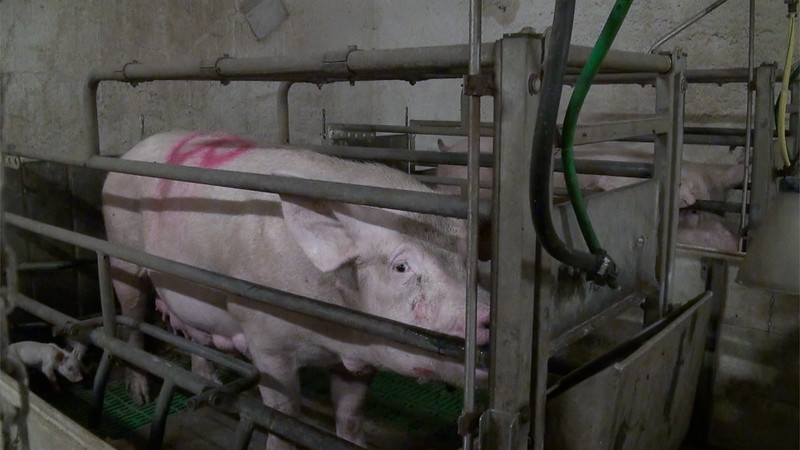
The central issue remains that of resources. In Italy more than 40 million animals are still raised in cages each year. The conversion of facilities requires structural investment, long lead times and ongoing economic support. With current figures, the Fund risks not even covering the needs of a single medium-sized farm.
This is the point the associations insist on: the Fund is a relevant political signal, but it cannot bear the weight of the transition alone. Without progressive strengthening, it remains a symbolic rather than a transformative tool.
A social question now clear
The pressure is not only coming from organizations. Eurobarometer data show that 91 percent of Italian citizens are against the use of cages on farms. At the European level, the Citizens’ Initiative “End the Cage Age” has collected 1.4 million signatures, calling for common legislation that would permanently overcome this model.
Pending binding choices from Brussels, the cage-free fund remains a test case for national policy. It is a measure that exists, is written into law and can be strengthened. The gap between social consensus and the instruments put in place, however, is still evident.