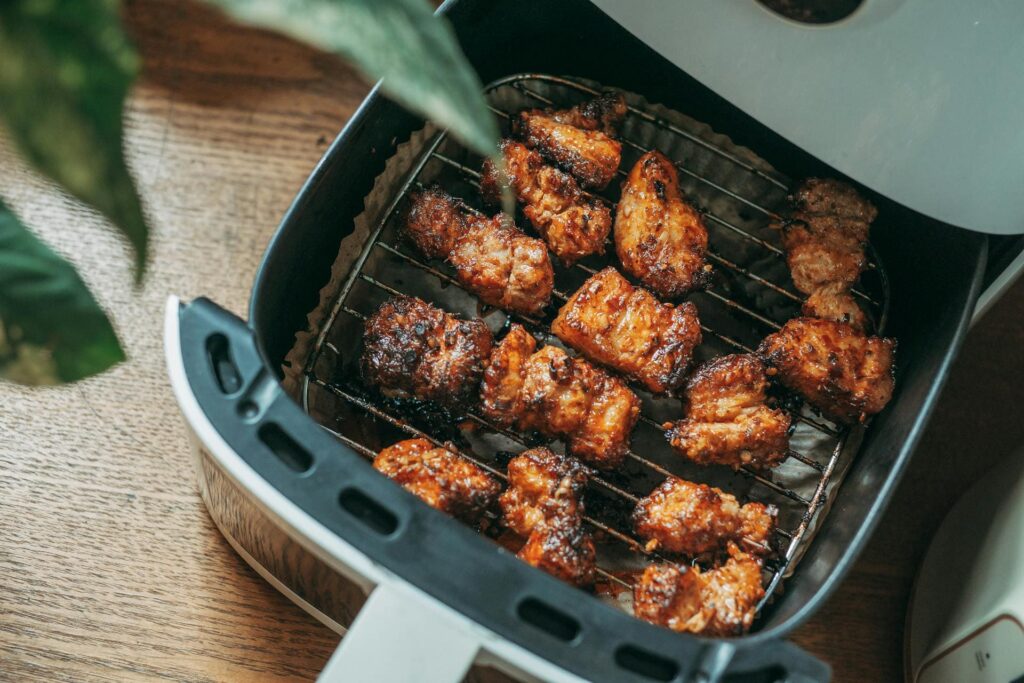
The air fryer is not just a shortcut to cooking faster or with less oil. According to University of Birmingham research published in ACS ES&T Air, its use also has a major environmental benefit: a marked reduction in household air pollution compared to traditional deep-frying in a frying pan or oil. This is far from a marginal issue, given that much of the daily exposure to pollutants occurs right within the walls of the home.
What happens to the air while frying
The study measured emissions of volatile organic compounds and ultrafine particles during the cooking of various foods, using highly sensitive experimental chambers. These substances, which are invisible but far from harmless, are among the main culprits in worsening indoor air quality and can have adverse effects especially on children, the elderly, and people with respiratory problems.
The tests involved frozen foods, lean fresh foods, and high-fat products. As might be expected, bacon and onion rings produce more emissions than vegetables or lean meats, even in the air fryer. The difference, however, remains stark: pollutant levels are still much lower than in traditional frying, with values up to a hundred times lower than in deep oil.
The dirt that accumulates
There is, however, one detail that makes a difference over time. A fryer used dozens of times without thorough cleaning begins to emit more pollutants. In tests on an appliance used more than seventy times, VOC emissions increase by about a quarter and ultrafine particles more than double. The cause is the accumulation of cooking residues in hard-to-reach areas, which return to heat and release substances into the air with each use.
Even when dirty, the air fryer still remains less polluting than traditional frying techniques. Chemical analysis detected aldehydes, ketones and alkenes produced by heating oils and browning reactions, but in overall concentrations below the recommended limits for indoor environments.
So the air fryer can help improve air quality in the home, but only if it is kept clean over time. A good reminder for manufacturers, too, who are called upon to design appliances that are easier to disassemble and sanitize.