The private car continues to be the mainstay of travel in Italy. According to ISPRA analysis, about 79 percent of passenger trips still take place on the road with cars and motorcycles. A figure that explains why traffic, emissions and time lost in traffic jams remain structural problems for cities.
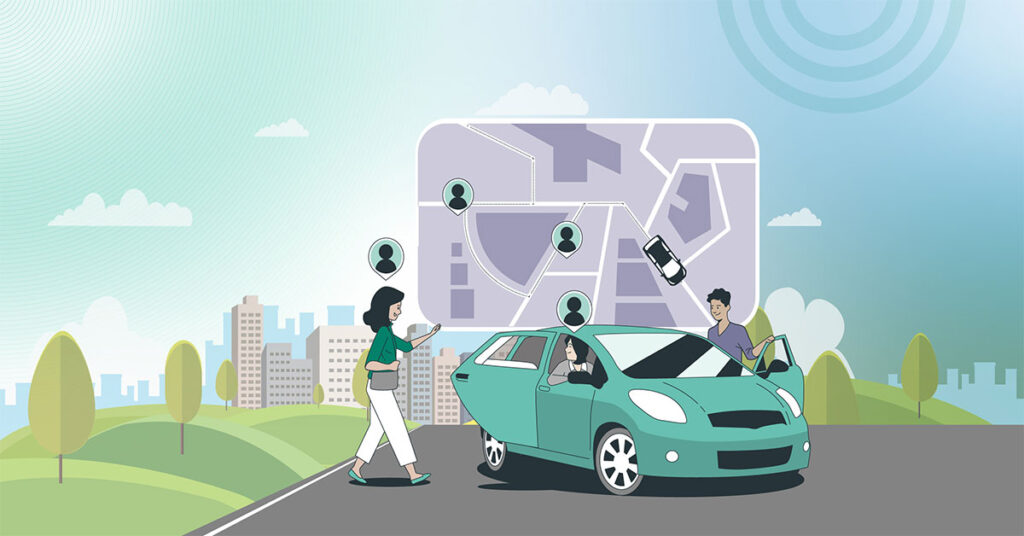
Yet something is moving, with a change in daily habits: carpooling. In 2025, corporate carpooling trips monitored by Jojob’s National Observatory reached 795,335 trips, more than double the number two years earlier. A number that translates into concrete effects: 454,819 cars taken off the roads, more than 12.4 million kilometers avoided, and 1,623,442 kilograms of CO₂ saved.
Traffic costing cities time
Urban congestion has become one of the main invisible costs of contemporary mobility. INRIX’s Global Traffic Scorecard 2025 indicates that in Rome each motorist loses 76 hours a year in traffic, while in Milan it exceeds 67 hours. In this context, reducing the number of cars on the road becomes not only an ecological but also an economic priority. Corporate carpooling tries to intervene right here: on home-to-work or home-to-university trips, which are repeated every day on the same routes.
The spread of carpooling closely follows the geography of Italian commuting. More than half of all shared trips are concentrated in five regions: Piedmont, Apulia, Lombardy, Emilia-Romagna and Lazio.
Piedmont leads the ranking with more than 145,000 trips, while Puglia shows very rapid growth, exceeding 100,000 shared trips in a single year. Some provinces also show interesting dynamics: Turin, Bologna and Milan remain the main hubs, but territories characterized by longer inter-municipal trips are also increasing rapidly.
In some southern regions and islands, the average distance per trip exceeds 50 kilometers, a sign that carpooling intercepts mainly suburban commuting, where public transportation is often less widespread.
Sharing the car before changing it
More than half of all shared trips are made by diesel cars, followed by gasoline and LPG. Electrics still remain marginal, below 1 percent.
This is telling about the current phase of the mobility transition in Italy. Even before replacing cars, carpooling aims to make better use of them, increasing the number of people on board and thus reducing the overall number of vehicles on the roads.
A change that starts with habits
In the past two years, shared trips have grown by 113 percent, while the total economic savings for users have exceeded 2.4 million.
Numbers that point to a transformation of everyday mobility-a practice that is finding its way right inside the dominant model of the private car.
In a country where commuting remains a constant, the difference can start with a simple detail: filling the empty seats of a car that would have left anyway.