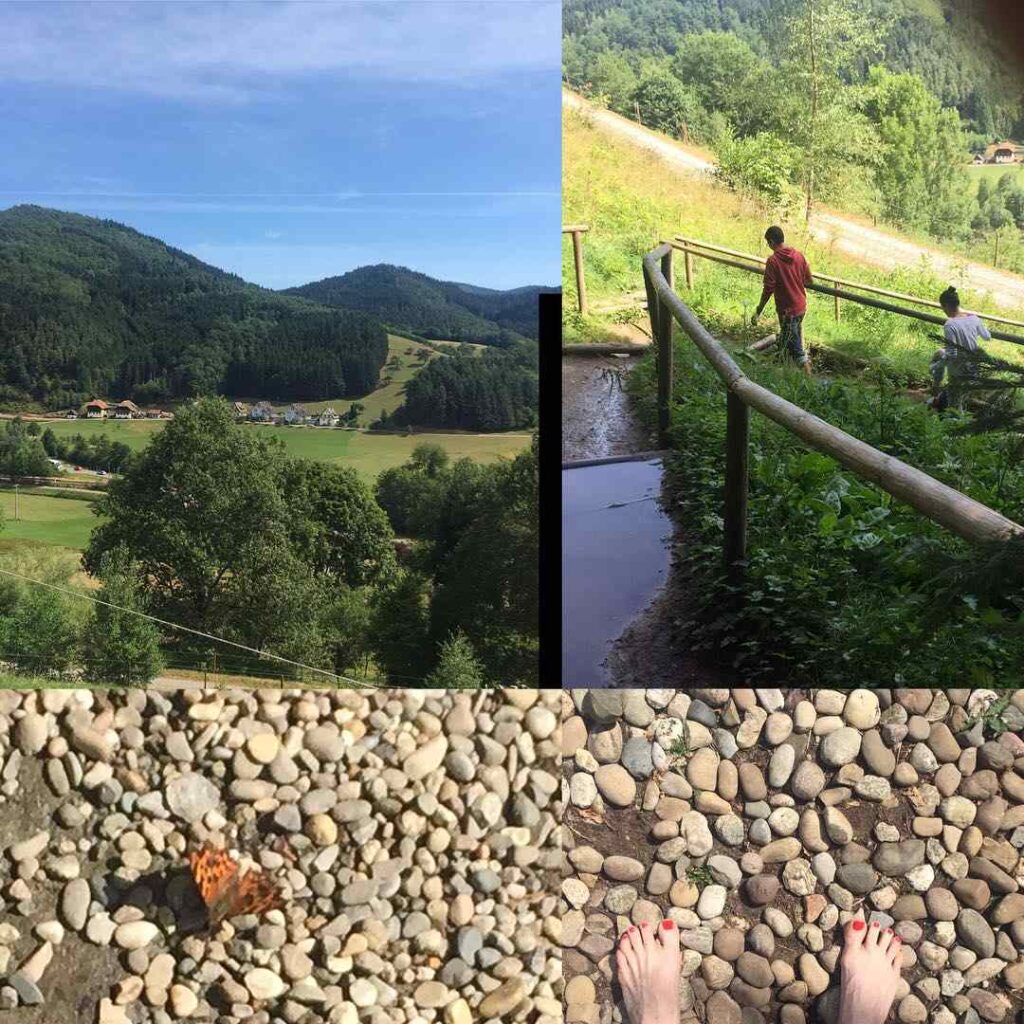
Walking barefoot surrounded by nature is a practice, part of European history, that is now returning with a contemporary twist, interweaving health, environmental education and slow tourism. In the forests of Germany, particularly in the Black Forest, trails dedicated to barefoot hiking are attracting visitors of all ages, offering an experience that focuses on the body and the senses.
These trails are designed to be walked without shoes: mud, pine needles, water and gravel become tools for sensory stimulation.
A comeback that comes from afar
The idea has its roots in the 19th century, when German priest Sebastian Kneipp, among the pioneers of naturopathy, began promoting direct contact with natural elements as a health practice. Walking on wet grass or snow, he claimed, stimulates circulation and strengthens the body.
Today, those insights find new confirmation in studies of mental and physical well-being: contact with natural surfaces can reduce stress and promote greater bodily awareness. Although the scientific literature remains cautious about some more ambitious benefits, the consensus on positive effects related to movement and immersion in nature is broad.
The park of the senses
In“Park mit allen Sinnen,” literally “park for all the senses,” the concept is expanded. Feet, sight, smell and hearing are involved in a path of about two kilometers. It goes from a meditation cave, where silence is required, to olfactory stations with fruit scents, to tactile installations.
This approach reflects a change in environmental tourism: less rapid consumption of landscapes, more immersive experience. The 6,000-square-kilometer Black Forest thus becomes a laboratory for practices that integrate well-being and land conservation.
From Germany to America
The model is crossing the Atlantic. In the United States, where such trails are still rare, “The Barefoot Trail” has been created near Flagstaff. The project, run as a nonprofit foundation, includes educational programs for schools and summer camps. These spaces offer direct contact with ecosystems often perceived as distant, transforming the enjoyment of nature into concrete, everyday experience.
The implications
Walking barefoot requires adaptation and is not for everyone: those with diabetes or neuropathy need to be careful. But the spread of these trails, from Germany to the United States, indicates a growing demand for accessible, low-infrastructure environmental experiences.
On the other hand, integrating usable natural spaces into everyday urban and peri-urban life is one of the emerging directions of sustainable tourism and public health policies. Barefoot trails, with low cost and limited impact, fit into this picture. More than a philosophy, it is a replicable format: short routes, natural materials, educational function. And one fact is clear: where they are implemented, public response comes.