The winter storms that have hit the Portuguese coast in recent weeks have resurfaced a piece of prehistoric ocean. On the beach at Galé-Fontainhas, in the municipality of Grândola, sand movement caused by bad weather has unearthed two fossilized whale skeletons dating back some 10 million years, a find that experts consider among the most important in recent years for European marine paleontology.
The discovery happened almost by accident. Some strong storms swept away some of the sand that covered a long slab of sedimentary rock, leaving exposed fossil remains that caught the attention of scholars. From there began an excavation campaign led by a team of paleontologists from the Lourinhã Museum, the Dom Luiz Institute of the University of Lisbon, and the National Museum of Natural History and Science, together with municipal technicians.
A paleontological site between tides and reefs
The recovery operation was not easy. The site is located in a hard-to-reach coastal area, and access is limited by the tides. So archaeologists had to work quickly between low tides, securing the fossils before erosion or the sea could damage them.
The storms exposed a rock slab more than 100 meters long belonging to the so-called Alcácer do Sal Formation, a Miocene sedimentary deposit formed in an ancient shallow marine environment about ten million years ago.
In that same rock, scholars have identified a veritable “mine” of fossils: remains of dolphins, turtles, sharks, bony fish and perhaps even seabirds, as well as numerous invertebrates such as bivalves and barnacles. This collection of species provides a fairly accurate picture of the ecosystem that populated that part of the Atlantic in the Miocene.
Two of the most complete skeletons in Europe
The most important find concerns the two fossilized whales. The skeletons are partial but exceptionally well preserved. One includes a skull with two almost complete mandibles, vertebrae and some ribs; the other has an almost entire skull, parts of the mandibles, numerous vertebrae and rib bones, as well as elements that may belong to the forelimbs and scapular girdle.
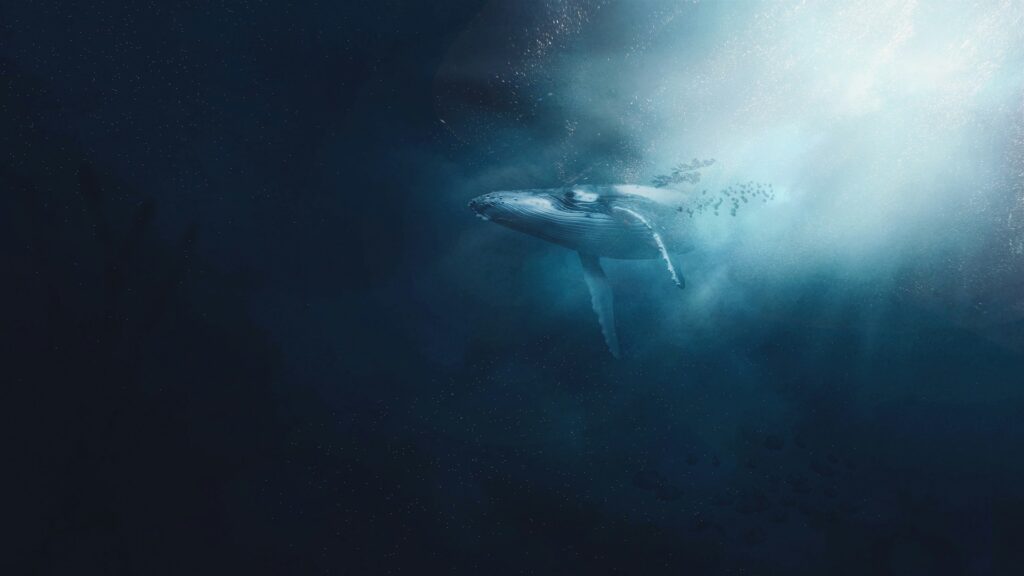
According to researchers, these whale remains are among the most complete ever found in Europe relative to the Miocene, a crucial period in cetacean evolution. The bones appear to belong to the Mysticeti group, the baleen whales that today include species such as the gray whale and blue whale.
Initial analyses suggest that the specimens may belong to the family Cetotheriidae, a group of small- to medium-sized whales widespread along the coasts of southern Europe millions of years ago.
A window to the Miocene ocean
The scientific value of the discovery involves more than just the skeletons. The set of fossils found in the same rock formation will allow scholars to reconstruct more accurately the marine ecosystem that characterized this area of the Atlantic during the Miocene, when the coasts of Portugal were frequented by a rich marine fauna.
By analyzing the bones, invertebrates and sediments, researchers will be able to better understand not only how these primitive whales lived, but also how they moved through food chains and what environmental conditions characterized that sea.
From excavation to laboratory
After recovery, the fossils will be transferred to the laboratories of the Lourinhã Museum, one of Europe’s leading centers dedicated to vertebrate paleontology. Here a long and delicate work will begin: cleaning of the remains, consolidation of the bones, anatomical study and digital reconstruction of the skeletons.
The institutions involved are preparing a collaboration protocol to coordinate research activities and enhance the discovery also from a cultural point of view. The goal is to make these fossils not only an object of scientific study, but also a shared heritage with the public.
After all, it is not often that a storm reveals a 10-million-year-old ocean fragment. In this case, the bad weather brought out a new page in the evolutionary history of whales.