The European Union has reached an agreement on so-called meat sounding, that is, the use of terms traditionally associated with meat to describe plant-based products. After months of discussion between the European Parliament, the Council and the Commission, the trialogue came up with a compromise solution: some names will be banned, while others will continue to be allowed.
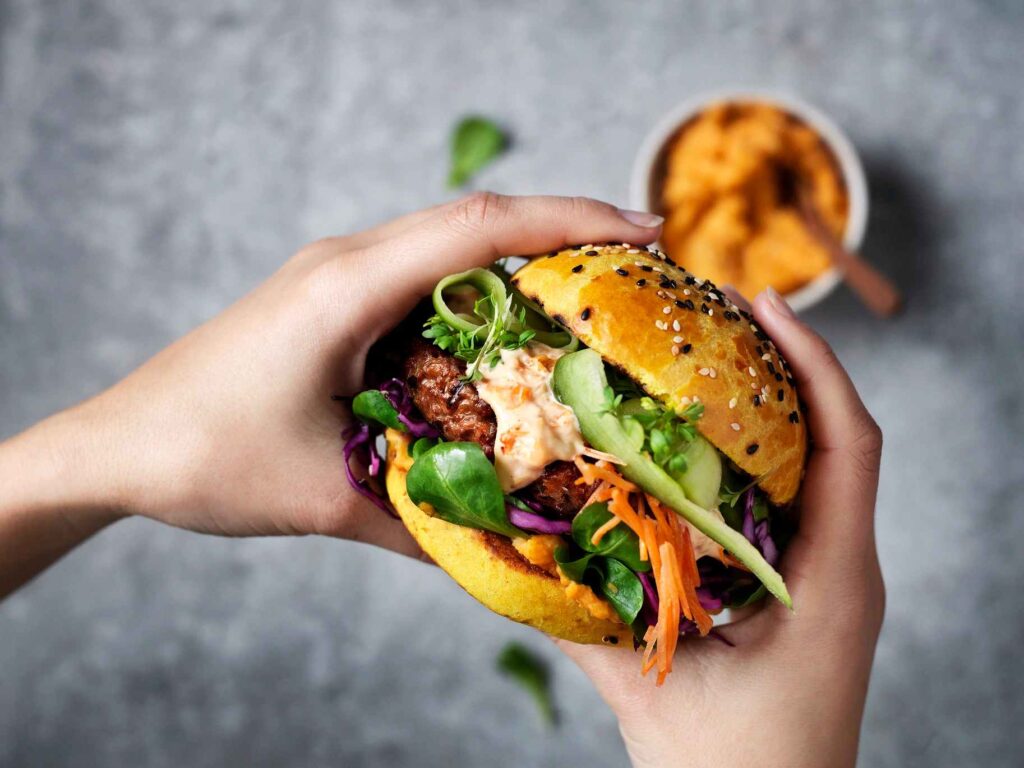
The agreed text introduces a ban on 31 terms related to cuts of meat or animal species, such as “bacon,” “steak,” and “liver,” as well as direct references to meats such as “chicken,” “beef,” or “pork.” Remain usable, however, are words that have now entered the common parlance of the plant-based market, including “burger,” “sausage,” and “nuggets,” which are considered by negotiators to be sufficiently well-established not to cause confusion among consumers.
The new rules will also apply to next-generation food products, such as those derived from cultured meat, even if these are not yet on the European market. Once the rule goes into effect, companies will have three years to adjust their labels and trade names.
A high-growth sector
The decision comes at a time of strong growth in the alternative protein market. According to an analysis by consulting firm Systemiq, carried out with the support of the Good Food Institute Europe, the sector could represent a major industrial opportunity for Europe in the coming decades.
With moderate support policies, Italy-which is already the European country with the largest number of researchers active in the alternative protein sector-could generate up to 10 billion euros in added value by 2040. The development of the supply chain could also lead to the creation of more than 30,000 jobs, strengthening the country’s role as a European hub for bioproduction.
Market numbers show that demand is already significant. In 2024, the retail value of plant-based products in Italy reached 639 million euros, up 7.6 percent from the previous year. According to consumer data, more than 15 million Italian households — about 59 percent of the total — purchased at least one plant-based product during the year. The total number of consumers has increased by more than 10 percent in the past three years.
Companies’ concerns
Despite the compromise reached in Brussels, many companies in the sector are cautiously eyeing the new rules. The fear is that restrictions on designations could complicate communication with consumers and slow the development of an industry that is still growing.
“We take note that the terms most used by consumers-such as “burger” and “sausage”-remain allowed: common sense has prevailed on this one,” comments Massimo Santinelli, CEO of Biolab, a historic company in the sector. “But the ban on 31 names related to meat cuts helps no one: neither farmers, nor consumers, nor companies that have bet on innovation. For us in the industry, this has never been just a label issue but a question of competitiveness and the future. Introducing new bureaucratic barriers at a time when the EU should be strengthening its industrial capacity is a choice we cannot afford. Italy has the skills and tradition to become a key player in the protein transition: it is a pity to waste this opportunity with regulations that look to the past instead of the future.”
Consumers little confused by labels
According to several studies cited by industry professionals, consumers do not perceive the names currently used for plant-based products as misleading. A YouGov poll commissioned in 2024 by the Good Food Institute Europe shows that 69 percent of Italians consider terms traditionally associated with meat to describe plant-based products to be appropriate, while 68 percent believe companies should be allowed to use them freely.
A similar orientation emerges from surveys by the European consumer association BEUC, according to which about 70 percent of EU citizens do not find the current labeling of plant products misleading.
The European regulatory environment
The debate on meat sounding is not just about Brussels. In Italy, the issue was already addressed in 2023 with Law 172, which introduced a ban on the use of typical meat names for plant products as part of the regulations on cultivated meat.
The rule, however, is still not fully applicable because it was adopted without complying with the European TRIS procedure for notifying technical regulations. This exposes the measure to the risk of being deemed unenforceable by a national court, according to the case law of the Court of Justice of the European Union.
The adoption of a uniform European framework could thus overcome national regulations. Before becoming final, however, the understanding reached in trialogue will still have to be approved by the Agriculture and Fisheries Council, which brings together the ministers of the member states, and then by the plenary of the European Parliament.
For many observers, the knot remains open: the compromise found in Brussels seeks to balance consumer protection and industrial innovation, but the risk is that the label debate will end up distracting Europe from a broader issue, namely the development of a sector considered strategic for food security, environmental sustainability and the continent’s industrial competitiveness.