Easter always arrives with the same script: set tables, chocolate eggs, doves and trips out of town. A familiar ritual that, when observed through the gaze of the circular economy, reveals a less festive side: food waste, unnecessary packaging and opaque supply chains. In recent years, more and more environmental studies and organizations are calling for rethinking the holidays as opportunities to experiment with more sustainable daily choices. Even Easter, with its symbols associated with spring, can become a test case for reducing environmental impact without sacrificing conviviality.
The hidden journey of cocoa
Let’s start with the signature ingredient of the Easter holidays: chocolate. According to data from leading fair trade organizations, about 60 percent of the world’s cocoa comes from the Ivory Coast and Ghana. Cultivation in these areas is often associated with deforestation, child labor and very low wages for farmers. This is why there is a growing focus on certified supply chains that guarantee decent working conditions and more sustainable agricultural management.
Certifications such as Fairtrade or Rainforest Alliance seek to act on this very point: establishing minimum prices for producers and promoting agricultural practices that protect soil and biodiversity. Thus, a seemingly simple choice-the supermarket-bought Easter egg-becomes a small act, both ecological and political, that connects European consumers to tropical farming communities.
Spring tables
Another chapter concerns the menu. The holidays are often synonymous with plenty, but planning can reduce both food waste and the ecological footprint of dining. Favoring local and seasonal produce not only supports local agricultural economies but also avoids the emissions associated with long-distance transportation.
Spring already offers many alternatives: asparagus, agretti, fava beans, and strawberries are ingredients that return to the counters just in the Easter weeks. Following the natural crop calendar also helps to maintain a more varied and nutritious diet throughout the year.
Decorations that don’t end up in the bin
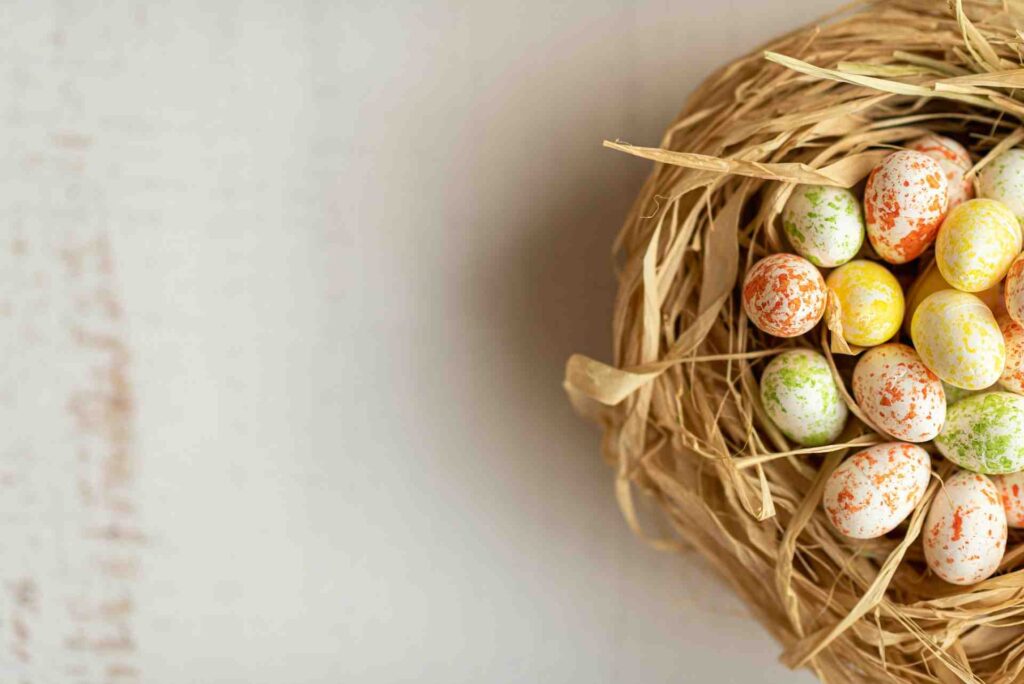
The aesthetics of the party can also change perspective. Many of the traditional decorations can be made from materials already in the home: recycled paper, dried branches, reused ribbons. Even eggs can be transformed into little experiments in home chemistry. Common spices and foods allow for natural coloring: turmeric for yellow, coffee for brown, red wine for purple, spinach for green.
The result is a creative workshop that especially engages younger children and reduces the purchase of disposable items destined to last only a few days.
The invisible problem of waste
According to numerous analyses on the global food system, household waste accounts for a significant share of food losses along the supply chain. For this very reason, reducing food waste can contribute to the reduction of emissions related to the food system.
In practice it means shopping with a precise list, checking labels and distinguishing between “to be consumed by” and “preferably by,” indications that often lead to confusion. And when the Easter meal inevitably produces some leftovers, the freezer becomes an invaluable ally: pies, cooked vegetables or egg dishes can be stored and reused in the following days, perhaps during the traditional Easter Monday picnic.
Differentiate
The sustainability of the holidays also comes through waste management. The packaging of doves and Easter eggs are often composed of different materials: cardboard in paper, clear bags in plastic, any compostable molds in organic. Crushing the packaging before throwing it in the recycling bin also helps reduce the volume of waste and facilitates the recycling process.
After all, the meaning of Easter – rebirth, natural cycles, the return of spring – has much to do with the idea of regeneration. Bringing this principle into everyday choices as well, from chocolate to recycling, means turning a centuries-old tradition into a small exercise in environmental responsibility.