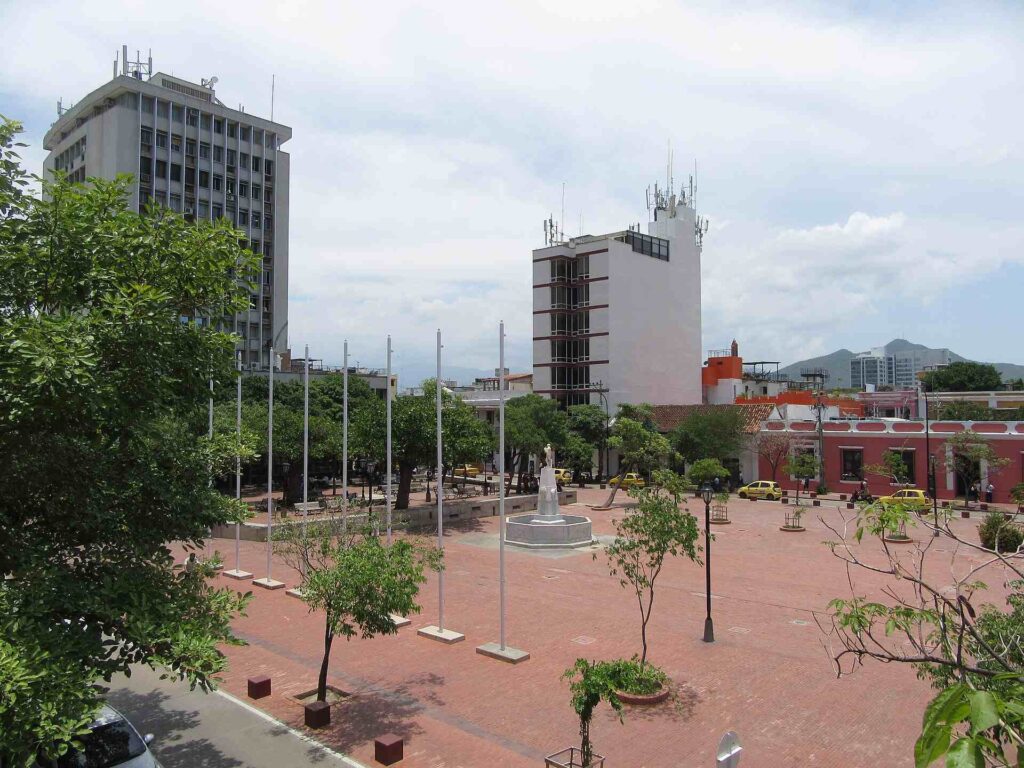
From April 24-29, Santa Marta, on Colombia’s Caribbean coast, hosts the first international conference entirely devoted to phasing out fossil fuels. In intentions, it is meant to be a useful policy laboratory for turning years of declarations into concrete measures. On the table is a preliminary scientific paper-viewed by Carbon Brief-that breaks with the caution typical of climate reports and explicitly calls on governments to “stop any new expansion of fossil fuels” and to “reject gas as a transitional fuel.”
A relationship outside the box
The document, titled “Food for Thought for the Santa Marta Process,” was drafted in less than two months by a group of 24 researchers. It was a quick piece of work, not subject to external review and far removed from the formal procedures of the IPCC, but with a clear objective: to offer operational guidance.
“This is an attempt to get broad coverage on relevant topics from researchers with solid expertise,” explained Frank Jotzo, professor at the Australian National University. The result is a list of 12 priorities, each accompanied by concrete recommendations. These include an immediate stop to new fossil projects before the final investment decision is made and the introduction of legally binding limits on methane emissions.
A choice that marks a discontinuity: whereas traditional scientific reports avoid direct prescriptions, here the policy direction is explicit. “The idea of actionable recommendations was introduced by the Colombian government,” clarifies Friedrich Bohn, coordinator of the paper.
End of “bridging” gas and greenwashing
Among the most controversial passages is the rejection of natural gas as a transition solution and skepticism toward carbon capture and storage (CCS) as a scalable option. The report also calls for exposing greenwashing narratives that, the authors explain, continue to undermine public consensus.
Not only that. Among the proposals appears the elimination of fossil fuel subsidies and the possibility of banning their advertising, opening a hitherto unexplored regulatory front.
The coalition “of the willing“
Representatives from some 50 countries, responsible for one-third of global fossil demand and one-fifth of production, are expected in Santa Marta. The initiative, co-organized by Colombia and the Netherlands, bills itself as a “coalition of the willing,” a space for those ready to act.
The stated goal is to produce a “menu of solutions” to feed into the global roadmap being prepared for COP31 in Turkey. A non-binding roadmap, but potentially influential in setting standards and expectations.
The Italian node
In this context, Italy’s position remains ambiguous. According to Colombian sources, Rome has confirmed participation, but without official communication. Meanwhile, national policies are moving in the opposite direction: postponing the exit from coal to 2038, new investments in gas , and pressure to loosen the European ETS.
A contradiction highlighted by a broad front of organizations – from Greenpeace to Legambiente – calling for transparency and consistent engagement. What is at stake is not just climate: the link between fossils, geopolitical instability and inequality is increasingly evident.
From theory to implementation
The Santa Marta conference was created precisely to bridge the gap between goals and actions. It does not replace the UN negotiations, but complements them with a pragmatic approach. Three pillars: overcoming economic dependence on fossil fuels, transforming energy supply and demand, and strengthening international cooperation. Alongside governments, a central role is reserved for civil society. The People’s Summit, held in parallel, brings together hundreds of organizations to set their own agenda, designed to influence the official process. The message coming out of Santa Marta is stark: the window for a gradual transition is closing.