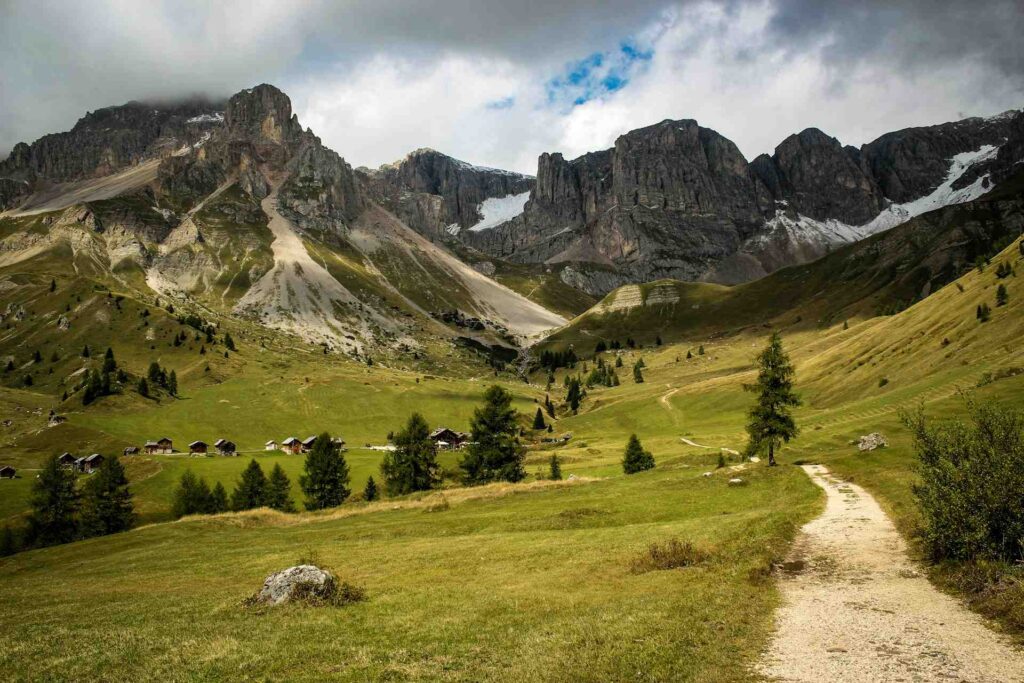
Nineteen green flags will fly in 2026 over the Italian Alps. They were awarded by Legambiente in Rovereto, Italy, at the 10th National Green Flags Summit, honoring associations, cooperatives, municipalities, university institutions and individual citizens who have chosen to build value in the mountain territory by focusing on sustainability, care for the commons and local economies.
The most awarded region is Friuli-Venezia Giulia, which wins five flags and tops the 2026 high-altitude green ranking. It is followed by Trentino-Alto Adige with four flags, Piedmont and Lombardy with three each, and Valle d’Aosta and Veneto with two each.
Wool, shepherds, and women spinning
Two of the award-winning stories are intertwined with the International Year of Pastures and Shepherds, proclaimed for 2026 by the United Nations. In Trentino, the “Bollait” project – people of wool – is the brainchild of Barbara Pisetta and Giovanna Zanghellini: recovering the wool of Lagorai sheep, now almost completely abandoned, to build an ethical and local supply chain that unites shepherds, women and artisans. In Valle d’Aosta, in Valgrisenche, the women’s cooperative LesTisserands has been carrying on for more than 55 years the weaving of Drap, the traditional fabric of Valle d’Aosta made from the wool of the Rosset sheep-a breed indigenous to the region-in collaboration with local farmers. Two experiences geographically distant but united by the same idea: the territory is also cared for through its production traditions.
The ermine and disappearing glaciers
Science enters powerfully among the awardees. At the University of Turin, a group of young conservation biologists coordinated by Marco Granata is studying the ermine as an indicator of alpine climate change: the small mammal, which turns white in winter to blend in with the snow, is increasingly seeing its snow-white coat become a handicap rather than a protection on slopes where snow is now scarce. The project is called the Ermlin Project and is one of the most concrete examples of how university research can dialogue with land management.
Among the awardees is the Robida collective, which in Friuli-Venezia Giulia has transformed the village of Topolò-Grimacco, in the province of Udine, into a permanent laboratory of mountain regeneration: artistic residences, cultural activities, and new ways of inhabiting abandoned places. In the Veneto region, the municipality of San Tomaso Agordino, in the Belluno area, has focused on a trail that reproduces the Dolomites to scale and a Rock Garden Center to attract slow and curious tourism, capable of generating income without devastating the landscape. In Lombardy, the municipality of Chiuro, in Valtellina, has chosen instead to protect the mating season of deer by limiting human disturbance at the most delicate times for wildlife: an example of how ecological knowledge can be translated into concrete rules for land management.
In Piedmont, the Togreenther association, founded in 2022 by young Piedmontese people in Valchiusella (Turin), works to restore burned forests through community-based prevention actions and participatory forest regeneration.
Seven black flags, one in Cortina
The Summit looks at more than just good practices. Legambiente also awarded seven black flags, to point out cases where mountains are still being used unsustainably. Three black flags in Trentino-Alto Adige, two in Friuli-Venezia Giulia, one in Piedmont and one in Veneto.
The most controversial case is that of Cortina d’Ampezzo, in the province of Belluno: the municipality received a black flag for the new bobsleigh track and the Apollonio – Socrepes Cabinovia built in preparation for the 2026 Winter Olympics. According to Legambiente, available sustainable alternatives were ignored and the risks of hydrogeological instability associated with the works were underestimated. An emblematic case of the conflict that runs through the Alps between major sporting events and land protection.