EU Regulation 2021/241 established the Recovery and Resilience Facility with 648 billion euros to be distributed to member states by 2026. Italy received 194.4 billion, the largest share among the 27 countries. The plan is officially known as the National Recovery and Resilience Plan. In 1973, Canadian ecologist C.S. Holling published the article “Resilience and Stability of Ecological Systems” in the*Annual Review of Ecology and Systematics *. In it, he defined resilience as a system’s ability to absorb changes in its state variables and parameters and still persist. Walker, Holling, and their colleagues later clarified in 2004, in *Ecology and Society*, that this capacity includes “reorganizing while changing”: not a return to the exact same state, but a transformation that preserves essential functions. Change is part of the definition. A return to the status quo is not.
Holling had introduced the term precisely to draw a distinction that everyday language does not make. “Engineering resilience” is the ability to quickly return to equilibrium after a disturbance: a pendulum that swings and returns to the center, a building that withstands an earthquake without changing its shape. “Ecological resilience” is something else entirely: the ability to absorb major disturbances by changing structure while maintaining essential functions. An ecosystem that burns and regrows with different species—ones adapted to the new climate—but continues to regulate the water cycle, provide habitat, and sequester carbon is resilient in the ecological sense. It hasn’t returned to the way it was. It has become something different that still works.
Since the 1990s, “resilience” has permeated psychology, economics, urban planning, and international institutions. The International Monetary Fund uses it to describe the ability of financial systems to withstand shocks. The World Bank has made it a criterion for investments in high-risk countries. The Sendai Framework for Disaster Risk Reduction (2015) identifies it as a central objective. The European Commission has included it in the name of its main instrument for responding to the pandemic crisis. With each shift across disciplines, the reorganization component has diminished. What remains, in political usage, is the ability to withstand shocks and continue functioning as before.
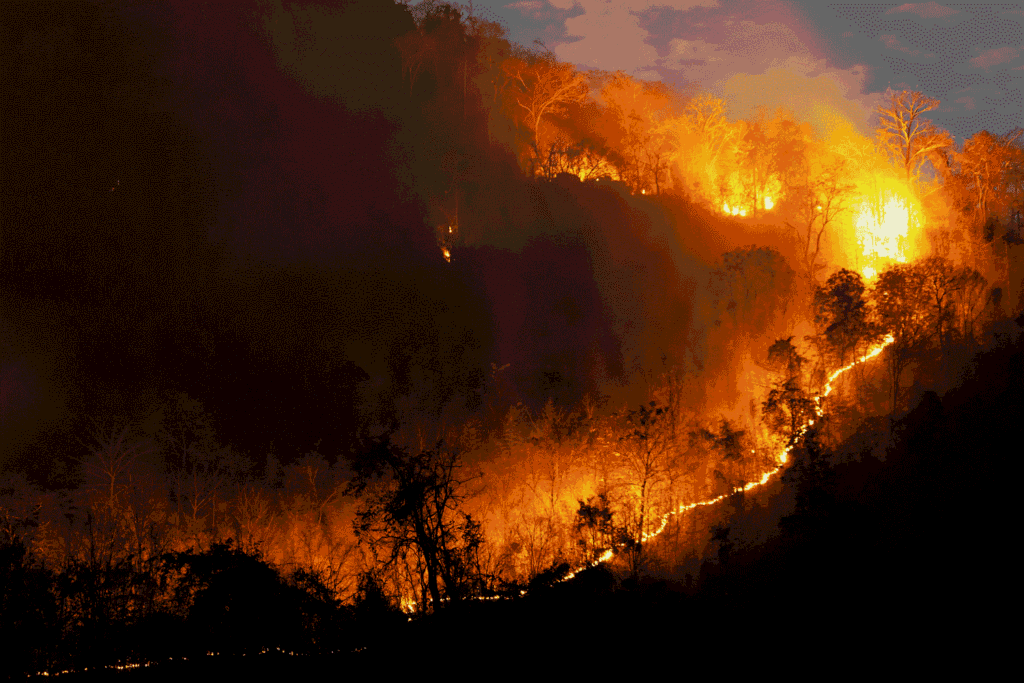
An analogy helps. A forest that burns and regrows with the same species is resilient in an engineering sense: it returns to what it was. A forest that burns and regrows with different species but continues to perform the same ecological functions is resilient in an ecological sense: it hasn’t returned to exactly what it was, but it still functions. When a strategy is called a “resilience strategy,” the question is: which type is meant?
Regulation 2021/241 does not include a formal definition of resilience. It uses the termin Article 4 among the objectives of the regulation: “to improve the resilience, crisis preparedness, adaptive capacity, and growth potential of Member States.” In the recitals, it provides operational guidance: building resilient economies means helping Member States “respond more effectively to shocks and recover more quickly from them.” The component of structural reorganization does not appear in either of these formulations. In the debate on European industrial policy for 2025, “resilience” appears alongside “competitiveness” and “strategic autonomy”: a resilient supply chain is one that does not depend on vulnerable foreign suppliers. Robustness, not transformation.
Academic literature has systematically analyzed this process. A study published in *Science Advances* in 2015 documented how “resilience” has become a cross-disciplinary concept precisely because of its semantic flexibility, which allows it to be adopted without sharing its technical assumptions. Some scholars interpret the gradual disappearance of the transformative component as a conscious choice on the part of institutional governance. Others view it as an inevitable drift inherent in any translation from scientific discourse to policy language. The question remains open. What can be documented is the gap between the ecological definition and its normative use.
This column explores climate-related terms whose technical meaning differs from their common perception. “Resilience” introduces a new mechanism: the term was introduced into science precisely to name something that everyday language does not distinguish, and then lost that distinction as it entered institutional discourse. The concept of structural reorganization implies that the system will not remain the same. The concept of resistance does not.
The next time you read “resilience” in a business plan, a climate strategy, or the name of a fund, there’s one question to ask: Is resilience a return to equilibrium, or is it a transformation that maintains functions? The two are not the same. Holling distinguished between them for a reason.