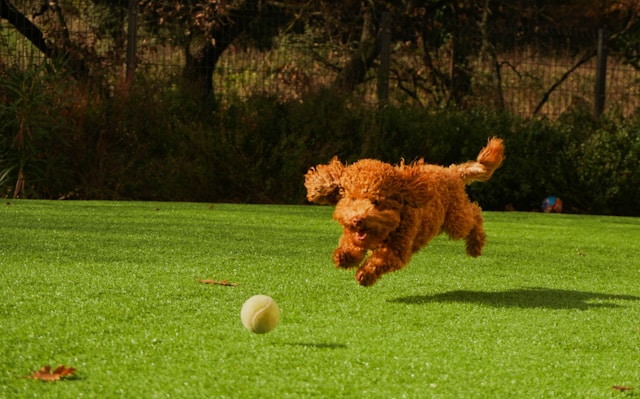
It’s well known that dogs go crazy over a ball. But what happens when that enthusiasm goes beyond simple fun and turns into an uncontrollable pursuit of the object—to the point of ignoring food, their owner, and even pain? This is the question a study published in *Scientific Reports*, authored by researchers from the University of Veterinary Medicine in Vienna and the University of Bern, seeks to answer.
The study documents, for the first time in a systematic way, the existence of behaviors reminiscent of those observed in human behavioral addictions, such as pathological gambling or video game addiction.
The signals observed by the researchers
The researchers examined 105 dogs between the ages of one and ten who were already known to have a strong motivation to play. Through behavioral tests and questionnaires completed by the owners, they assessed typical signs of addiction: compulsive craving, loss of self-control, inability to divert attention, and persistence of the behavior despite negative consequences.
In 33 subjects, particularly pronounced traits emerged. Some animals continued to stare at the toy even when it was out of reach, neglected food and social interactions, and remained agitated for a long time after it was removed. As the authors explain, “some dogs continued to want to play even when they were visibly exhausted or had minor injuries,” a behavior that echoes one of the fundamental criteria of addiction: continuing an activity despite the harm it causes.
Genetics Matter
However, the study makes an important point: the sample does not represent the canine population as a whole. In fact, the researchers had selected animals with a very high predisposition to play. It is therefore not surprising that Malinois, Border Collies, and Labrador Retrievers—working breeds in which humans have, for decades, selected individuals with a strong motivation to retrieve and play—were overrepresented among the subjects.
According to the authors, it is precisely this selection that may have fostered, at least in some individuals, a marked tendency to become fixated on the toy.
A wake-up call for property owners as well
The most interesting finding goes beyond mere scientific curiosity. In fact, the study encourages us to distinguish between a dog that loves to play and one that can no longer stop playing. The difference lies not in the intensity of the play, but in the loss of behavioral flexibility.
For those who live with these breeds, the message is clear: a high drive to play is often an asset in training and work, but it can become a problem if it isn’t accompanied by self-control, breaks, and adequate mental stimulation. Not every dog that obsessively chases a ball is “addicted.” But ignoring the signs of a possible compulsion risks compromising the dog’s well-being.